Technology
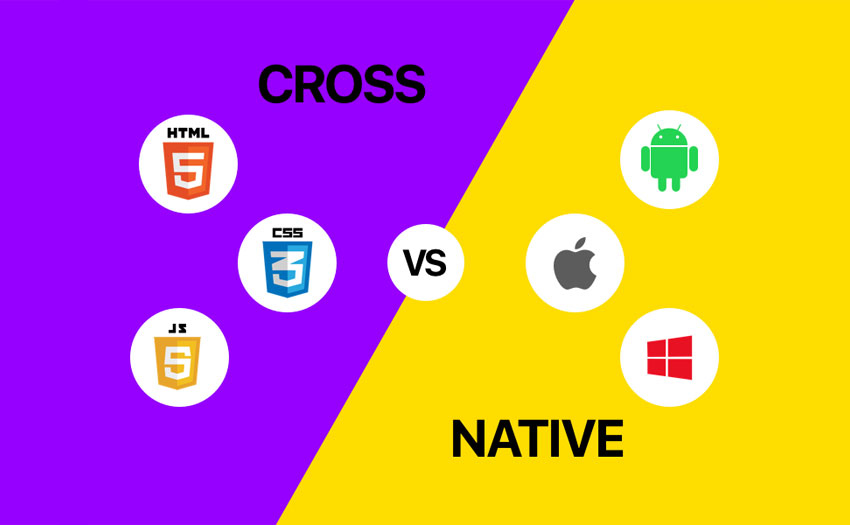
What are Native and cross-platform Apps? Which one is suitable for a startup?
Do you want to know which mobile App will be suitable for your business – native or cross-platform App. This article will provide you some useful info to make that decision.

The number of smartphone users is expected to reach 6648 billion by 2022 based on a Statista report. This reveals people are spending more time on their mobile phones. This opens many great opportunities for businesses to attract customers, build trust, increase sales, awareness and of course, make more profit.
If you are confused about whether to choose a Native or Cross-platform App, I assume you already know the importance of mobile Apps. Hence let us dive straight into which one suits your business better.
Why choose native Apps:
A native App is built solely for a single platform, for instance, iOS. Therefore it has the power to utilize the operating system to the full extent effectively and use all of the phone’s features, like GPS or camera.
Moreover, these apps are developed to a particular platform with separate programming languages. Android Apps generally employ Java or Kotlin, while iOS Apps use Swift and Objective-C. You can choose native App development if
- The majority of your services rely on mobiles or your App itself acts as a business
- You are a large company and doesn’t care about the budget of your App and have plans for much scaling in a long-term
- You need an App with complicated interactions, designs, and animations, for example, a game
- You are in need to offer the best performance to stand out from your competitors and desire an App with the widest functionality and complexity
- Your App needs maximum access to the phone’s resources and services like GPS, camera, accelerometer, etc
- Your App should have the ability to work offline i.e., without an internet connection, and require great responsiveness
- It’s okay that the App runs only on one platform iOS or Android and the App should manage a lot of corporate and user data.
Why choose cross-platform Apps:
Cross-platform Apps enjoy a single codebase, about 70-95% of code can be reused for different platforms. Hence, the App can run on multiple platforms and devices at the same time. Besides, the development is faster and cheaper compared to the native approach.
Tools or frameworks like Flutter, React Native, and Xamarin are used in developing these Apps. The cross-platform approach is favored by many companies due to its convenience and profitability, however, it comes with some limitations. Developers may find it difficult to utilize a device’s hardware and tailor the App to several platforms at once. You can opt for these Apps if
- You require an App to run on two or more platforms and at the same time it shouldn’t cost much
- If you are a startup that needs to develop an MVP in a limited time
- Your business doesn’t depend entirely on App i.e it is not a core thing
- You wish to enter the market quickly by testing your idea
- It’s okay that the App has decent responsiveness and no complicated elements and logic are expected
- The App uses the device’s functions to a limited extent and it should be easily maintainable
- You need an App with good synchronization over all platforms and devices
- The App should have a solid UI/UX consistency that reflects your brand identity, whereas this is difficult to achieve in native Apps
Wrapping Up
To conclude, both native and cross-platform Apps are kings in their own jungle. We cannot say one is superior to another. However, to choose one approach, it’s important to know your business in and out.
The above points will be helpful to make your choice. If you need professional assistance, get in touch with Soft Suave which is a leading mobile app development company. Try this 30-min free consultation to avoid making the wrong choice.














Lillipad Engineers Standing Mat to Its Own Desk Frame, Solving a Fit Problem Generic Mats Create

ETHRA AI Reports Strong Early Momentum as Stage 1 Presale Reaches 11% Completion

Understanding Comparative Negligence in Jacksonville Personal Injury Cases

LiquidWhales Goes Live: The First Hyperliquid Whale Tracker That Grades Every Wallet Net of Fees — and Lets You Copy the Winners in One Click

SolForger Launches as a Non-Custodial Solana Developer Platform for Builders, Creators, and On-Chain Projects

FBI, State Police, and Coast Guard Tactics in the Ronald L. Fischer Capture

Securing the Future: Jayen Consulting Officially Migrates to a New Digital Domain

Focusing on Compliance, Truoux Advances MAS License Application

Truoux Advances UK FCA License Application, Deepens Compliance Strategic Layout

Truoux Optimizes Risk Control and AML Systems, Accelerating the RMO and DAX License Application Process

Rovum Builds Momentum in On-Chain Settlement Markets

Is Professional Mold Testing Worth It?

Why Small Shipping Boxes Are Becoming the Default for 25-unit Trial Runs

Radio Ads and Personal Spending: Where Prosecutors Allege the Dynamic Money Millions Went

The $34 Million Deception: Where the Guam Charity Bingo Money Really Went