
Legal News
SAFE HAVEN? THINK AGAIN, COUNTRIES ARE TURNING ON FUGITIVES FAST

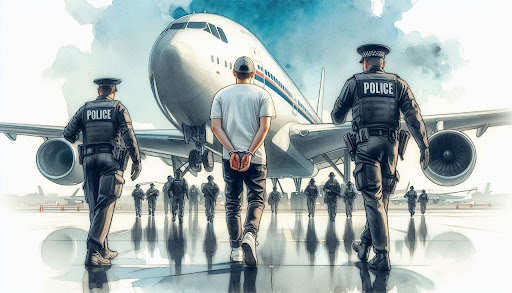
The place that once offered protection can become a trap when politics shift, and pressure starts to build.
WASHINGTON, DC, April 18, 2026.
The old fugitive dream has always depended on one dangerous assumption. Find the right country, and the hunt slows down. Pick a jurisdiction with a weak treaty, a political grudge against the requesting state, a tradition of protecting nationals, or a bureaucracy too slow to care, and the map starts working for you.
That dream is getting weaker.
Around the world, the countries once seen as comfortable refuge are becoming less reliable. Constitutions are being revised. Courts are reading old protections more narrowly. Governments that once hesitated to hand people over are deciding that drug violence, organized crime, diplomatic pressure, and domestic anger have changed the cost of offering sanctuary. A place that looked like protection two years ago can suddenly look like a departure lounge.
That is what makes modern extradition so dangerous for fugitives. The greatest risk is not always the country chasing you. Sometimes it is the country sheltering you, because the shelter can change its mind.
The U.S. Justice Department’s Office of International Affairs describes extradition in dry institutional language as part of the lawful return of fugitives through international cooperation. But for people on the run, the meaning is much starker. The safe haven is no longer a fixed place. It is a temporary political condition, and temporary conditions have a way of expiring at the worst possible moment.
The first mistake is confusing delay with safety.
Many fugitives make the same strategic error. They assume that if a country has not acted yet, it will not act later. They treat inertia like a promise. They mistake slow process for durable protection.
That is often how the trap is built.
A government may resist extraditing its own nationals for years, then reverse course after public outrage, cartel infiltration, corruption scandals, or pressure from allies. A court may tolerate a legal gray zone until one especially embarrassing case forces clarity. Politicians may spend years sounding protective of sovereignty, then decide that handing over one notorious figure is the fastest way to prove they are serious about crime.
From the fugitive’s perspective, this feels like betrayal. From the state’s perspective, it often looks like adjustment.
And that adjustment can come fast.
Costa Rica showed how quickly the old rules can collapse.
One of the clearest recent examples came out of Central America. Costa Rica had long been a country where nationals could not be extradited. That kind of constitutional protection has enormous psychological value for fugitives and suspected traffickers. It creates a narrative of safety. Stay home, or get home, and the worst cannot happen.
Then the rules changed.
As Reuters reported in its account of Costa Rica’s first extradition of one of its own citizens to the United States, former Supreme Court judge and ex-security minister Celso Gamboa was sent to Texas after Costa Rica reformed its constitution in 2025 to allow the extradition of nationals in drug trafficking cases. That was not just another transfer. It was a warning shot to every fugitive who still thinks yesterday’s legal shield will keep working tomorrow.
The symbolism mattered as much as the individual case. This was not an obscure trafficker operating at the margins. It was a former senior official, someone who had once lived inside the state itself. When a country reaches that far into its own elite ranks and says the door is open now, fugitives notice.
They notice because the message is plain. What once protected you can be rewritten.
The politics of refuge can change faster than fugitives can adapt.
That is the part people underestimate. A fugitive can change apartments, names, papers, and routes. What he cannot easily change is the political mood of the country keeping him safe.
A government that feels stable may enter an election cycle. A government that once feared extraditing nationals may decide the domestic anger over organized crime is now worse than the diplomatic cost of cooperation. A country that tolerated a notorious foreign figure may suddenly conclude that the relationship is bad for investment, security ties, or international reputation.
This is why “safe haven” is one of the most misleading phrases in the fugitive world. It sounds permanent. It sounds geographic. It sounds like something you can point to on a map.
In reality, it is often temporary and political.
That makes it far more fragile than most wanted people want to believe.
Drug trafficking and corruption cases are accelerating the shift.
The countries most likely to turn hard are often the ones under visible strain. When drug trafficking groups become too powerful, homicide rates rise, institutions look compromised, and public confidence collapses, leaders start searching for visible proof that they are still in charge.
Extradition becomes useful in that environment.
It sends a signal outward, to allies and partner governments, that cooperation is alive. It sends a signal inward, to domestic voters, that even politically connected suspects are not beyond reach. And it gives governments a clean way to move explosive defendants out of the local system and into another court process that may be harder to influence.
That is why some of the sharpest legal changes are happening in places where crime and politics have started colliding too openly to ignore. Once extradition becomes part of the national anti-crime narrative, the old refuge logic starts dying very quickly.
A fugitive does not need to lose his hideout in a dramatic raid. He can lose it in parliament, in a court ruling, in a constitutional reform, or in a cabinet-level political decision made hundreds of miles away.
Even comfort can become evidence that the haven is weakening.
There is another cruel feature to these cases. The fugitive often feels safest right before conditions turn.
He has money. He has a residence. He has contacts. He may even have local protection. Life starts to look normal again. The danger becomes abstract. The extradition request feels like foreign noise.
That is usually when complacency returns.
But comfort inside a haven can actually increase vulnerability. A settled life means routines. Routines mean visible patterns. Visible patterns mean that once the political decision changes, the suspect is easier to find, easier to locate and easier to deliver. The country does not need to launch a heroic global hunt if the person has already built a comfortable cage for himself inside its borders.
That is the hidden weakness in many so-called sanctuary countries. They do not have to betray the fugitive at random. They only have to decide, at some later point, that protecting him is no longer worth the trouble.
Then the entire safe life flips at once.
The real danger is that the haven becomes cooperative overnight.
This is where fugitives often think too narrowly. They focus on whether a country has an extradition treaty. They focus on whether their nationality creates a barrier. They focus on how the law read when they first arrived.
Those things matter, but they are not the whole game.
The real question is whether the country still wants to be difficult.
That willingness can change overnight. A new administration comes in. A scandal erupts. A foreign partner applies pressure. A court hands down a precedent. A notorious defendant becomes a national embarrassment. Suddenly, the same system that used to stall becomes efficient. The same officials who once talked about sovereignty start talking about cooperation. The same legal obstacles begin to look negotiable.
This is one reason private advisory firms such as Amicus International Consulting’s extradition practice talk about extradition risk as a moving legal and political problem, not a simple map problem. The issue is not merely where a person is today. The issue is what that place may become next month, next election, or next crisis.
For fugitives, that is deeply unsettling because it means the environment itself is unstable. The haven is not failing because they made a mistake. It is failing because the country has changed its mind about what kind of burden it is willing to carry.
The modern fugitive is running from more than the requesting state.
That may be the biggest shift of all. In the old fugitive imagination, the danger came from the country trying to get you back. In the modern version, the danger also comes from the country currently hosting you.
That host country may not act immediately. It may still offer delay, ambiguity, and breathing room. But if crime, politics, and diplomacy keep tightening around the issue, the host can become the delivery mechanism.
And once that happens, the whole logic of escape starts to collapse.
The apartment no longer feels secure. The passport no longer feels useful. The citizenship barrier no longer feels absolute. The well-connected fixer no longer feels essential. The haven stops looking like a shield and starts looking like a waiting room.
That is why fugitives are running out of reliable refuge. Countries are becoming less willing to absorb the reputational, political, and security costs of sheltering wanted people, especially in major drug, corruption, and organized crime cases. They may still delay. They may still hedge. But more of them are signaling that the old bargain is over.
So, the place that once looked safe can turn into the most dangerous place of all. Not because the fugitive moved, but because the country did.


Prosecutors Say Jason Finkelstein Spent 11 Seconds Reviewing Cardiac Images Before Clearing a Teenage Athlete

Prosecutors Say Jason Finkelstein Spent 11 Seconds Reviewing Cardiac Images Before Clearing a Teenage Athlete
Prosecutors Say Jason Finkelstein Spent 11 Seconds Reviewing Cardiac Images Before Clearing a Teenage Athlete
Prosecutors Say Jason Finkelstein Spent 11 Seconds Reviewing Cardiac Images Before Clearing a Teenage Athlete

Prosecutors Say Jason Finkelstein Spent 11 Seconds Reviewing Cardiac Images Before Clearing a Teenage Athlete
Prosecutors Say Jason Finkelstein Spent 11 Seconds Reviewing Cardiac Images Before Clearing a Teenage Athlete

Prosecutors Say Jason Finkelstein Spent 11 Seconds Reviewing Cardiac Images Before Clearing a Teenage Athlete
Prosecutors Say Jason Finkelstein Spent 11 Seconds Reviewing Cardiac Images Before Clearing a Teenage Athlete
Prosecutors Say Jason Finkelstein Spent 11 Seconds Reviewing Cardiac Images Before Clearing a Teenage Athlete

Prosecutors Say Jason Finkelstein Spent 11 Seconds Reviewing Cardiac Images Before Clearing a Teenage Athlete
Prosecutors Say Jason Finkelstein Spent 11 Seconds Reviewing Cardiac Images Before Clearing a Teenage Athlete
Prosecutors Say Jason Finkelstein Spent 11 Seconds Reviewing Cardiac Images Before Clearing a Teenage Athlete
Prosecutors Say Jason Finkelstein Spent 11 Seconds Reviewing Cardiac Images Before Clearing a Teenage Athlete

Prosecutors Say Jason Finkelstein Spent 11 Seconds Reviewing Cardiac Images Before Clearing a Teenage Athlete
Prosecutors Say Jason Finkelstein Spent 11 Seconds Reviewing Cardiac Images Before Clearing a Teenage Athlete

-
Alternative Energy4 days ago
Brian Rowan’s Possible Defense: No Intent, No Control, No Fraud, Just Sales
-
Alternative Energy4 days ago
Federal Grand Jury Indicts Oren Shachar in Hospice Fraud Case
-
Business3 days ago
How Darrell Seale Builds High-Performing Teams Through Service-Based Leadership
-
Education3 days ago
Daniel Cullen Delafield on Bridging Executive Leadership and Skilled Trades Development
-

 News1 day ago
Prosecutors Say Jason Finkelstein Spent 11 Seconds Reviewing Cardiac Images Before Clearing a Teenage Athlete
-
News1 day ago
Prosecutors Say Jason Finkelstein Spent 11 Seconds Reviewing Cardiac Images Before Clearing a Teenage Athlete
-

 News1 day ago
Prosecutors Say Jason Finkelstein Spent 11 Seconds Reviewing Cardiac Images Before Clearing a Teenage Athlete
-
News1 day ago
Prosecutors Say Jason Finkelstein Spent 11 Seconds Reviewing Cardiac Images Before Clearing a Teenage Athlete