
Immigration
Buying a Diplomatic Passport: Why Prosecutors Watch These Deals Closely

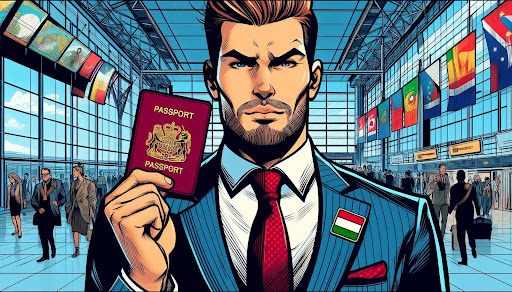
From forged appointments to fake immunity claims, buying a diplomatic passport can trigger criminal exposure across multiple jurisdictions.
WASHINGTON, DC, March 7, 2026.
The pitch is built to sound irresistible.
A broker says he can secure a diplomatic passport through a discreet government channel. A consultant claims a foreign ministry contact can arrange a special envoy appointment. A fixer promises that with the right payment, the client can obtain not just a prestigious travel document but a layer of legal insulation, smoother border treatment, and a status most ordinary travelers will never touch.
For prosecutors, that sales script is not intriguing. It is familiar.
In 2026, buying a diplomatic passport is not viewed by serious authorities as a clever shortcut. It is increasingly treated as a risk event that may involve forged paperwork, corrupt public officials, misrepresentation to foreign governments, cross-border payment trails, and false claims about immunity. The glamorous packaging hides a blunt legal reality. Diplomatic status is not supposed to function like a private retail product. The moment someone markets it that way, criminal exposure can enter the picture fast.
That is the real story behind the search traffic.
People do not type “buy a diplomatic passport” into a search bar because they are curious about the structure of diplomatic law. They type it because they want something. Some want prestige. Some want easier travel. Some want the appearance of untouchability. Some want distance from litigation, regulatory pressure, sanctions concerns, or personal scrutiny. The demand is emotional before it is legal, and that is exactly why bad actors have built an entire market around it.
The legal system, however, is not fooled by the branding.
The first problem for any buyer is that a diplomatic passport, a diplomatic appointment, and recognized diplomatic status are not the same thing. Online sellers merge those concepts because it helps close deals. Prosecutors separate them because that is how cases are built. A passport can be real and still not delivering the legal effect the buyer was promised. An appointment letter can look official and still be worthless abroad. A title can sound impressive and still collapse the moment a border agency, foreign ministry, or court asks for proof of function and recognition.
That gap between appearance and legal effect is where investigators start asking hard questions.
As official UK government guidance makes clear, a diplomatic passport is not by itself evidence of diplomatic status. The purpose of the trip and the actual status of the traveler matter more than the cover of the document. That is a devastating fact for the online brokerage market because the entire sales pitch usually depends on the opposite assumption. Brokers imply that once a person has the document, the rest of the world will treat the holder differently. Prosecutors, border officers, and foreign ministries know that is not how the system is supposed to work.
The second problem is the paper trail.
The modern passport fraud case is rarely just about a fake booklet. It is about the ecosystem around the booklet. Who introduced the buyer to the seller? Which company invoiced the client? Where was the payment sent? Which ministry or government office was allegedly involved? What appointment documents were produced? What claims were made about immunity, visa waivers, diplomatic privileges, or official status? Once investigators begin pulling on those threads, the transaction can stop looking like a private advisory deal and start looking like conspiracy, fraud, corruption, document abuse, or money laundering.
That is why prosecutors watch these deals so closely. They understand that buyers are often not simply purchasing paper. They are purchasing a story about legal advantage. If the story is false, inflated, or corruptly assembled, every step in the transaction can become relevant evidence.
A forged appointment is one of the clearest examples. In many online schemes, the client is told he will be named as a special envoy, trade representative, or diplomatic adviser. The title is deliberately vague. It sounds official enough to impress the buyer, but not specific enough to invite easy verification. Sometimes a letter appears on ministry stationery. Sometimes there is a protocol card, a support note, or a document that resembles an internal authorization. To the buyer, that looks like confirmation. To a prosecutor, it may look like the beginning of a forgery analysis.
Even when the paperwork is genuine, prosecutors may ask whether it was obtained through bribery, false pretenses, insider abuse, or misuse of public office. A real document does not always equal a lawful process. That is one of the most dangerous misunderstandings in this market. Clients often assume that if a state issued something, then the arrangement must be valid. In reality, corruption cases are full of genuinely issued documents that became evidence precisely because they were obtained in the wrong way.
Serious analysts in this area keep stressing the same point. In its discussion of diplomatic passports and immunity, Amicus International Consulting notes that possession of a diplomatic passport does not automatically grant immunity, because immunity depends on accreditation and host state recognition. That distinction matters enormously in criminal terms. If the passport does not create automatic immunity, then a buyer who relies on it to avoid ordinary scrutiny may be stepping deeper into legal danger, not away from it.
This is where the fake immunity claim becomes central.
Many sellers do not stop at offering a document. They market the idea of protection. They suggest the holder will be beyond the reach of certain checks, less vulnerable to questioning, or shielded from detention and legal process. Those claims are not just misleading. They can shape criminal exposure in their own right. A buyer induced to transfer funds by promises of immunity may later claim fraud. A seller who made those promises may face scrutiny for misrepresentation. A third party who helped draft the claims, move funds, or source the paperwork may also find himself inside the investigation.
Prosecutors are especially interested when those promises are tied to cross-border conduct. If a passport package was sold in one country, paid for through another, and intended for use in a third, the deal can attract attention from multiple authorities at once. Immigration officials may focus on misrepresentation. Anti-corruption bodies may focus on the issuing process. Financial crime units may focus on the transfers. Tax or sanctions authorities may look at the motive behind the purchase. What started as a supposedly private transaction can turn into a multi-jurisdictional file very quickly.
That is not theoretical. Cases involving diplomatic and service passport abuse have repeatedly shown how quickly the glamour falls away when investigators arrive. In one widely cited case reported by Reuters, Sierra Leone’s anti-corruption commissioner said corrupt officials had been selling fraudulent service and diplomatic passports to people seeking U.S. visa advantages. The facts of that case mattered because they exposed the supposed market for what it often is, not a lawful premium service, but an alleged corruption pipeline built on access, paperwork, and the hope that an official-looking credential would survive scrutiny long enough to be useful.
That pattern helps explain why prosecutors do not see these deals as harmless vanity purchases.
The passport package market often includes several features that, from a criminal enforcement perspective, are deeply unattractive. One is secrecy beyond ordinary confidentiality. Buyers are told to avoid email, to use encrypted apps, or to keep the arrangement off the record because it is sensitive. Another is payment urgency. Clients are pushed to move money quickly to preserve a rare opportunity. Another is vagueness around authority. The seller gestures toward a minister, an adviser, or a political channel but avoids concrete, verifiable details. Another is scope creep. The passport is sold not just as a travel document, but as a tool for banking, asset shielding, border ease, and legal insulation.
Each of those features can become incriminating in context.
Take the payment side alone. Prosecutors like transaction maps because they are harder to romanticize than sales copy. If funds moved through consultants, shell entities, nominees, or unrelated accounts, the structure may tell its own story. If invoices use vague language while private chats describe immunity and influence, that contrast matters. If part of the money went to an intermediary who claimed government access, prosecutors may start examining whether the intermediary was bribing an official, laundering proceeds, or simply running a fraud. The buyer may have thought he was purchasing discretion. An investigator may see the architecture of concealment.
Then there is use. What did the client actually intend to do with the passport?
If the answer is official travel on behalf of a state, the file may look one way. If the answer is to gain visa advantages, reduce customs scrutiny, pressure counterparties, or create a false impression of protected status, the case can look very different. Prosecutors care about intent because intent helps define the offense. Was this a corrupt procurement of state documents? Was it immigration fraud? Was it wire fraud? Was it a conspiracy to misrepresent status to foreign authorities? Was it part of a wider attempt to evade compliance or enforcement?
The buyer’s own communications can become central here. Messages boasting about immunity, discussing how the passport will avoid due diligence, or framing the document as a shield from law enforcement can be profoundly damaging. In many white-collar and corruption cases, the language parties use among themselves ends up being more important than the polished documents they show outsiders.
There is also a public policy reason these deals draw attention. Diplomatic systems work only if states trust the official identities and status claims being presented to them. When brokers commercialize that system, even at a small scale, they do more than mislead individual clients. They corrode a framework governments rely on for real diplomatic business. That is why authorities treat abuse of diplomatic credentials as more than a quirky side hustle. It strikes at the credibility of state documentation and international protocol.
Buyers often underestimate how little patience prosecutors have for the “everyone does it” defense in this area. The internet may be full of talk about honorary roles, quiet appointments, and unofficial channels. None of that changes the core legal problem. If a document or status claim was bought through falsehoods, corruption, forged paperwork, or deceptive promises, the fact that similar pitches circulate online does not make the conduct safe. It merely shows how crowded the risk market has become.
So, what do prosecutors usually look for first?
They look for the mismatch. A private client with no obvious state role claims diplomatic status. A document appears without a coherent official purpose. A title sounds grand, but cannot be independently verified. Money moved fast, but documentation stayed thin. The seller promised immunity, but the legal basis is foggy. The package was marketed as confidential, yet it supposedly confers public authority. Those contradictions are often the first clue that the case is not about diplomacy at all. It is about manufactured status.
That is why the smart question is not “can this be arranged,” but “what would happen if a prosecutor or foreign ministry saw the full file.” Would the paperwork stand up? Would the payment trail make sense? Would the appointment survive scrutiny? Would the claimed benefits align with the actual law? Could the client explain, with a straight face, why a private payment bought access to what is supposed to be a public function?
In many cases, the answer is obvious long before the first subpoena.
The harder truth is that buyers are often drawn in because they want the fantasy to be real. They want to believe a special document can create a private zone of reduced accountability. But prosecutors are paid to strip away fantasy. They look at records, motives, messages, bank wires, appointment letters, ministry contacts, and border use. Once they do, the elegant story of diplomatic privilege can shrink into something far more ordinary, a fraud scheme, a corruption deal, or a document crime dressed up in official language.
That is why buying a diplomatic passport draws such close prosecutorial attention in 2026. It is not because authorities are fascinated by elite travel perks. It is because these transactions often sit at the intersection of false status claims, public corruption, international movement of money, and attempted legal advantage. The passport may look impressive. The deal may feel exclusive. The broker may sound connected. But if the status is manufactured, the appointment is dubious, or the promises are false, the buyer is not acquiring protection.
He may be acquiring evidence.


Prosecutors Say Jason Finkelstein Spent 11 Seconds Reviewing Cardiac Images Before Clearing a Teenage Athlete

Prosecutors Say Jason Finkelstein Spent 11 Seconds Reviewing Cardiac Images Before Clearing a Teenage Athlete
Prosecutors Say Jason Finkelstein Spent 11 Seconds Reviewing Cardiac Images Before Clearing a Teenage Athlete
Prosecutors Say Jason Finkelstein Spent 11 Seconds Reviewing Cardiac Images Before Clearing a Teenage Athlete

Prosecutors Say Jason Finkelstein Spent 11 Seconds Reviewing Cardiac Images Before Clearing a Teenage Athlete
Prosecutors Say Jason Finkelstein Spent 11 Seconds Reviewing Cardiac Images Before Clearing a Teenage Athlete

Prosecutors Say Jason Finkelstein Spent 11 Seconds Reviewing Cardiac Images Before Clearing a Teenage Athlete
Prosecutors Say Jason Finkelstein Spent 11 Seconds Reviewing Cardiac Images Before Clearing a Teenage Athlete
Prosecutors Say Jason Finkelstein Spent 11 Seconds Reviewing Cardiac Images Before Clearing a Teenage Athlete

Prosecutors Say Jason Finkelstein Spent 11 Seconds Reviewing Cardiac Images Before Clearing a Teenage Athlete
Prosecutors Say Jason Finkelstein Spent 11 Seconds Reviewing Cardiac Images Before Clearing a Teenage Athlete
Prosecutors Say Jason Finkelstein Spent 11 Seconds Reviewing Cardiac Images Before Clearing a Teenage Athlete
Prosecutors Say Jason Finkelstein Spent 11 Seconds Reviewing Cardiac Images Before Clearing a Teenage Athlete

Prosecutors Say Jason Finkelstein Spent 11 Seconds Reviewing Cardiac Images Before Clearing a Teenage Athlete
Prosecutors Say Jason Finkelstein Spent 11 Seconds Reviewing Cardiac Images Before Clearing a Teenage Athlete

-
Alternative Energy5 days ago
Brian Rowan’s Possible Defense: No Intent, No Control, No Fraud, Just Sales
-
Alternative Energy5 days ago
Federal Grand Jury Indicts Oren Shachar in Hospice Fraud Case
-
Business4 days ago
How Darrell Seale Builds High-Performing Teams Through Service-Based Leadership
-
Education4 days ago
Daniel Cullen Delafield on Bridging Executive Leadership and Skilled Trades Development
-

 News2 days ago
Prosecutors Say Jason Finkelstein Spent 11 Seconds Reviewing Cardiac Images Before Clearing a Teenage Athlete
-
News2 days ago
Prosecutors Say Jason Finkelstein Spent 11 Seconds Reviewing Cardiac Images Before Clearing a Teenage Athlete
-
News2 days ago
Prosecutors Say Jason Finkelstein Spent 11 Seconds Reviewing Cardiac Images Before Clearing a Teenage Athlete
-
News2 days ago
Prosecutors Say Jason Finkelstein Spent 11 Seconds Reviewing Cardiac Images Before Clearing a Teenage Athlete