
News
Unveiling Today’s Scientific News: Breakthroughs and Discoveries


Hey there! Ready to catch up on what’s new in science? We’re talking about some pretty cool stuff, from tiny particles to huge galaxies. It’s all about the latest breakthroughs and discoveries happening right now. Stick around to see how today’s scientific news is changing our world.
Key Takeaways
- Scientists are making quantum clocks super precise, and they’re even figuring out how to make weird quantum currents with graphene. Also, they’re getting closer to making quantum computers a real thing.
- Black holes might be like natural particle smashers, helping us find new stuff in space. People are also finding new objects in our solar system, and there’s even work on teaching lasers to build things out in space.
- New ways to turn old electronics into gold are popping up, which is way better for the planet. Plus, there’s a new cooling method for data centers that saves energy, and a new way to make hydrogen cheaper.
- AI can now spot hidden heart problems, which is a big deal for health. And get this, they’re looking into how tiny living things could help build stuff on Mars. Also, some weird things are happening with molecules inside DNA droplets.
- Graphene is still a big deal, now helping with magnetic-free tech. Lasers are doing some unexpected things, and there’s a new, almost perfect way to move sound. All this stuff is changing how we think about materials.
Revolutionary Advances in Quantum Physics
Quantum physics is still weird, right? But it’s also where a lot of the coolest new tech is coming from. This month has been packed with breakthroughs, so let’s jump in.
Redefining Timekeeping with Quantum Clocks
Okay, so imagine a clock that’s so precise, it makes your phone’s clock look like a sundial. Scientists are doing some crazy stuff with quantum mechanics to build these super-accurate clocks. The basic idea is to use the quantum properties of atoms to measure time with insane precision. They’re using two "hands" on the clock, one moving fast in the quantum world, the other more traditional. This could change everything from GPS to fundamental physics research. I read that timekeeping breakthrough could boost precision dramatically.
Unlocking Impossible Quantum Currents with Graphene
Graphene, that super-thin layer of carbon, is back in the news. Researchers have figured out how to make quantum currents flow in graphene in ways that were previously thought impossible. This involves some pretty complex physics, but the bottom line is that it could lead to new types of electronic devices with crazy capabilities. Think faster, smaller, and more efficient electronics. It’s like they’re bending the rules of physics at the nanoscale. Here are some potential applications:
- Next-gen transistors
- Ultra-sensitive sensors
- New types of quantum devices
Achieving the Holy Grail of Quantum Computing
Quantum computing is always a hot topic, and for good reason. The big challenge has always been error correction – quantum computers are super sensitive and prone to making mistakes. But a team just announced they’ve achieved a major milestone: an exponential speedup that’s unconditional. They used clever error correction and IBM’s powerful 127-qubit processors to tackle a variation of Simon’s problem. This shows that quantum machines are now breaking free from classical limitations. It’s a huge step towards building practical, fault-tolerant quantum computers. This is a big deal because:
- Solves complex problems faster
- Breaks current encryption
- Simulates molecules for drug discovery
Groundbreaking Discoveries in Space and Astronomy
Space is still the place! We’re constantly learning new things, and the pace of discovery feels faster than ever. From peering into the hearts of black holes to figuring out how to build things among the stars, here’s a quick look at some recent highlights.
Black Holes as Natural Supercolliders
Turns out, black holes aren’t just cosmic vacuum cleaners. Scientists are starting to think they might act like giant particle accelerators. As matter spirals into a black hole, the extreme gravitational forces can accelerate particles to incredibly high speeds, potentially creating conditions similar to those in supercolliders like the LHC. This could give us a way to study physics at energy levels we can’t reach on Earth. It’s like the universe is doing the experiments for us!
Predicting New Solar System Objects
With better telescopes and smarter algorithms, we’re getting better at spotting things lurking in the outer reaches of our solar system. The Rubin Observatory is set to revolutionize this field. Instead of just reacting to discoveries, researchers are now using models to predict where new objects might be hiding. This lets them focus their search efforts and increases the odds of finding those elusive dwarf planets and comets. It’s like playing a cosmic game of hide-and-seek, but with math!
Teaching Lasers to Build in Space
Imagine a future where we can 3D-print habitats and equipment on the Moon or Mars. That future might be closer than we think. Scientists are working on ways to use lasers to melt and fuse materials in the vacuum of space, essentially turning them into giant 3D printers. This could dramatically reduce the cost and complexity of space exploration, as we wouldn’t have to haul everything from Earth. It’s like having a cosmic construction crew ready to build whatever we need, wherever we need it. This could be a game changer for space telescopes and future missions.
Innovations in Sustainable Technology
Turning E-Waste Into Gold Safely
Okay, so I read this thing about how scientists are finding ways to get gold out of old electronics, which is pretty cool considering how much e-waste we produce. Apparently, the old methods used some seriously nasty chemicals like mercury and cyanide. But now, researchers at Flinders University figured out a way to use stuff that’s way safer – like, the kind of stuff you’d find in pool disinfectant. They use this with a special polymer that they can reuse, which is great. This new method is not only better for the environment but could also make recycling e-waste more profitable. It’s a win-win, really. I wonder if this means we’ll see more e-waste recycling programs popping up soon.
Passive Cooling Breakthrough for Data Centers
Data centers use a crazy amount of energy, mostly to keep all those servers from overheating. I saw something about a new passive cooling system that could seriously cut down on that energy use. The idea is to use clever design and materials to let the heat dissipate naturally, without needing a ton of air conditioning. I don’t have all the technical details, but it sounds like it involves some kind of special coating and a smart layout. If this works on a large scale, it could make a huge difference in the energy consumption of these centers. It’s a big deal because data centers are only going to get bigger and more numerous as we rely more on cloud computing and AI.
New Catalyst Slashes Hydrogen Production Costs
Hydrogen is supposed to be the fuel of the future, right? Clean and all that. But the problem is, making it is still kind of expensive and not always that clean. I just read about a new catalyst developed by researchers in South Korea that could change that. They tweaked the levels of boron and phosphorus in cobalt phosphide nanosheets, which apparently makes the water-splitting process way more efficient. This means we could produce hydrogen at a much lower cost, making it a more viable alternative to fossil fuels. It’s still early days, but this kind of breakthrough is what we need to make hydrogen energy a reality. It’s exciting to think about the possibilities if we can get this technology scaled up.
Cutting-Edge Developments in Health and Biology
AI Spots Deadly Heart Risk
Okay, so this is pretty wild. Doctors are getting some serious help from AI now. Apparently, there’s this new AI model from Johns Hopkins called MAARS, and it’s digging through heart MRI scans that usually get overlooked. It’s finding hidden scar patterns that can signal sudden cardiac death. The cool thing is it seems to be way better than what doctors are currently using, which they’re calling a ‘dice-roll clinical guideline’. If this works out, it could save a lot of lives and keep people from getting treatments they don’t even need. It’s like having a super-powered second opinion that never gets tired. You can read more about AI in healthcare on other sites.
Microbes Building on Mars
Imagine this: instead of hauling tons of building materials to Mars, we just send microbes that can make stuff for us. That’s the idea, anyway. Scientists are looking into using microbes to create building materials directly on Mars. It sounds like science fiction, but it could be a game-changer for future Mars colonies. Think about it:
- Less weight to transport from Earth.
- Using resources already on Mars.
- Potentially self-replicating construction crews!
It’s still early days, but the potential is huge. I wonder if they’ll need tiny hard hats?
Guest Molecules Riding Waves in DNA Droplets
This one’s a bit more abstract, but still super interesting. Researchers have found that DNA droplets can act like tiny wave pools, and other molecules can ‘surf’ on these waves. It’s all about how molecules interact and move within these droplets. It could help us understand how cells organize themselves and how different processes happen inside them. It’s like discovering a whole new level of molecular choreography. It’s amazing how much is going on at the molecular level that we’re only just starting to understand.
Transformative Progress in Materials Science
Graphene Spins Up a Magnetic-Free Revolution
Graphene continues to amaze! Scientists have found a way to generate quantum spin currents in graphene without needing magnets. I know, right? It sounds like something out of a sci-fi movie. Basically, they paired graphene with a magnetic material, which unlocked a quantum effect. This lets electrons carry information just through their spins. This could mean faster and more efficient electronics in the future. Think about that – no more bulky magnets needed for certain applications. It’s a big deal for spintronics and could change how we design devices.
Lasers Don’t Split, They Multiply
Okay, this one is a bit mind-bending. Instead of splitting, lasers can now multiply. I had to read that a few times to really get it. Researchers are doing some wild stuff with lasers, and it sounds like it could have huge implications for manufacturing and other fields. Imagine being able to create multiple beams from a single source – the possibilities are pretty cool. UF engineers are even using lasers to build in space, which is just insane.
New Way to Move Sound Nearly Perfectly
Ever thought about how sound moves? Probably not, but some scientists have, and they’ve found a new way to move sound almost perfectly. Apparently, it involves some fancy materials and clever engineering. I’m not going to pretend I understand all the details, but the idea is that we could potentially create better speakers, microphones, and other audio devices. Plus, it could lead to new ways of quantum computing and communication. Who knew sound could be so interesting?
Exploring Earth’s Mysteries and Environmental Science
Earth’s Leaking Core and Strange Signals
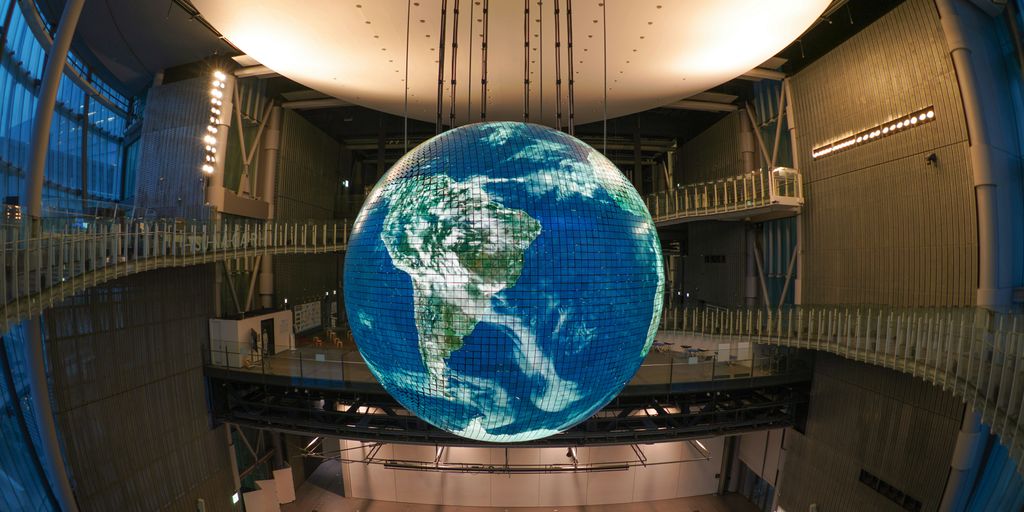
Okay, so the Earth’s core is doing some weird stuff. Scientists are picking up on strange signals, and it looks like our planet’s core might be "leaking" in some way. I know, sounds like a sci-fi movie, right? But it’s real! They’re studying seismic waves to figure out what’s going on deep down there. Apparently, solid rock in the Earth’s mantle flows horizontally, causing post-perovskite crystals to align. This alignment explains the acceleration of seismic waves, solving a long-standing geological mystery. You can read more about mantle flows if you’re interested.
Desert Survivor Defies the Odds
There’s this plant, see, that’s living way longer than it should in a super harsh desert environment. It’s like it’s found some secret to survival that we don’t understand yet. Researchers are all over it, trying to figure out its adaptations. Is it the roots? The leaves? The way it handles water? It’s a whole puzzle, and understanding it could give us clues about how life can persist in extreme conditions. It’s also important to study environmental awareness to understand the impact of climate change on these species.
Cleaner Gold Extraction Methods
Mining for gold is usually a pretty dirty business, environmentally speaking. Lots of nasty chemicals involved. But some smart folks are working on new, cleaner ways to get gold out of the ground. This is a big deal because it could reduce pollution and make the whole industry more sustainable. Here are some of the methods they are exploring:
- Using bacteria to leach gold from ore (bioleaching).
- Developing less toxic chemical solvents.
- Improving water treatment processes at mine sites.
These new methods could really help with pollution from gold mining.
Conclusion
So, as we wrap things up, it’s pretty clear that science is always moving forward. Every day, there are new discoveries and cool breakthroughs happening all over the place. It’s not just for scientists in labs, either. This stuff impacts all of us, from how we live to what we know about the world. It’s a good reminder that there’s always more to learn, and that’s a pretty exciting thought, right? Keep an eye out, because who knows what amazing things we’ll hear about next!




Prosecutors Say Jason Finkelstein Spent 11 Seconds Reviewing Cardiac Images Before Clearing a Teenage Athlete

Prosecutors Say Jason Finkelstein Spent 11 Seconds Reviewing Cardiac Images Before Clearing a Teenage Athlete
Prosecutors Say Jason Finkelstein Spent 11 Seconds Reviewing Cardiac Images Before Clearing a Teenage Athlete
Prosecutors Say Jason Finkelstein Spent 11 Seconds Reviewing Cardiac Images Before Clearing a Teenage Athlete

Prosecutors Say Jason Finkelstein Spent 11 Seconds Reviewing Cardiac Images Before Clearing a Teenage Athlete
Prosecutors Say Jason Finkelstein Spent 11 Seconds Reviewing Cardiac Images Before Clearing a Teenage Athlete

Prosecutors Say Jason Finkelstein Spent 11 Seconds Reviewing Cardiac Images Before Clearing a Teenage Athlete
Prosecutors Say Jason Finkelstein Spent 11 Seconds Reviewing Cardiac Images Before Clearing a Teenage Athlete
Prosecutors Say Jason Finkelstein Spent 11 Seconds Reviewing Cardiac Images Before Clearing a Teenage Athlete

Prosecutors Say Jason Finkelstein Spent 11 Seconds Reviewing Cardiac Images Before Clearing a Teenage Athlete
Prosecutors Say Jason Finkelstein Spent 11 Seconds Reviewing Cardiac Images Before Clearing a Teenage Athlete
Prosecutors Say Jason Finkelstein Spent 11 Seconds Reviewing Cardiac Images Before Clearing a Teenage Athlete
Prosecutors Say Jason Finkelstein Spent 11 Seconds Reviewing Cardiac Images Before Clearing a Teenage Athlete

Prosecutors Say Jason Finkelstein Spent 11 Seconds Reviewing Cardiac Images Before Clearing a Teenage Athlete
Prosecutors Say Jason Finkelstein Spent 11 Seconds Reviewing Cardiac Images Before Clearing a Teenage Athlete

-
Alternative Energy5 days ago
Brian Rowan’s Possible Defense: No Intent, No Control, No Fraud, Just Sales
-
Alternative Energy5 days ago
Federal Grand Jury Indicts Oren Shachar in Hospice Fraud Case
-
Business4 days ago
How Darrell Seale Builds High-Performing Teams Through Service-Based Leadership
-
Education4 days ago
Daniel Cullen Delafield on Bridging Executive Leadership and Skilled Trades Development
-

 News2 days ago
Prosecutors Say Jason Finkelstein Spent 11 Seconds Reviewing Cardiac Images Before Clearing a Teenage Athlete
-
News2 days ago
Prosecutors Say Jason Finkelstein Spent 11 Seconds Reviewing Cardiac Images Before Clearing a Teenage Athlete
-
News2 days ago
Prosecutors Say Jason Finkelstein Spent 11 Seconds Reviewing Cardiac Images Before Clearing a Teenage Athlete
-
News2 days ago
Prosecutors Say Jason Finkelstein Spent 11 Seconds Reviewing Cardiac Images Before Clearing a Teenage Athlete