
Blockchain Technology
Unlocking Potential: Identifying the Best Crypto to Buy for 2025

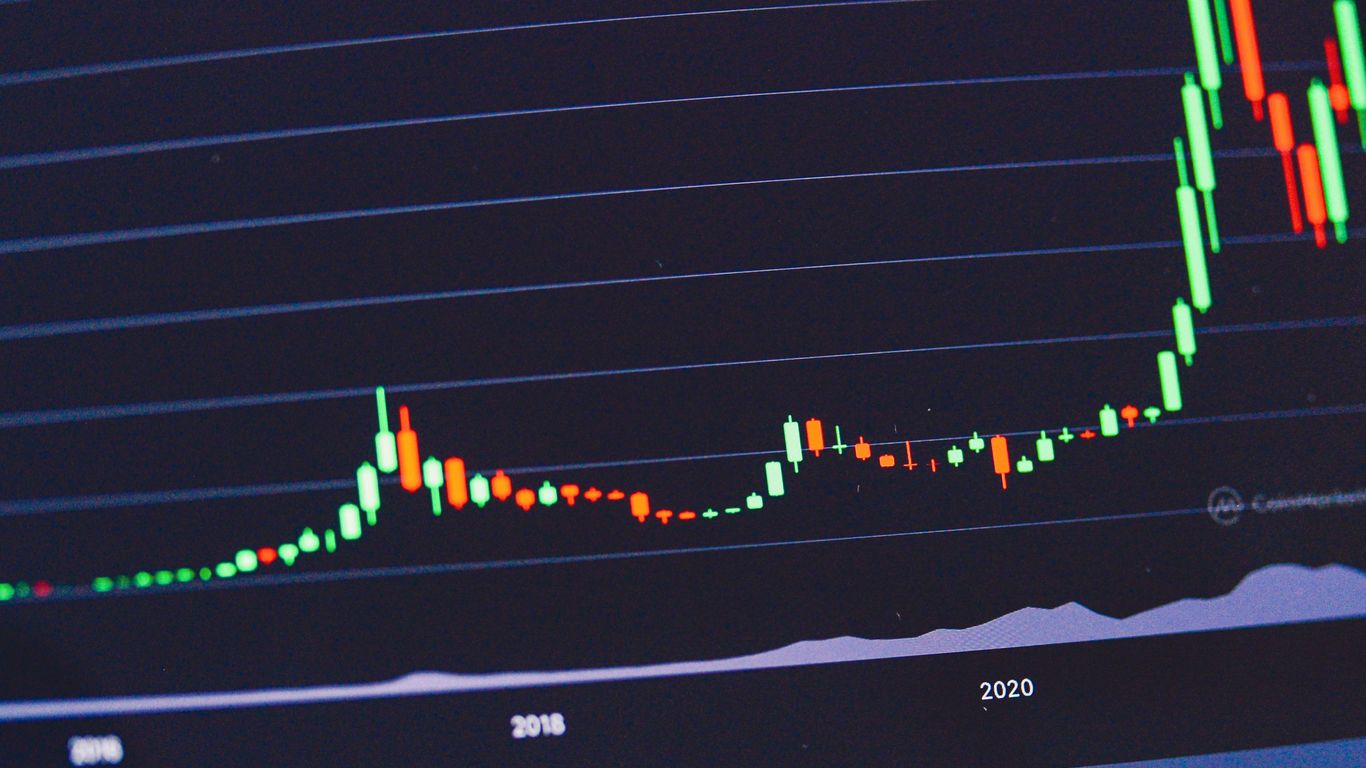
Alright, so you’re looking to figure out the best crypto to buy for 2025, huh? It’s a bit of a wild ride out there, and honestly, predicting what’s going to pop off is never a sure thing. But, we can look at what’s been doing well and what seems to have some solid backing. Think of this as spotting some interesting players in the game, not a crystal ball telling you exactly where to put your money. Remember, crypto is super risky, so always do your own homework and don’t bet the farm on anything.
Key Takeaways
- Bitcoin and Ethereum are still the big dogs, with ETFs making them more accessible.
- BNB powers the Binance ecosystem and is important for exchange-related activities.
- XRP focuses on fast international money transfers, aiming to improve on systems like SWIFT.
- Chainlink connects real-world data to blockchains, which is pretty vital for smart contracts.
- Hyperliquid is a Layer-1 blockchain known for its advanced transaction speeds.
1. Bitcoin

When you talk about cryptocurrency, Bitcoin is usually the first thing that comes to mind. It’s the original, launched way back in 2009 by someone (or a group) known as Satoshi Nakamoto. For a long time, it was the only game in town, and even now, with thousands of other coins out there, it’s still the biggest player in terms of market value.
Think of Bitcoin as the digital gold of the crypto world. Its main job is to be a store of value and a way to send money around without needing a bank. While other coins have popped up trying to do more complex things like run apps or make super-fast transactions, Bitcoin has stuck to its core mission.
Its status as the first and most well-known cryptocurrency gives it a unique advantage, often seen as the benchmark for the entire market.
Here’s a quick look at some key figures for Bitcoin:
| Metric | Value |
|---|---|
| Price | $108,605.50 |
| Market Cap | $2.16 trillion |
It’s important to remember that crypto prices can swing wildly. Bitcoin is no exception. Its value isn’t tied to any physical asset, so what people are willing to pay for it is what really sets the price. This volatility is something anyone looking to invest needs to be aware of. Despite the ups and downs, Bitcoin remains a central piece of the crypto conversation and a major focus for many investors looking at the market in 2025.
2. Ethereum
Ethereum, often seen as the second pillar of the crypto world after Bitcoin, is way more than just a digital currency. Think of it as a global, decentralized computer that anyone can build on. Its main innovation is the smart contract – basically, self-executing contracts with the terms of the agreement directly written into code. This has opened the door for a whole universe of decentralized applications (dApps), from finance (DeFi) to gaming and beyond.
The big upgrade to Ethereum, known as ‘The Merge’, shifted its operation from a power-hungry ‘proof-of-work’ system to a much more energy-efficient ‘proof-of-stake’ model. This was a massive technical feat and has made ETH a more attractive option for environmentally conscious investors. Plus, the move to proof-of-stake sets the stage for future upgrades aimed at increasing transaction speeds and lowering fees, which have historically been a pain point.
Here’s a quick look at some key aspects:
- Smart Contracts: The backbone of Ethereum, enabling complex applications.
- dApps: A vast ecosystem of decentralized applications built on Ethereum.
- DeFi: A significant portion of decentralized finance operates on the Ethereum network.
- NFTs: While not exclusive to Ethereum, it’s the dominant platform for Non-Fungible Tokens.
Looking ahead to 2025, the focus remains on scaling solutions. Layer-2 networks built on top of Ethereum are gaining traction, helping to process transactions faster and cheaper. While competition is always present, Ethereum’s established network effect and ongoing development suggest it will remain a major player. Many investors are watching how these scaling solutions mature and how the network handles increased demand. You can find more information on recent crypto news and analyses on various topics.
As of late 2025, Ethereum’s performance has been solid, showing steady growth. Its market cap remains substantial, reflecting its widespread adoption and the sheer volume of activity on its network. The ongoing development and the potential for further upgrades make it a coin many are keeping a close eye on for the long term.
3. BNB
BNB, originally known as Binance Coin, is the native cryptocurrency of the Binance ecosystem, one of the world’s largest crypto exchanges. It started as an ERC-20 token on the Ethereum blockchain but later migrated to its own chain, the BNB Chain (formerly Binance Smart Chain). BNB plays a central role in powering various applications and services within the Binance network and beyond.
Initially, BNB was created to offer discounted trading fees on the Binance exchange. However, its utility has expanded significantly. It’s used to pay for transaction fees on the BNB Chain, participate in token sales launched on the Binance Launchpad, and even as a payment method for certain services and goods.
The BNB Chain itself is a popular platform for decentralized applications (dApps), especially those focused on decentralized finance (DeFi) and gaming, due to its relatively low transaction costs and high speed compared to other blockchains. This ecosystem growth directly benefits BNB by increasing demand for its use in transaction fees and staking.
BNB also has a deflationary mechanism through its quarterly coin burns, where a portion of BNB is destroyed based on trading volume, reducing the total supply over time. This mechanism aims to increase the scarcity and potential value of the remaining tokens.
Looking ahead to 2025, BNB’s performance is closely tied to the continued success and adoption of the Binance exchange and the BNB Chain ecosystem. Its integration into various dApps and services, along with ongoing development of the BNB Chain, suggests it will remain a significant player in the crypto space. Some price predictions for 2025 place its minimum cost around $411.51, though actual performance could vary based on market conditions and broader crypto adoption trends. Binance Coin (BNB) price predictions offer more detailed outlooks.
4. XRP
XRP is a digital asset that was created with the goal of making money transfers faster and cheaper. It’s the native currency of the XRP Ledger, an open-source technology that powers RippleNet. Think of RippleNet as a system designed for international payments, aiming to be more efficient than older methods like SWIFT.
The main idea behind XRP is to act as a bridge currency for cross-border transactions. This means it can be used to quickly move value between different currencies without needing traditional banking intermediaries. While the XRP Ledger is open source, it’s not a traditional blockchain in the same way Bitcoin or Ethereum are, which has led to some debate about its classification.
Here’s a quick look at some performance data:
| Metric | Value |
|---|---|
| YTD Performance | 37.13% |
| Price (approx.) | $2.82 |
| Market Cap | $168.33 Billion |
Despite some of the technical discussions, XRP has shown resilience. Its focus on payment solutions means it’s often watched by those interested in the practical applications of crypto for financial services. The four-hour chart for XRP does show a bearish trend recently, with the 50-day moving average falling, which suggests some short-term weakness. However, its established presence and ongoing development in the payment space keep it on the radar for many investors looking at the future of digital payments.
5. Chainlink
Chainlink is a big name in the crypto world, and for good reason. It’s basically the go-to for getting real-world information onto the blockchain. Think of it as a bridge between smart contracts and the outside world. Without something like Chainlink, smart contracts would be pretty limited, only able to access data already on their own blockchain.
Chainlink’s main job is to provide reliable data feeds to smart contracts. This is super important for all sorts of applications, from decentralized finance (DeFi) to insurance and gaming. They’ve built a whole network of "oracles" – these are the nodes that fetch and verify data from external sources like APIs, IoT devices, or even other blockchains. This data can be anything from stock prices and weather reports to sports scores.
Here’s a quick look at why Chainlink is considered a solid player:
- Decentralized Oracle Network: This is the core of Chainlink. By using multiple independent nodes, they make sure the data is accurate and can’t be easily manipulated. If one node goes down or provides bad data, the others can correct it.
- Wide Adoption: Lots of major projects and companies use Chainlink. This includes big names in DeFi and even some traditional enterprises looking to explore blockchain tech. This widespread use shows trust in their system.
- Expanding Use Cases: Chainlink isn’t just about price feeds anymore. They’re working on things like Verifiable Random Function (VRF) for gaming and NFTs, and Cross-Chain Interoperability Protocol (CCIP) to help different blockchains talk to each other. This shows they’re not standing still.
Looking at the numbers, Chainlink (LINK) has shown steady performance. As of late August 2025, its year-to-date performance was around 16.82 percent, which is respectable in a fluctuating market. The network continues to grow, with more developers building on top of its infrastructure. For anyone interested in the infrastructure that powers much of the decentralized web, Chainlink is definitely worth keeping an eye on. Their work in connecting blockchains to real-world data is a foundational piece for many future applications, and their ongoing development in areas like AI data analysis suggests they’re prepared for what’s next.
6. Bitcoin Cash
Bitcoin Cash (BCH) is a cryptocurrency that came about in 2017. Some folks thought certain parts of the original Bitcoin blockchain weren’t working as well as they could, so they made some changes to create BCH. The main idea was to make transactions faster and cheaper compared to Bitcoin.
It’s seen some decent performance this year, hitting a year-to-date gain of 22.79 percent as of late August 2025. This puts it in a solid spot among other top performers.
Here’s a quick look at its performance:
| Cryptocurrency | Performance YTD |
|---|---|
| Bitcoin Cash (BCH) | 22.79 percent |
When you’re thinking about sending money internationally, it’s good to know your options. You’ve got to figure out how fast you need it to get there and if you’re more worried about fees or the exchange rate. Sometimes, a service might have low fees but give you a worse rate, or vice versa. Understanding these trade-offs helps you get the most value when sending money to India [0a3f].
BCH aims to be a more practical digital currency for everyday use, focusing on quick and low-cost transactions. While it shares a history with Bitcoin, its development path has focused on improving these specific aspects of usability.
7. TRON
TRON, or TRX, is a blockchain platform that got started back in 2017. It’s all about building a decentralized internet, and it uses smart contracts to let people create decentralized applications, or dApps, right on the TRON network. Think of TRX as the fuel that keeps the whole system running.
TRON has been around for a while and has built up a pretty big ecosystem. It’s known for trying to offer fast transaction speeds and low fees, which is always a plus when you’re dealing with crypto. This makes it attractive for developers who want to build and deploy applications without breaking the bank on gas fees.
One of the things TRON has focused on is content sharing and entertainment. The idea is to cut out the middlemen and let creators connect directly with their audience, getting rewarded for their work. They’ve made moves in areas like decentralized storage and streaming, aiming to create a more open digital world.
Looking ahead to 2025, TRON’s established network and ongoing development could position it well. Its ability to handle a decent amount of transactions and its focus on practical use cases, like decentralized finance (DeFi) and digital content, are points to watch. If you’re looking to get into various crypto assets, checking out major exchanges is a good first step. TRON’s goal is to create a more equitable digital landscape for creators and users alike.
8. Hyperliquid
Hyperliquid is a bit of a newer player in the blockchain space, but it’s been making some noise, especially with its native token, HYPE. It’s built as a Layer-1 blockchain, meaning it’s designed to handle transactions directly, and it’s focused on being really fast and efficient. Think of it as a platform trying to make crypto trading and other complex transactions smoother.
The HYPE token is the engine that runs the Hyperliquid network. It’s used for things like paying transaction fees and participating in the network’s governance, which means token holders get a say in how the platform develops. The total supply is capped at 1 billion coins, which is something to note for those interested in its long-term value.
Here’s a quick look at some stats:
| Metric | Value |
|---|---|
| Price (as of Aug 29, 2025) | $44.30 |
| Market Cap (as of Aug 29, 2025) | $14.79 billion |
| Performance YTD (as of Aug 29, 2025) | 86.23% |
What’s interesting about Hyperliquid is its focus on advanced transaction capabilities. While many blockchains are still figuring out how to handle high volumes of activity without getting bogged down, Hyperliquid seems to be built with speed in mind from the start. This could make it a go-to for decentralized exchanges or other applications that need quick confirmations and low fees. It’s definitely one to watch if you’re interested in the infrastructure side of crypto.
9. Celer Network
Celer Network is trying to make blockchains talk to each other better and faster. Think of it like building bridges between different blockchain islands so that information and value can move around without too much hassle. They’ve got this product called cBridge, which has seen a lot of use for moving funds between different chains. It’s pretty neat because it helps keep transaction costs down and speeds things up.
What’s interesting about Celer is its focus on this cross-chain communication. It’s a big deal for the whole crypto space because right now, different blockchains often operate in their own little worlds. Celer is working on making that less of a problem. They’re also busy adding new features and connecting with more blockchain projects, which is important for staying relevant. For example, they recently helped PancakeSwap with a new cross-chain bridge, showing that other projects are starting to rely on Celer for this kind of work.
Here’s a quick look at what Celer offers:
- Layer-2 Scaling: Helps blockchains handle more transactions faster.
- Interoperability: Allows different blockchains to communicate and share assets.
- cBridge: A popular tool for moving crypto between various networks.
- Inter-chain Messaging Framework: Simplifies building applications that work across many chains.
The CELR token is used for things like staking, paying fees, and voting on network changes. As the crypto world continues to grow and more specialized blockchains pop up, the need for smooth connections between them will only increase. Celer Network is positioning itself to be a key player in that interconnected future, and its ongoing development suggests it’s a project to keep an eye on in the evolving landscape of decentralized applications and services. You can find more details on their official website.
10. Oraichain
Oraichain is doing something pretty interesting in the blockchain space. It’s basically the first network designed to be an AI oracle, and it’s aiming to be a whole AI Layer 1. Think of it as a base layer for building new kinds of smart contracts and decentralized apps that can actually use artificial intelligence.
What sets Oraichain apart is its focus on AI. Instead of just pulling in simple data like some other oracles, Oraichain lets smart contracts tap into AI services. This means you could have a smart contract ask an AI to do something, like analyze an image or predict a trend, and get a verifiable result back. They’ve built a bunch of tools already, like AI price feeds, ways to generate NFTs using AI, and even a marketplace for AI services with over 100 different APIs.
The big draw for Oraichain in 2025 is its position at the crossroads of AI and blockchain, two areas that are really heating up. The platform has a system where network validators can check AI results before they’re put on the blockchain, which helps make sure the AI services are reliable. This is super important for things like checking IDs or verifying the content of NFTs.
Here’s a quick look at some of their products:
- AI-Powered Oracles: Connect smart contracts to AI models.
- AI Marketplace: Access to over 100 AI APIs.
- On-Chain AI Tools: Features like VRF (Verifiable Random Function) and AI-based NFT generation.
- Cosmwasm IDE: A development environment for building on their platform.
Built using the Cosmos SDK, Oraichain also supports connections with other blockchains through IBC. They’ve even introduced GPU Staking, which sounds like a way to get more people involved in running the network and improve its performance. The team behind it seems solid, with a good number of AI and blockchain experts, and they’ve got some notable partners like TRON and Injective.
| Metric | Value (as of Sep 9, 2025) |
|---|---|
| Price | $2.47 |
| Market Cap | $47.1M |
| All-Time High | $107.48 |
Wrapping It Up
So, we’ve looked at a bunch of different crypto coins that might do well in 2025. Remember, this market moves fast, and what looks good today might change tomorrow. It’s super important to do your own homework before putting any money in. Don’t just buy something because someone on the internet said so. Think about your own budget and how much you’re okay with potentially losing. Crypto can be exciting, but it’s also risky business. Keep learning, stay cautious, and make smart choices for your own financial situation.




Prosecutors Say Jason Finkelstein Spent 11 Seconds Reviewing Cardiac Images Before Clearing a Teenage Athlete

Prosecutors Say Jason Finkelstein Spent 11 Seconds Reviewing Cardiac Images Before Clearing a Teenage Athlete
Prosecutors Say Jason Finkelstein Spent 11 Seconds Reviewing Cardiac Images Before Clearing a Teenage Athlete
Prosecutors Say Jason Finkelstein Spent 11 Seconds Reviewing Cardiac Images Before Clearing a Teenage Athlete

Prosecutors Say Jason Finkelstein Spent 11 Seconds Reviewing Cardiac Images Before Clearing a Teenage Athlete
Prosecutors Say Jason Finkelstein Spent 11 Seconds Reviewing Cardiac Images Before Clearing a Teenage Athlete

Prosecutors Say Jason Finkelstein Spent 11 Seconds Reviewing Cardiac Images Before Clearing a Teenage Athlete
Prosecutors Say Jason Finkelstein Spent 11 Seconds Reviewing Cardiac Images Before Clearing a Teenage Athlete
Prosecutors Say Jason Finkelstein Spent 11 Seconds Reviewing Cardiac Images Before Clearing a Teenage Athlete

Prosecutors Say Jason Finkelstein Spent 11 Seconds Reviewing Cardiac Images Before Clearing a Teenage Athlete
Prosecutors Say Jason Finkelstein Spent 11 Seconds Reviewing Cardiac Images Before Clearing a Teenage Athlete
Prosecutors Say Jason Finkelstein Spent 11 Seconds Reviewing Cardiac Images Before Clearing a Teenage Athlete
Prosecutors Say Jason Finkelstein Spent 11 Seconds Reviewing Cardiac Images Before Clearing a Teenage Athlete

Prosecutors Say Jason Finkelstein Spent 11 Seconds Reviewing Cardiac Images Before Clearing a Teenage Athlete
Prosecutors Say Jason Finkelstein Spent 11 Seconds Reviewing Cardiac Images Before Clearing a Teenage Athlete

-
Alternative Energy5 days ago
Brian Rowan’s Possible Defense: No Intent, No Control, No Fraud, Just Sales
-
Alternative Energy4 days ago
Federal Grand Jury Indicts Oren Shachar in Hospice Fraud Case
-
Business4 days ago
How Darrell Seale Builds High-Performing Teams Through Service-Based Leadership
-
Education4 days ago
Daniel Cullen Delafield on Bridging Executive Leadership and Skilled Trades Development
-

 News2 days ago
Prosecutors Say Jason Finkelstein Spent 11 Seconds Reviewing Cardiac Images Before Clearing a Teenage Athlete
-
News2 days ago
Prosecutors Say Jason Finkelstein Spent 11 Seconds Reviewing Cardiac Images Before Clearing a Teenage Athlete
-
News2 days ago
Prosecutors Say Jason Finkelstein Spent 11 Seconds Reviewing Cardiac Images Before Clearing a Teenage Athlete
-
News2 days ago
Prosecutors Say Jason Finkelstein Spent 11 Seconds Reviewing Cardiac Images Before Clearing a Teenage Athlete