
Travel
How Passports Prevent Forgery: Inside the First Real Anti-Fraud Breakthrough

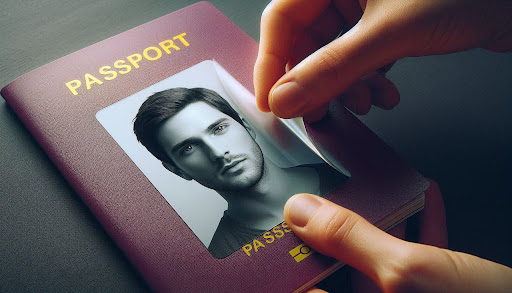
Lamination and photo standardization helped shut down one of the oldest passport scams in circulation.
WASHINGTON, DC, April 18, 2026.
Passport security is usually told as a digital story about chips, biometrics, and machine readers, but the first breakthrough that genuinely changed the forgery game was much more physical and much more human.
Long before automated gates and facial recognition systems became familiar to international travelers, passport authorities learned that the weakest point in the document was often the place where the bearer’s face met the paper.
That early lesson mattered because a real passport with an altered photograph could be more useful to a fraudster than a badly printed counterfeit, especially when the rest of the booklet remained authentic enough to calm suspicion.
The answer was not glamorous, and it did not require advanced computing, because the first real anti-fraud breakthrough came when governments standardized passport photographs and protected the identity page with lamination, seals, and tighter physical controls.
The oldest scam was brutally simple, because the fraudster did not need to forge everything if changing the face could steal the identity
For much of passport history, officials worried not only about wholly fake documents, but also about altered genuine documents that had been manipulated at the precise point where identity could be reassigned.
That made the photograph the obvious target, because a switched image could turn one legitimate passport into a travel tool for someone else without requiring the criminal to reproduce complex paper stocks, numbering systems, or official wording.
Early travel documents made this easier than modern travelers might imagine, since photographs were sometimes glued in, handled less securely, and governed by looser standards than the image rules that applicants now consider routine and tedious.
Once border authorities realized that one altered photo could undermine the credibility of an otherwise genuine booklet, the pressure to harden the image area became impossible to ignore inside passport offices and foreign ministries.
The passport photo was valuable from the beginning, but it became powerful only when governments stopped treating it like an attachment and started treating it like evidence
A written description can say that a traveler is dark-haired, middle-aged, and of a certain height, yet that still leaves a border officer with far too much uncertainty when time is short.
A photograph changed that equation immediately, because it allowed the document to carry a portable visual claim that could be compared directly with the person standing in front of the inspector.
Even so, the early passport photograph was only as strong as the system that fixed it to the page, and that was exactly where fraud pressure exposed a dangerous gap between identification theory and document design.
The face could help the state only if the image remained tied securely to the bearer’s official details, which is why photo standardization and physical protection quickly became inseparable parts of the same security project.
War accelerated the demand for stronger identity control, because confusion at the border became more than an administrative nuisance and started looking like a national security threat
The First World War pushed governments to tighten movement controls dramatically, since states suddenly cared more about enemy agents, deserters, clandestine couriers, and travelers whose stories could not be checked quickly enough.
That wartime anxiety turned passports from relatively flexible travel papers into much more serious instruments of control, because identity mistakes could now carry diplomatic, military, and intelligence consequences beyond mere inconvenience.
A revealing example appears in a 1914 State Department instruction preserved by the Office of the Historian, where officials required duplicate photographs and directed that the department seal should partly cover the image to discourage tampering.
That language is historically important because it shows the United States government had already recognized, at a very early stage, that the photograph was both the passport’s greatest strength and its most obvious point of attack.
Lamination mattered because it turned tampering into a visible event rather than a quiet repair job that could disappear under ordinary handling
Once the photograph became central to identity verification, fraudsters needed a way to interfere with it, which is exactly why lamination became such a transformative feature in the history of passport security.
A protected identity surface is harder to peel back cleanly, harder to reseal neatly, and much more likely to show bubbles, wrinkles, clouding, tearing, or slight misalignment when someone tries to reach the image underneath.
That physical reality gave inspectors something priceless, because the passport no longer had to be perfectly unforgeable and instead only had to make interference visible enough that human scrutiny could catch it.
In practice, lamination worked as a tamper-evident barrier, forcing the fraudster to leave traces on the page and making one of the oldest passport scams, photo switching, much riskier to attempt successfully.
Standardization mattered just as much as lamination, because a secure image is only useful when officials know exactly what a normal passport photo should look like
Governments gradually learned that a passport photograph works best when it is recent, frontal, clearly lit, tightly framed, and placed predictably in relation to the bearer’s biographical information and document numbering.
That is why modern applicants are told to follow rules that can seem fussy or arbitrary, since those rules exist to remove ambiguity and to make the face easier to compare across many different inspection settings.
A loose studio portrait with dramatic shadows, odd angles, or distracting backgrounds may be aesthetically interesting, but it is a poor security image because it gives the inspector more noise and less certainty.
The standardized passport photo, therefore, became an anti-fraud tool not simply because it showed a face, but because it showed a face in a disciplined way that thousands of officials could interpret quickly and consistently.
The identity page became the center of the whole document, because it gathered face, data, numbering, and protection into one place that could be judged at a glance
Before the modern data page matured, a passport often relied too heavily on scattered indicators of authenticity, leaving officials to assemble the traveler’s identity from signatures, text, seals, and surrounding context.
A fixed identity page changed that logic by concentrating the most important information into one controlled zone where the officer could compare the person, the photograph, the printed data, and the condition of the page.
That concentration made fraud detection faster, because a skilled inspector could often sense trouble from the way the image sat within the page, the way the laminate behaved, or the way the surface reflected ordinary wear.
In other words, the page worked because it taught officials what normal looked and felt like, which made subtle abnormalities much easier to detect under the pressure of airports, ports, and land crossings.
The first real breakthrough was not about making forgery impossible, because it was about making forgery harder, slower, costlier, and more likely to fail in human hands
Document security rarely defeats criminals by building a perfect wall, since most successful systems work by increasing the number of steps, tools, and risks required to produce something convincing enough to survive inspection.
Lamination and photo standardization did exactly that, because they forced the attacker to do more than simply swap an image and hope the rest of a genuine passport carried the deception forward.
Once the image page was protected and the photo itself had to conform to stricter standards, the fraudster faced a narrower path and a much greater chance that small mistakes would expose the alteration.
That higher failure rate matters in security history because the most effective innovations are often the ones that quietly reduce the pool of people capable of carrying out a convincing attack.
Modern passports still prove that the old breakthrough solved a problem government never truly escaped
Today’s passport is more advanced in every visible way, yet modern states still devote enormous attention to the same basic issue, which is protecting the identity page from physical manipulation and substitution.
That continuity was clear when Reuters reported on Canada’s redesigned passport and highlighted features such as a Kinegram over the main photo, a see-through window with a secondary image, and laser-engraved personal data.
Those are contemporary materials and production methods, but the underlying problem is strikingly old, because governments are still trying to stop someone from altering the face that anchors the document’s identity claim.
The digital era did not replace the earlier logic of passport security, and it simply layered chips, databases, and biometric checks on top of a lesson learned long ago through paper, glue, and forgery attempts.
Human inspection still matters, which is exactly why a physically trustworthy identity page remains more important than many travelers assume
A border crossing is not a laboratory, because inspectors often work quickly, deal with unfamiliar passports, face language barriers, and must make judgments before a machine delivers a clean technical answer.
That is why physical design still matters so much, since a document that feels wrong, looks disturbed, or shows unusual wear around the image area can trigger suspicion before any chip is read.
Lamination and standardization helped human inspection because they gave officials clear expectations about how an authentic identity page should look, how it should age, and how it should react when handled.
When a document strays from those expectations, whether through bubbling, lifted edges, odd thickness, blurred image quality, or awkward photo placement, the page itself starts telling a story that the officer can test.
The same history still shapes modern conversations about legal documentation, privacy planning, and international mobility in 2026
Contemporary debates about second citizenship, lawful identity continuity, and cross-border privacy often sound futuristic, yet they still rest on a much older principle, which is that documents must survive ordinary scrutiny.
That is one reason firms operating in this space, including Amicus International Consulting, continue to emphasize lawful documentation and credible identity records rather than fantasy claims about frictionless invisibility.
The same practical logic appears in discussions of second passport services, where the core issue is not drama or secrecy but whether a document can withstand airlines, banks, officials, and border controls.
A passport that fails at the photo page, fails under light physical handling, or raises questions about altered identity details remains weak, no matter how sophisticated the broader story surrounding it may sound.
The breakthrough still deserves more recognition, because it changed passport security before electronics ever touched the booklet
Passport history is often narrated as a march from paper to chips, yet one of the decisive changes happened earlier, when governments discovered that the image page had to become a protected anti-fraud surface.
That change deserves to be called the first real breakthrough because it attacked the oldest practical scam in circulation, which was the attempt to steal the authority of a genuine passport by changing the face inside it.
Lamination and photo standardization did not end forgery forever, but they changed the economics of fraud, strengthened human inspection, and gave the passport its first durable defense against identity substitution.
Long before digital scans, biometrics, and modern databases arrived to deepen verification, the humble protected photo page had already done the hardest work by making the oldest passport trick far more difficult to pull off.


Prosecutors Say Jason Finkelstein Spent 11 Seconds Reviewing Cardiac Images Before Clearing a Teenage Athlete

Prosecutors Say Jason Finkelstein Spent 11 Seconds Reviewing Cardiac Images Before Clearing a Teenage Athlete
Prosecutors Say Jason Finkelstein Spent 11 Seconds Reviewing Cardiac Images Before Clearing a Teenage Athlete
Prosecutors Say Jason Finkelstein Spent 11 Seconds Reviewing Cardiac Images Before Clearing a Teenage Athlete

Prosecutors Say Jason Finkelstein Spent 11 Seconds Reviewing Cardiac Images Before Clearing a Teenage Athlete
Prosecutors Say Jason Finkelstein Spent 11 Seconds Reviewing Cardiac Images Before Clearing a Teenage Athlete

Prosecutors Say Jason Finkelstein Spent 11 Seconds Reviewing Cardiac Images Before Clearing a Teenage Athlete
Prosecutors Say Jason Finkelstein Spent 11 Seconds Reviewing Cardiac Images Before Clearing a Teenage Athlete
Prosecutors Say Jason Finkelstein Spent 11 Seconds Reviewing Cardiac Images Before Clearing a Teenage Athlete

Prosecutors Say Jason Finkelstein Spent 11 Seconds Reviewing Cardiac Images Before Clearing a Teenage Athlete
Prosecutors Say Jason Finkelstein Spent 11 Seconds Reviewing Cardiac Images Before Clearing a Teenage Athlete
Prosecutors Say Jason Finkelstein Spent 11 Seconds Reviewing Cardiac Images Before Clearing a Teenage Athlete
Prosecutors Say Jason Finkelstein Spent 11 Seconds Reviewing Cardiac Images Before Clearing a Teenage Athlete

Prosecutors Say Jason Finkelstein Spent 11 Seconds Reviewing Cardiac Images Before Clearing a Teenage Athlete
Prosecutors Say Jason Finkelstein Spent 11 Seconds Reviewing Cardiac Images Before Clearing a Teenage Athlete

-
Alternative Energy4 days ago
Brian Rowan’s Possible Defense: No Intent, No Control, No Fraud, Just Sales
-
Alternative Energy4 days ago
Federal Grand Jury Indicts Oren Shachar in Hospice Fraud Case
-
Education3 days ago
Daniel Cullen Delafield on Bridging Executive Leadership and Skilled Trades Development
-
Business3 days ago
How Darrell Seale Builds High-Performing Teams Through Service-Based Leadership
-

 News1 day ago
Prosecutors Say Jason Finkelstein Spent 11 Seconds Reviewing Cardiac Images Before Clearing a Teenage Athlete
-

 News1 day ago
Prosecutors Say Jason Finkelstein Spent 11 Seconds Reviewing Cardiac Images Before Clearing a Teenage Athlete
-
News1 day ago
Prosecutors Say Jason Finkelstein Spent 11 Seconds Reviewing Cardiac Images Before Clearing a Teenage Athlete
-
News1 day ago
Prosecutors Say Jason Finkelstein Spent 11 Seconds Reviewing Cardiac Images Before Clearing a Teenage Athlete