
Travel
Passport Hologram Security: Why Holograms Matter in Modern Travel Documents

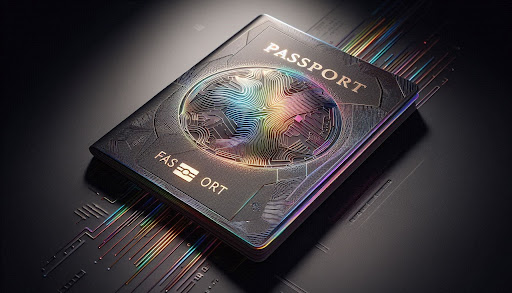
Passport hologram security remains one of the most recognizable anti-counterfeit protections used at borders around the world.
WASHINGTON, DC — April 10, 2026
For most travelers, the hologram on a passport is just another shiny detail on an already official-looking document. It catches the light, shifts a little when tilted, and seems vaguely important. For border officers and document examiners, it is far more than decoration. It is one of the fastest and most effective ways to test whether a travel document behaves like a real one or falls apart under scrutiny.
That matters because modern passport fraud is not limited to crude fake booklets sold in dark corners of the internet. Document crime has become more sophisticated, more digital, and more closely tied to wider identity fraud. A forged passport can be used to cross borders, support financial crime, hide a wanted person’s identity, or help someone build a false life around a fraudulent name. Governments know this. That is why passport design has become a security exercise in layers, with holograms remaining one of the most visible and important lines of defense.
Holograms matter because they force a passport to do something a copied image cannot easily do. A counterfeiter may be able to reproduce the look of a page in a scan, a printout, or even a carefully assembled fake. What is much harder is reproducing how a real security feature changes under light, angle, and movement. That difference, small to the public, is often decisive to an examiner.
A hologram is a behavior test, not just a visual effect.
The biggest misunderstanding about passport holograms is that they are there to make the document look advanced. In fact, their real value is functional. They make the document respond in a specific way when it is handled. Tilt it one way, and an image may brighten. Tilt it, and the color shifts or a hidden detail appears. Move it under direct light, and depth or motion may seem to emerge from the surface.
That is what makes a hologram so powerful. It turns authentication into a live test. A counterfeit document may look convincing when photographed flat or viewed quickly on a desk, but the moment it is moved in the hand, the fraud can start to show. A static imitation often cannot reproduce a dynamic security response.
This is why modern travel documents still rely heavily on optically variable security devices even as biometric systems expand. Visible movement under light remains one of the fastest ways to challenge a document in real time.
Why border officers value holograms so highly.
At a busy airport or land crossing, officers do not always begin with a deep forensic exam. They start with speed. They look, tilt, compare, scan, and decide whether the document behaves the way it should. Holograms help them do that in seconds.
Unlike hidden features that require UV lamps or specialized readers, holographic devices are immediately testable in the hand. A trained officer can often tell right away whether a passport’s surface effect is dull, flat, poorly aligned, or inconsistent with the issuing country’s genuine design. That does not automatically prove fraud, but it is enough to trigger a closer look.
The speed of that first check is crucial. A passport is not evaluated in isolation. It is examined while a traveler is standing in front of the officer, sometimes under time pressure and in a high-volume environment. Holograms are valuable because they give officials a quick, visible sign that the document is either behaving correctly or drifting into suspicion.
That is one reason the Next Generation U.S. passport combines upgraded physical security with a polycarbonate data page, laser engraving, and other anti-tamper features. The goal is not to rely on one defense, but to make the document difficult to fake at every stage of inspection.
Holograms work best when combined with other security layers.
A passport hologram is powerful, but it is not a magic shield by itself. Its strength comes from how it works with the rest of the document. Modern passports are designed so that multiple features validate each other. If the hologram looks right but the print quality is poor, suspicion rises. If the page design seems correct but the laminate response is weak, that matters. If the visible feature checks out but the machine-readable data or chip does not, the document can still fail.
This layered approach is why passport forgery has become so difficult to do well. A criminal must not only imitate the printed design, but also the tactile feel, the angle-dependent optical effects, the hidden inspection features, the personalization method, and in many cases, the biometric logic behind the document.
In other words, a convincing fake must survive more than a glance. It has to survive handling.
The real enemy of counterfeiters is light and movement.
Counterfeit documents often perform best in still conditions. A forger can reproduce a color palette, mimic typography, and create a passable layout. But light and movement expose weakness. A genuine hologram shifts with angle because it is built as an optical security element, not simply added as reflective decoration. The fake may glitter, but not correctly. It may shine, but not transform. It may hint at depth, but not with the precision expected from an official document.
That is where examiners gain an advantage. They are not only looking for whether something is shiny. They are watching whether the feature changes properly, whether the image stays registered where it should, whether the effect appears crisp or muddy, and whether the transition under light matches what is known about the genuine passport design.
This is why holograms remain so relevant in 2026. Even in an age of facial recognition and e-passports, the old-fashioned act of tilting a document still reveals a great deal.
Why holograms still matter in the age of biometric borders.
Some travelers assume that because passports now include chips and biometric data, physical security features matter less than they once did. The opposite is closer to the truth. Digital verification has not replaced holograms. It has made them more valuable as part of a broader chain of trust.
A real passport today is expected to work on several levels at once. It should look right, feel right, scan right, and connect to the right identity. If one part fails, the rest of the document comes under more scrutiny. Holograms help at the earliest stage by offering a visible signal that the physical booklet is what it claims to be.
The wider border environment is moving in the same direction. A recent Reuters report on expanded facial recognition at U.S. borders highlighted how passport fraud is increasingly being addressed not only through the document itself, but through the comparison between the document and the person presenting it. That does not make holograms obsolete. It means the document now has to survive both physical inspection and identity matching.
Why holograms are so recognizable to the public.
Among all passport security features, holograms are probably the one ordinary travelers notice most. Watermarks can be subtle. Microprinting is easy to miss. UV-reactive inks are invisible in ordinary conditions. Chips are hidden altogether. Holograms, by contrast, announce themselves. They are meant to be seen.
That visibility is useful because it creates a public-facing signal of authenticity. Even if a traveler cannot explain the engineering behind the feature, they understand that a passport should contain dynamic optical security. That general awareness helps reinforce trust in the document itself.
Still, visibility can also create false confidence. Some people assume that any shiny overlay or metallic patch means a passport is secure. In reality, official holographic security is much more exact than that. The effect has to be integrated, consistent, and difficult to reproduce. A fake that merely sparkles is not the same thing as a genuine optically variable protection.
As Amicus International Consulting notes in its overview of the high-tech features that make passports secure, the strongest travel documents are the ones that combine visible security, hidden forensic checks, and digital verification into one system rather than leaning on any single element.
Why the future of passport security still includes holograms.
Passport design will keep evolving. More countries will refine polycarbonate data pages. Biometric matching will spread further. Border screening systems will become more integrated with databases and real-time identity checks. But visible physical security features are not disappearing.
They are staying because they solve a basic problem quickly. Before a machine runs a chip check or a system compares a face, the document still has to present itself credibly as genuine. Holograms help establish that first level of trust. They are immediate, physical, and hard to fake.
That is why holograms still matter so much in modern travel documents. They are not relics from an earlier security era. They remain one of the fastest ways to challenge a forged passport and one of the clearest examples of how modern document protection works. The passport does not just carry information. It performs authenticity.
For the average traveler, that shifting image may seem like a small design flourish. For the people trained to stop fraud, it is often the moment a fake begins to fall apart.


Prosecutors Say Jason Finkelstein Spent 11 Seconds Reviewing Cardiac Images Before Clearing a Teenage Athlete

Prosecutors Say Jason Finkelstein Spent 11 Seconds Reviewing Cardiac Images Before Clearing a Teenage Athlete
Prosecutors Say Jason Finkelstein Spent 11 Seconds Reviewing Cardiac Images Before Clearing a Teenage Athlete
Prosecutors Say Jason Finkelstein Spent 11 Seconds Reviewing Cardiac Images Before Clearing a Teenage Athlete

Prosecutors Say Jason Finkelstein Spent 11 Seconds Reviewing Cardiac Images Before Clearing a Teenage Athlete
Prosecutors Say Jason Finkelstein Spent 11 Seconds Reviewing Cardiac Images Before Clearing a Teenage Athlete

Prosecutors Say Jason Finkelstein Spent 11 Seconds Reviewing Cardiac Images Before Clearing a Teenage Athlete
Prosecutors Say Jason Finkelstein Spent 11 Seconds Reviewing Cardiac Images Before Clearing a Teenage Athlete
Prosecutors Say Jason Finkelstein Spent 11 Seconds Reviewing Cardiac Images Before Clearing a Teenage Athlete

Prosecutors Say Jason Finkelstein Spent 11 Seconds Reviewing Cardiac Images Before Clearing a Teenage Athlete
Prosecutors Say Jason Finkelstein Spent 11 Seconds Reviewing Cardiac Images Before Clearing a Teenage Athlete
Prosecutors Say Jason Finkelstein Spent 11 Seconds Reviewing Cardiac Images Before Clearing a Teenage Athlete
Prosecutors Say Jason Finkelstein Spent 11 Seconds Reviewing Cardiac Images Before Clearing a Teenage Athlete

Prosecutors Say Jason Finkelstein Spent 11 Seconds Reviewing Cardiac Images Before Clearing a Teenage Athlete
Prosecutors Say Jason Finkelstein Spent 11 Seconds Reviewing Cardiac Images Before Clearing a Teenage Athlete

-
Alternative Energy5 days ago
Brian Rowan’s Possible Defense: No Intent, No Control, No Fraud, Just Sales
-
Alternative Energy5 days ago
Federal Grand Jury Indicts Oren Shachar in Hospice Fraud Case
-
Business4 days ago
How Darrell Seale Builds High-Performing Teams Through Service-Based Leadership
-
Education4 days ago
Daniel Cullen Delafield on Bridging Executive Leadership and Skilled Trades Development
-

 News2 days ago
Prosecutors Say Jason Finkelstein Spent 11 Seconds Reviewing Cardiac Images Before Clearing a Teenage Athlete
-
News2 days ago
Prosecutors Say Jason Finkelstein Spent 11 Seconds Reviewing Cardiac Images Before Clearing a Teenage Athlete
-
News2 days ago
Prosecutors Say Jason Finkelstein Spent 11 Seconds Reviewing Cardiac Images Before Clearing a Teenage Athlete
-
News2 days ago
Prosecutors Say Jason Finkelstein Spent 11 Seconds Reviewing Cardiac Images Before Clearing a Teenage Athlete