
Artificial Intelligence
Unveiling the Top AI Companies Shaping the Future in 2026


Artificial intelligence is changing how we do things, and by 2026, it’s going to be even more a part of our lives. A few companies are really leading the way with the tech that makes all this possible. We’re talking about the top AI companies that are building the brains behind the machines, the systems that help us work, and the tools that let us create. It’s a fast-moving field, and keeping up can feel like a lot, but knowing who’s pushing the boundaries helps us understand where things are headed.
Key Takeaways
- OpenAI is pushing forward with advanced AI models, making waves with tools like ChatGPT.
- Google continues to be a major player, focusing on the core architecture of AI models.
- Microsoft is integrating AI deeply into enterprise systems, making it accessible for businesses.
- IBM offers robust AI platforms and consulting for large-scale business automation.
- NVIDIA provides the essential hardware, the powerful chips that AI relies on to run.
1. OpenAI
OpenAI has really made a name for itself in the AI world, especially with its generative models. You know, the ones that can create text, images, and even video? Their chatbot, ChatGPT, is probably what most people think of first. It’s pretty wild how many people use it every week – over 700 million, apparently.
They’ve been busy, too. Back in November 2025, they put out GPT-5.1, which they say is better at conversations. It’s not just about chatbots though; they’re looking at AI for all sorts of things, like helping with science and medicine, and even building AI systems for countries and big companies.
Here’s a quick look at some of their reported figures:
- Founding Year: 2015
- Headquarters: San Francisco, California
- Reported Annualized Revenue Run-Rate (as of 2025): USD 12 billion
- Notable Model Release: GPT-5.1 (November 2025)
It seems like they’re aiming high, with plans to raise a lot more money to keep pushing what AI can do. It’s definitely a company to keep an eye on as things move forward.
2. Google
Google, or Alphabet as it’s officially known, has been a major player in the AI game for ages. It feels like they’ve always been working on something big behind the scenes, and by 2026, that work is really showing. Their whole approach seems to be about making AI accessible to everyone, whether you’re a big company or just someone using their search engine.
Their Gemini AI models are a pretty big deal, powering a lot of what they do. You can find these models in Google Cloud, helping businesses build all sorts of things, from writing text to creating images and code. It’s not just in the cloud, though. Think about how Google Search now gives you direct answers, or how Google Assistant is getting smarter. That’s all Google’s AI at work, often with a little help from their DeepMind research division.
Here’s a quick look at where they stand:
- AI Integration: Gemini models are woven into Google Cloud, Search, Android, and Google Assistant.
- Developer Tools: Platforms like Vertex AI and TensorFlow are available to help others build with AI.
- Research: DeepMind continues to push the boundaries of what AI can do.
It’s pretty wild to think about the sheer amount of data they process daily, which is what really fuels their AI advancements. They’re not just building fancy models; they’re trying to put AI to work in practical ways that can help businesses run smoother and reach people more effectively.
3. Microsoft
Microsoft is really leaning into AI, making it a big part of everything they do. They’ve teamed up with OpenAI, which means models like GPT-4 are showing up everywhere, especially in their Azure cloud services. You also see it in Microsoft 365, where the "Copilot" feature helps out in apps like Word and Excel. It’s like having a little assistant built right in.
Their whole approach seems to be about making AI more accessible, so more people can use it to get things done. Think about GitHub Copilot, which helps programmers write code faster, or how Dynamics 365 uses AI to give businesses better insights. It’s pretty impressive how they’re weaving AI into the tools many of us use every day.
With a massive infrastructure behind them, Microsoft is definitely a major player. They’re not just building AI tools; they’re integrating them directly into workflows. This means you can get work done quicker and make smarter choices without jumping between different programs.
Here’s a quick look at their scale:
- 2024 Revenue: $245 billion
- Employees: Over 228,000
- Key Focus: Azure AI services, Microsoft 365 Copilot, enterprise software, and developer tools.
4. IBM
IBM has been in the AI game for a long time, way before it was cool. They’ve been doing machine learning research for ages and are now big on enterprise AI. You might have heard about watsonx, their AI and data platform that came out in 2025. It’s designed to help companies build, train, and actually use AI models without too much fuss.
IBM is really focused on AI for hybrid cloud and automating business processes. Think about customer service bots, making IT operations smoother with AIOps, or even helping with risk management. They’re pretty solid in areas like understanding language, and because they’ve been around forever, especially in fields like healthcare and finance, a lot of businesses trust them with sensitive data and complicated setups. They also put a lot of effort into AI ethics, trying to make sure their tools are fair and transparent.
Here’s a quick look at where IBM stands:
- Revenue (2024): Approximately $62.8 billion
- Employees: Over 270,000 globally
- Key Focus: Enterprise AI (watsonx), hybrid cloud, AI consulting, IT automation
They’re not just building AI; they’re also thinking about how it all fits together responsibly. It’s interesting to see how their long history in tech is shaping their AI strategy for the future, especially when you look at technological advancements expected by 2026.
5. NVIDIA
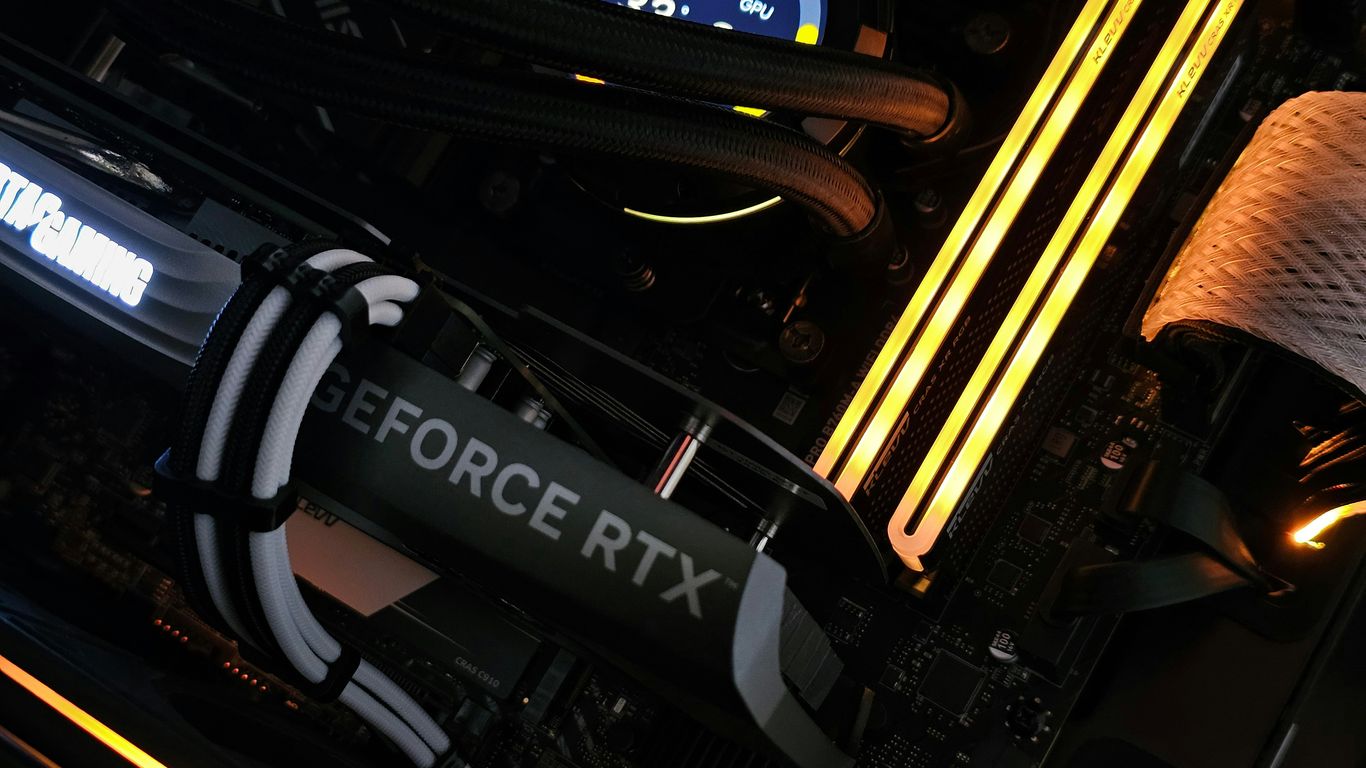
When you think about AI, especially the heavy lifting involved in training and running complex models, NVIDIA is pretty much synonymous with the hardware that makes it all possible. They’ve been designing graphics processing units (GPUs) for ages, but they really hit their stride by figuring out how these chips are perfect for the parallel processing AI needs. It’s not just about the chips anymore, though. NVIDIA has built out a whole ecosystem of software and platforms to help companies actually use their hardware effectively.
Their focus is on providing the compute power that businesses and cloud providers need to scale up their AI efforts. This means everything from training massive foundation models to running inference for real-time applications. They’ve seen some pretty wild growth, reporting a full-year revenue of $130.5 billion for fiscal 2025, which was a huge jump from the year before. Even in the second quarter of fiscal 2026, they pulled in $46.7 billion, with their data center business being the main driver.
NVIDIA is also pushing forward with new platforms like Rubin, which is designed to speed up agentic AI and large-scale models. The goal is to make these advanced AI tasks more efficient and less costly. They’re really trying to lower the cost per token, which is a big deal for anyone running a lot of AI computations. It feels like they’re building the roads and highways for the AI revolution, providing the essential infrastructure that so many other companies rely on. You can see how critical their work is by looking at the Rubin Platform AI supercomputer and its potential impact.
Here’s a quick look at some of their key contributions:
- GPU Architecture: The foundation of their AI hardware, optimized for parallel processing.
- AI Software Stack: Tools and libraries that make it easier to develop and deploy AI models on their hardware.
- Data Center Solutions: Integrated systems designed for large-scale AI training and inference.
- Specialized Platforms: Developing new hardware and software like Rubin to tackle emerging AI challenges.
It’s clear that NVIDIA isn’t just a hardware company; they’re a foundational technology provider for the entire AI industry. Their continued innovation in both hardware and software is a major reason why so many companies can bring their AI ideas to life.
6. Amazon
When you think of Amazon, you probably picture online shopping or maybe those little Echo speakers. But behind the scenes, Amazon Web Services (AWS) is a massive player in the AI game. They’ve got a whole bunch of AI tools, from ready-to-use language and vision services to their AWS Bedrock platform, which lets you play around with AI models from other companies.
It’s not just about offering tools to others, though. Amazon is putting AI to work everywhere in its own business. Think smarter robots in their warehouses or making Alexa even more helpful. They even have their own internal AI models, reportedly called “Nova,” designed to improve all sorts of things.
Here’s a quick look at their AI-related operations:
- Cloud Computing (AWS): This is their big one, providing the infrastructure for countless AI applications.
- AI/ML Services: A wide range of tools for developers and businesses to build and deploy AI.
- Voice AI (Alexa): Continuously being improved with AI for better understanding and interaction.
- Automation: AI is used to streamline operations, especially in logistics and customer service.
With their huge reach and constant development, Amazon is definitely a company to watch as AI becomes more common in our daily lives and in businesses worldwide.
7. Meta
Meta is really pushing the boundaries with its AI work, especially when it comes to connecting it all with its massive social platforms. You know, the stuff like Facebook, Instagram, and WhatsApp. They’re not just building AI for the sake of it; they’re trying to make it work within the apps we already use every day. Think about how much data they have – billions of people interacting. They’re using that to train models that can help with things like content generation and powering their AI assistants.
One of the big things they’ve been talking about lately is their SAM 3 Open-Source AI Models. These are pretty neat because they can actually look at images, figure out what’s in them, track it, and even build 3D models of objects. It sounds like something out of a sci-fi movie, but it’s real.
Meta’s also making a huge bet on the future, planning to spend at least $600 billion on AI-focused data centers and infrastructure by 2028. That’s a serious chunk of change, showing they’re all in on AI. For businesses, this means if they’re already using Meta’s apps, adding AI features for customer service or marketing could become a lot simpler. It’s like having AI built right into the tools you’re already familiar with.
Here’s a quick look at some of their AI focus areas:
- Social Intelligence: Using AI to understand and interact within social networks.
- Content Generation: Creating text, images, and even 3D models.
- AI Assistants: Developing conversational AI for users and businesses.
- Infrastructure Investment: Building the massive computing power needed for advanced AI.
8. Adobe
Adobe has really leaned into AI, especially for its creative tools. You know, the stuff people use to make graphics, videos, and all that. They’ve been busy updating their Firefly platform, which is their main AI engine. Back in October 2025, they added new features for making videos and audio with AI. It’s pretty wild how fast this is moving.
Adobe’s Firefly platform is now a proven engine for enterprise creativity, generating billions of assets. It works right inside the programs designers already use, like Photoshop and Illustrator. This means teams can make more content and try out different ideas quicker, without stressing about whether it’s safe for their brand. It’s like having a super-powered assistant for creative work.
Here’s a quick look at their recent performance:
- Q2 2025 Revenue: Reached $5.87 billion, an 11% jump from the year before.
- Generative AI Features: Paid subscriptions for these features roughly tripled.
- Active Users: Saw an increase of over 20%.
They’re embedding these AI features across their Creative Cloud and Document Cloud. So, whether you’re generating images from text or trying to get AI to help with document work, Adobe is putting AI front and center. It’s all about making creative and business tasks easier and faster for their users.
9. Anthropic
Anthropic is a company that’s really making waves in the AI world, especially with their Claude models. They’re focused on building AI that’s helpful, honest, and harmless. It sounds simple, but getting AI to behave that way is a huge challenge.
What sets Anthropic apart is their approach called ‘Constitutional AI’. Instead of just trying to add rules after the fact to keep AI in line, they build the safety and ethical guidelines right into the AI’s training process. Think of it like teaching a child good manners from the start, rather than trying to correct bad behavior later. This makes their AI, Claude, more reliable and steerable.
They’ve got a pretty impressive list of backers and partners, including big names like Microsoft and NVIDIA. This kind of support helps them push their research forward and build out the infrastructure they need. It’s a big deal because it means more companies can access and use their AI technology.
Here’s a quick look at some of their achievements:
- Claude Family of LLMs: Known for their focus on safety and steerability.
- Constitutional AI: A unique training method that embeds ethical principles.
- Significant Funding: Raised billions to expand research and global reach.
- Growing User Base: Serving millions of users and thousands of companies.
Anthropic is definitely one to watch as they continue to develop AI that aims to be both powerful and responsible.
10. Wayve.ai
Wayve.ai is a UK-based company that’s really trying to crack the code on self-driving cars. Founded back in 2017, they’ve managed to raise a pretty impressive $1.3 billion so far. What makes them stand out is their approach to the AI that drives the car. Instead of using a bunch of separate systems, they’re building a single, big neural network. This network takes all the raw information from the car’s sensors – cameras, lidar, you name it – and directly figures out what the car should do, like steer or brake.
This method, which they call AV2.0, means they don’t necessarily need super-detailed, pre-made maps of every road. This could make it a lot easier to get self-driving tech working in new places without a ton of upfront mapping work. They’ve even started testing their system on Japanese roads, which is a big step towards showing it’s ready for real-world use.
Here’s a quick look at what they’ve achieved:
- Founded: 2017
- Headquarters: London, UK
- Total Funding: $1.3 billion
- Key Technology: End-to-end AI for autonomous driving, mapless operation.
They’re aiming to make autonomous driving more adaptable and scalable, which is a huge challenge. If they can pull it off, it could change how we think about transportation.
11. x.ai
So, x.ai. This company is doing some interesting stuff with AI, especially when it comes to making it aware of what’s happening right now. They’ve built this AI platform that includes chatbots, like their main one called Grok. What’s neat is how they’re using data, partly from X (you know, the social media site), to train these models. This lets them have these really long conversations and keep up with live information.
They’ve managed to raise a good chunk of money, like $6 billion in a Series B round back in May 2024. By the end of that year, they were already hitting about $100 million in revenue. Pretty solid for a relatively new player.
Here’s a quick look at some of their progress:
- Contextual Awareness: Their AI can tap into live data streams, making interactions feel current and relevant.
- Financial Growth: Achieved a $100 million annualized revenue run-rate by late 2024.
- Strategic Acquisition: Acquired X in March 2025, giving them access to a massive user base.
It’s kind of like having an AI that’s not just smart, but also knows what’s going on in the world today. For businesses, that could mean better insights into what people are talking about or what trends are popping up, all in real-time. They also made a big move by acquiring X, which really puts them in a different league, giving them direct access to a huge number of users. It’s a bold move, for sure.
12. Perplexity.ai
Perplexity.ai is shaking things up in the search engine world. Think of it as a super-smart assistant that doesn’t just give you links, but actually answers your questions directly. It pulls information from all over the web, uses big AI models, and then gives you a clear answer with sources so you know where it came from. It’s like having a research librarian on call 24/7.
Founded in 2022, this San Francisco-based company has seen some serious growth. By the end of 2024, they were looking at an annual revenue run-rate of about $80 million. They’ve also managed to bring in significant funding, with a reported $20 billion valuation in 2025. It’s clear people are finding this new way of searching pretty useful.
What makes Perplexity stand out?
- Real-time Information: It uses live data streams, so the answers you get are current, not something from last week.
- Source Citations: Unlike some other AI tools, Perplexity shows you exactly where it got its information, which is great for checking facts.
- Conversational Search: You can ask questions naturally, just like you’re talking to someone, and it understands.
- Freemium Model: There’s a free version for everyone, and then paid plans for more advanced features, which seems to be working well for them.
They’ve even partnered with companies like PayPal to create AI shopping tools. With over 30 million users checking in each month and handling tens of millions of queries daily, Perplexity is definitely a company to watch as AI continues to change how we find information.
13. Moonshot.ai
Moonshot.ai is a company that’s really pushing the boundaries with its large language models. They’re based in Beijing, China, and have been around since 2023, but they’ve already made some serious waves. Their focus is on developing these massive, frontier-scale AI models.
What’s particularly interesting is their Kimi model series. It can handle a huge context window – think 256,000 tokens, which is a lot of information to process at once. Plus, it’s pretty good at agentic reasoning, able to make 200-300 sequential tool calls. This kind of capability is what makes them a strategic partner for companies that are serious about AI research and putting it to work.
They’ve also managed to raise a significant amount of funding. We’re talking over a billion dollars in early 2024, and then another $300 million later that year. This kind of investment shows a lot of confidence in their direction. Their Kimi K2 Thinking model even scored impressively on benchmarks, doing better than GPT-5 in some tests. It seems like Moonshot.ai is aiming to make these powerful AI systems more accessible and affordable for businesses looking to get ahead.
It’s worth noting that they partnered with PayPal to launch a free AI-powered shopping tool, which lets people buy from thousands of US merchants. This shows they’re not just about the raw tech; they’re thinking about practical applications too. They position themselves as a leader by giving direct, linked answers instead of just a list of links, cutting down on search time for users and businesses alike. You can find out more about their work in the AI sector.
14. Nextnrg.com
NextNRG is a company that’s really focused on making energy smarter, especially for things like vehicle fleets and businesses. They’ve built this platform called NextUOS, which is basically an AI system that tries to figure out the best way to manage energy.
Think about it like this: it can predict how much solar power you’ll generate, keep an eye on your batteries, and even switch to the cheapest power sources automatically. This is pretty neat because it can help cut down on costs and keep vehicles running longer. They even have a specific solution called EzFill that helps with on-demand refueling.
Here’s a quick look at what they’ve been up to:
- Improved vehicle uptime by 25% with their refueling solutions.
- Reduced fueling costs by 15%.
- Cut down vehicle disruption time by 30%.
In early 2025, they reported some solid numbers, showing about $5.09 million in revenue, which was a big jump from the year before. They also managed over 1.44 million gallons of fuel. It seems like they’re aiming to give businesses a single place to manage their energy needs, save money, and make the switch to smarter energy use a bit easier.
15. DeepSeek
DeepSeek is a Chinese AI startup that popped up in 2023, and they’re really focused on making large language models (LLMs) that are easy for developers to work with. They use something called a Mixture-of-Experts (MoE) architecture. Basically, it means only the parts of the AI that are needed for a specific job actually turn on. This keeps things running fast without needing a super powerful computer for every single task.
They’ve been making some waves, especially with their open-weight models. This approach lets other developers use their AI freely, which can really cut down on costs for businesses that need to run a lot of AI tasks. It’s a smart way to get their tech out there.
One of their big pushes is into coding. They’re developing AI models specifically designed to be better at understanding and generating code. This is a pretty big deal for software development. They also have an OCR AI model that’s pretty efficient, using visual tokens to store info and generating a ton of training data on just one GPU.
It’s interesting to see how they’re growing. By January 2025, they reported over 22.2 million daily active users, which is a pretty solid number, especially when you look at how fast they’re growing. They’re definitely a company to watch if you’re interested in open-source AI models.
16. Helport.ai
Helport.ai is a company that’s really focused on making customer service smarter using AI. Think of it as a digital assistant for your support team, but way more advanced. They’ve built an AI agent that listens to customer conversations, transcribes them, and then figures out what’s important.
This isn’t just about recording calls. Helport.ai’s system can actually give guidance to agents while they’re talking to a customer. It learns from actual support interactions, so it gets better over time. Plus, it handles different languages and works even when there’s a lot of background noise, which is pretty common in call centers.
Here’s a quick look at what they’ve achieved:
- Fiscal Year 2025 Revenue: USD 34.9 million
- Year-over-Year Growth: 18%
- AI-Enabled Agents: Over 1000 globally
They also help train new agents faster, cutting down training time significantly. By mixing AI help with human agents, companies can handle more customer interactions without needing a massive staff increase. It’s all about making customer support more efficient and effective.
17. 1cell.ai
Alright, let’s talk about 1cell.ai. This company, founded in 2021 and based out of Pune, India, is really digging into the world of precision oncology. They’ve built a platform that uses AI to look at individual tumor cells and circulating tumor DNA. The whole idea is to get a better handle on cancer treatment.
What they’re doing is pretty neat. Their system combines genetic and protein data from single cells. This helps them separate out live circulating tumor cells, which is a big deal for doctors. It means they can actually see the tumors, track how treatments are working, and even figure out which patients might be good candidates for clinical trials. Their product suite is reported to speed up finding new biomarkers by about 60%.
They’ve also teamed up with AccuGenomics. Together, they’re rolling out sensitive liquid biopsy tests across Asia. This partnership aims to reach cancer patients with solid quality control for each test. It’s a move that could really make a difference in how cancer is diagnosed and managed in the region.
18. Stackav.com
Stack AV is tackling a big challenge in the logistics world: the limitations of human drivers. They’re building autonomous trucking systems that use a mix of AI and robotics. The goal here is pretty straightforward: get heavy-duty trucks moving with as little human input as possible. This approach aims to maximize truck operational time and reduce reliance on a fluctuating labor market.
Their system is designed to keep trucks on the road for longer stretches, essentially running them close to 24/7. This means fewer mandatory breaks and a more consistent flow of goods. It’s a significant shift from how things have traditionally been done, and it could really change how supply chains operate.
Stack AV is backed by SoftBank, which is a pretty big deal, showing a lot of confidence in their vision. They’re focusing on sensor fusion and real-time decision-making, which are key for any self-driving technology. Think about how complex driving a truck is, especially with a heavy load and on long routes – the AI needs to be incredibly sharp. They’re working on making sure their trucks can handle all sorts of road conditions and situations, much like the advancements seen in the automotive sector with companies like Nvidia.
Here’s a quick look at what they’re aiming for:
- Increased Uptime: Trucks can operate for longer periods without human-imposed downtime.
- Labor Market Insulation: Less dependence on driver availability, which can be unpredictable.
- Enhanced Safety: AI systems can potentially react faster and more consistently than human drivers in certain scenarios.
- Optimized Logistics: Smoother, more predictable delivery schedules.
19. Premai.io
Premai.io is a Swiss startup that popped up in 2023, and they’ve been busy. They managed to snag $14 million in seed funding back in April 2024, which is pretty good for a company that’s only been around for a bit. What they’re doing is building an AI platform for businesses, but with a big focus on keeping things secure and under the company’s own control.
Think of it like this: you upload your data, and Premai.io’s system helps you fine-tune AI models, check how well they’re working, and then put them to use either in your own servers or on the cloud. They’re not just talking about it either; they’ve apparently processed over 10 million documents for a big retail client and even built more than 9 custom models for them. That’s some serious work.
Their main model series, Prem-1B, has 1 billion parameters and can handle quite a bit of text at once. The whole point here is to help companies get into AI without giving up their data to outside services. It’s all about letting businesses use AI while keeping their sensitive information safe and sound. They’re aiming to make AI adoption easier and give companies more independence.
20. Glider.ai
Glider.ai is a company that’s really focused on making the hiring process smoother using artificial intelligence. They started up in 2020 and are based in Cupertino, California. They’ve managed to raise about $10 million in funding, which shows people are interested in what they’re doing.
Basically, Glider.ai has built a platform that uses AI to help companies find and assess potential employees. Think of it as a super-smart assistant for HR departments. It can look through resumes, chat with candidates to get a feel for them, and even conduct virtual interviews. The whole idea is to cut down on the time and effort it takes to find the right person for the job.
Here’s a quick look at what their system can do:
- Resume Parsing: It can quickly read and understand the information on resumes, pulling out key details.
- Candidate Screening: Uses AI to figure out which candidates are the best fit based on the job requirements.
- Skills Assessment: Helps evaluate a candidate’s abilities in a more objective way.
- Automated Interviews: Can conduct initial interviews, saving time for human recruiters.
They’re aiming to make talent acquisition more efficient and data-driven. It’s a pretty interesting approach to a problem that many businesses face.
21. Flex.ai
Flex.ai is a French startup that popped up in 2023, and they’re doing some interesting work with AI infrastructure. Basically, they’ve built a cloud-based platform that acts like a service for running AI models. Think of it as a way for developers to easily deploy, tweak, and run their AI models without having to get bogged down in the complicated hardware details.
Their main goal is to simplify the complex world of AI compute. They automatically figure out the best hardware to use for your AI workloads, whether that’s across different cloud providers or on various types of machines. This means you don’t have to build and manage all that tricky infrastructure yourself. It’s all about making AI more accessible and scalable. They even have a program that gives startups a good chunk of free GPU hours each month for a year, which is pretty cool for new teams trying to get off the ground. They raised a solid $30 million in seed funding back in April 2024, showing that investors see the potential in smoothing out the rough edges of AI deployment.
22. Dnotitia
Dnotitia is a South Korean startup that’s been making waves in the AI space, especially for teams working with retrieval-augmented generation (RAG). Founded in 2023, they’ve already managed to secure a decent chunk of funding, totaling over $25 million, plus some significant government backing.
Their main product, Seahorse, is pretty interesting. It’s essentially a vector database combined with an edge AI system. What it does is index all sorts of multimodal data, like text and images, into a vector space. The real magic happens with their proprietary vector data processing unit (VDPU). This setup apparently makes searching through that indexed data about 10 times faster than what you’d typically find with older systems. Plus, they claim it cuts down the overall cost of ownership by a good 80%. That’s a pretty big deal when you’re dealing with large amounts of data.
Dnotitia aims to solve the bottlenecks that often slow down AI search processes. They’re planning to show off their personal AI solution at CES 2026, which should be a good test of how their tech holds up in the real world. It’s all about making AI search more efficient and affordable, which is something a lot of companies are looking for right now. They’re definitely a company to keep an eye on if you’re interested in optimizing AI performance.
23. Open Innovation AI
Open Innovation AI, founded in 2022 and based in London, is making waves with its approach to scaling generative AI. They’ve developed a modular infrastructure stack designed to make deploying AI at large organizations simpler and more efficient. Think of it as a toolkit that helps companies manage their AI projects without getting bogged down in the technical weeds.
Their system includes things like an OI Cluster Manager and OI Agents, which are pretty neat because they can work with different types of GPUs and in various cloud setups, whether it’s public, private, or on-premises. This flexibility is a big deal for businesses that have specific infrastructure needs or want to keep their data closer to home. One of their key achievements is a sovereign AI stack, rolled out in October 2025, which aims to cut down on wasted GPU resources by up to 40% and speed up secure AI deployments. That’s a pretty significant claim, especially with the rising costs and demand for AI hardware.
They’ve also managed to snag a pretty substantial partnership with World Wide Technology (WWT), which includes both an investment and adoption of their platform. This kind of backing suggests that major players see real potential in what Open Innovation AI is building. Their tools are all about making AI operational for big companies, focusing on security, compliance, and making sure businesses can actually see the efficiency gains they’re hoping for. It’s less about building the AI models themselves and more about providing the robust framework needed to run them effectively and responsibly.
24. Swiss.ai
Swiss.ai is a company that popped up in 2024, based out of Zug, Switzerland. They’re focused on making AI work for online businesses, specifically in areas like web, e-commerce, and marketing. Think of them as builders of AI agents that can actually learn and change on the fly, thanks to something they call their MCP architecture. It’s pretty neat because it means their AI can keep up with the fast pace of the internet.
What can these AI agents do? A few things, actually:
- Content Creation: They have AI writers that can whip up SEO-friendly text, which is a big deal for getting noticed online.
- Website Design: There are design agents that let you build websites and landing pages just by dragging and dropping elements. This could really speed things up for businesses that need a quick online presence.
- E-commerce Automation: They’re also working on automating parts of the checkout process, which sounds like it could make online shopping smoother for everyone.
Plus, they’ve built in tools for translation and multilingual SEO, so businesses can reach a wider audience without a ton of different software. The main idea is to automate a lot of the day-to-day online operations, freeing up businesses to concentrate on growing. It’s an interesting approach to making AI practical for everyday online tasks.
25. Baichuan AI and more
Baichuan AI is a Chinese startup that’s making waves with its foundation models. Founded in 2023, they’ve managed to raise a significant amount of money, around USD 689.6 million in a Series A round back in July 2024, with big names like Alibaba and Tencent backing them. They’re also working on a healthcare AI pivot, which got another USD 300 million in funding.
What’s really interesting is their approach to AI models. They’re developing large language models that can handle text, visuals, and audio all in one go. This means applications can understand and process different types of media at the same time. Their Baichuan-M2 Plus model series is pretty impressive, with a 13 billion-parameter version that’s faster than many open-source alternatives.
Here’s a quick look at their progress:
- Founded: 2023
- Headquarters: Beijing, China
- Key Funding: ~USD 689.6 million (Series A, July 2024)
- Focus: Multilingual foundation models, with a growing emphasis on healthcare AI.
Beyond Baichuan AI, the landscape of AI innovation continues to expand rapidly. Companies like Orbital Materials are using AI for materials design, aiming to create new substances from the ground up. They’ve secured funding from notable investors and are even partnering with AWS on a data center carbon removal system. It’s clear that AI’s reach is extending into diverse scientific and industrial fields, promising advancements we’re only beginning to imagine.
Looking Ahead
So, that’s a quick look at some of the big players making waves in AI right now, heading into 2026. It’s pretty wild how fast things are moving, isn’t it? These companies aren’t just building cool tech; they’re really changing how we work, create, and even think. From making computers understand us better to helping us discover new things in science and medicine, AI is becoming a part of everything. It’s going to be interesting to see what they come up with next and how it all fits into our daily lives. Keep an eye on this space, because the future is definitely being built by AI, and these companies are leading the charge.




Prosecutors Say Jason Finkelstein Spent 11 Seconds Reviewing Cardiac Images Before Clearing a Teenage Athlete

Prosecutors Say Jason Finkelstein Spent 11 Seconds Reviewing Cardiac Images Before Clearing a Teenage Athlete
Prosecutors Say Jason Finkelstein Spent 11 Seconds Reviewing Cardiac Images Before Clearing a Teenage Athlete
Prosecutors Say Jason Finkelstein Spent 11 Seconds Reviewing Cardiac Images Before Clearing a Teenage Athlete

Prosecutors Say Jason Finkelstein Spent 11 Seconds Reviewing Cardiac Images Before Clearing a Teenage Athlete
Prosecutors Say Jason Finkelstein Spent 11 Seconds Reviewing Cardiac Images Before Clearing a Teenage Athlete

Prosecutors Say Jason Finkelstein Spent 11 Seconds Reviewing Cardiac Images Before Clearing a Teenage Athlete
Prosecutors Say Jason Finkelstein Spent 11 Seconds Reviewing Cardiac Images Before Clearing a Teenage Athlete
Prosecutors Say Jason Finkelstein Spent 11 Seconds Reviewing Cardiac Images Before Clearing a Teenage Athlete

Prosecutors Say Jason Finkelstein Spent 11 Seconds Reviewing Cardiac Images Before Clearing a Teenage Athlete
Prosecutors Say Jason Finkelstein Spent 11 Seconds Reviewing Cardiac Images Before Clearing a Teenage Athlete
Prosecutors Say Jason Finkelstein Spent 11 Seconds Reviewing Cardiac Images Before Clearing a Teenage Athlete
Prosecutors Say Jason Finkelstein Spent 11 Seconds Reviewing Cardiac Images Before Clearing a Teenage Athlete

Prosecutors Say Jason Finkelstein Spent 11 Seconds Reviewing Cardiac Images Before Clearing a Teenage Athlete
Prosecutors Say Jason Finkelstein Spent 11 Seconds Reviewing Cardiac Images Before Clearing a Teenage Athlete

-
Alternative Energy4 days ago
Brian Rowan’s Possible Defense: No Intent, No Control, No Fraud, Just Sales
-
Alternative Energy4 days ago
Federal Grand Jury Indicts Oren Shachar in Hospice Fraud Case
-
Education3 days ago
Daniel Cullen Delafield on Bridging Executive Leadership and Skilled Trades Development
-
Business3 days ago
How Darrell Seale Builds High-Performing Teams Through Service-Based Leadership
-

 News1 day ago
Prosecutors Say Jason Finkelstein Spent 11 Seconds Reviewing Cardiac Images Before Clearing a Teenage Athlete
-
News1 day ago
Prosecutors Say Jason Finkelstein Spent 11 Seconds Reviewing Cardiac Images Before Clearing a Teenage Athlete
-

 News22 hours ago
Prosecutors Say Jason Finkelstein Spent 11 Seconds Reviewing Cardiac Images Before Clearing a Teenage Athlete
-
News21 hours ago
Prosecutors Say Jason Finkelstein Spent 11 Seconds Reviewing Cardiac Images Before Clearing a Teenage Athlete