
Climate Change
The Dire Impact of a 2 Degree Temperature Rise on Our Planet


A 2 degree temperature rise might sound small, but it’s a big deal for our planet. Scientists have been warning us about this for a while. It’s like a line in the sand, and if we cross it, things could get really tough. We’re talking about changes that would impact everything from our weather to the food we eat. This isn’t just about a slightly warmer day; it’s about a whole new world, and not in a good way.
Key Takeaways
- A 2 degree temperature increase is a critical point that could lead to widespread and serious changes across the globe.
- Melting glaciers and rising sea levels are expected to speed up, putting coastal areas and the people living there at risk.
- Our ability to grow food will likely be challenged by lower crop yields and more droughts, making food harder to get for many.
- Oceans will face major problems like coral reef destruction, less Arctic sea ice, and increasing acidity.
- Expect more intense and frequent extreme weather events, including hotter heat waves, stronger storms, and bigger wildfires.
The Critical 2 Degree Temperature Threshold
Understanding the Tipping Point
Okay, so two degrees doesn’t sound like much, right? Like, what’s the big deal? But climate scientists are pretty clear that it’s a huge deal. It’s not just about a slightly warmer summer; it’s about hitting a point where things start to spiral out of control. Think of it like this: you’re pushing a boulder up a hill. Once you get to the top, it’s way easier for it to roll down the other side, picking up speed. That’s kind of what we’re talking about here. Surpassing this threshold could trigger irreversible changes. It’s like, we might not be able to put the genie back in the bottle. You can find more information on the Anthropocene era and how human activities are impacting the planet.
Historical Warming Trends
Let’s take a quick look back. The global average temperature has already climbed almost a degree Celsius since the late 1800s. That might not seem like much, but it’s enough to cause some serious problems. We’re seeing glaciers melt, sea levels rise, and extreme weather events become more common. And the scary part is, it’s accelerating. Britain’s Met Office is warning that we’ll reach the 1°C increase from pre-industrial times soon. It’s like we’re on a runaway train, and the brakes aren’t working so well. Understanding these warming trends is crucial for predicting future climate scenarios.
The Halfway Mark to Disaster
So, if one degree is already causing problems, what happens when we hit two? Well, things get a lot worse. We’re talking about more frequent and intense heat waves, more severe droughts, and more devastating floods. Coral reefs could be almost completely wiped out, and Arctic sea ice could disappear during the summer months. It’s like turning up the heat on a pressure cooker. The Climate Council released an infographic based on the 2018 IPCC report on what can happen with 1.5°C and 2°C warming. The difference between 1.5°C and 2°C might seem small, but the impacts are huge. For example, an additional 62 million people will be exposed to drought yearly if we reach 2°C, compared to 1.5°C. It’s like we’re already halfway to a disaster, and we need to slam on the brakes before it’s too late. We need to transition to renewable energy sources to mitigate these effects.
Melting Glaciers and Rising Sea Levels
It’s easy to think of a couple of degrees as no big deal, like when the weather forecast is off. But when we’re talking about the whole planet, a 2-degree temperature increase is a HUGE deal, especially when it comes to ice and water.
Accelerated Glacier Retreat
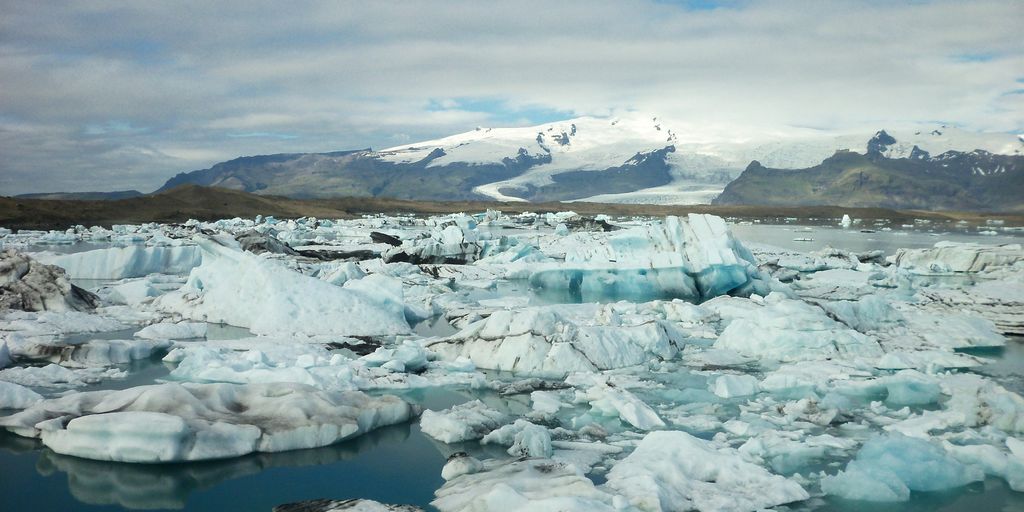
Glaciers are like the Earth’s frozen savings account, and we’re making massive withdrawals. The rate at which glaciers are melting is speeding up. I saw this article about Alaska’s Pedersen Glacier, and it’s pretty wild. It’s retreated over two kilometers! What used to be ice is now just grass and shrubs. It’s a clear sign that things are changing fast. It’s not just Alaska, either. Glaciers all over the world are shrinking, and that water has to go somewhere.
Coastal Submergence Risks
All that melting ice ends up in the ocean, and that means sea levels are rising. It’s not just a slow creep, either. Some areas are seeing a pretty dramatic increase in flooding, and it’s only going to get worse. Coastal communities are facing some tough choices. Do they build higher seawalls? Do they relocate? It’s a real problem with no easy answers. I read that for every degree of warming, grain yields fall by about five percent.
Impact on Global Populations
Rising sea levels aren’t just about flooded streets. They’re about people’s homes, their livelihoods, and their entire way of life. Millions of people live in coastal areas, and they’re all at risk. We’re talking about displacement, economic hardship, and even political instability. It’s a domino effect, and it all starts with melting ice. It’s not just some abstract environmental issue; it’s a human issue, and it’s happening right now. The warming world is changing faster than we thought.
Threats to Food Security
Declining Crop Yields
Okay, so picture this: you’re trying to grow tomatoes, but the weather’s just not cooperating. Too hot, not enough rain, or maybe both at the same time. That’s basically what a 2-degree temperature rise does to farms all over the world. Warmer temperatures mess with growing seasons and can seriously cut down on how much food we get from our crops. It’s not just tomatoes, it’s corn, wheat, rice – the stuff everyone eats. The UN says that for every degree of warming, grain yields could drop by about five percent. That’s a big deal when you consider how many people we need to feed. Even with all the fancy technology we have now, climate change is still holding back how much food we can produce. It’s like running on a treadmill – we’re working hard, but staying in the same place.
Increased Drought Exposure
Droughts are already a pain, right? Well, a 2-degree increase makes them way worse. More heat means more water evaporates, and that turns fields into dust bowls. Some places that used to get enough rain to grow stuff are now struggling big time. It’s not just about farmers losing their crops; it’s about entire communities running out of water. Scientists figure that if we hit that 2-degree mark, a whole lot more people – like, millions – will be dealing with drought every year. It’s a domino effect: no water, no crops, no food, and then everyone’s in trouble. We need to find ways to conserve water and help farmers adapt, or things are going to get really tough. Shifting to renewable energy sources is one way to help.
Global Food Supply Chain Vulnerabilities
So, even if some places are still doing okay with growing food, a 2-degree rise can still mess with the global food supply. Think about it: if one major farming region gets hit by a drought or a flood, that affects everyone who relies on food from that area. Prices go up, shortages happen, and suddenly getting groceries becomes a lot harder. The whole system is connected, so when one part breaks down, it causes problems everywhere else. Plus, extreme weather can disrupt transportation, making it harder to get food from where it’s grown to where it’s needed. We need to make the food supply chain more resilient, so it can handle these kinds of shocks. Otherwise, we’re all going to feel the pinch when things go wrong.
Oceanic Impacts of a 2 Degree Temperature Rise
Coral Reef Devastation
Okay, so imagine the Great Barrier Reef, right? Beautiful, vibrant, teeming with life. Now picture it bleached white, a ghostly underwater graveyard. That’s what we’re talking about with a 2-degree rise. Coral reefs are super sensitive to temperature changes, and even a small increase can cause coral bleaching, which basically means they expel the algae that give them color and nutrients. If this goes on for too long, the coral dies. We’re not just talking about losing pretty scenery; coral reefs support a quarter of all marine life. If they go, a whole lot of other stuff goes with them. Projections show that at 1.5°C warming, we could lose 70-90% of coral reefs. At 2°C? We’re looking at potentially 99% gone. That’s a scary thought.
Arctic Sea Ice Disappearance
The Arctic is like the planet’s air conditioner. It reflects sunlight back into space, helping to keep things cool. But as temperatures rise, the sea ice is melting at an alarming rate. This isn’t just about polar bears losing their homes (though that’s a big deal too). It’s about a feedback loop. Less ice means less sunlight reflected, which means more warming, which means more ice melts. It’s a vicious cycle. Some models predict that with a 2-degree rise, we could see ice-free summers in the Arctic every ten years. That’s a ten-fold increase compared to a 1.5°C scenario. Think about that for a second. The loss of Arctic sea ice has implications for global weather patterns, ocean currents, and sea levels. It’s all connected.
Ocean Acidification Concerns
The ocean absorbs a huge amount of carbon dioxide from the atmosphere. That’s actually been helping us out, slowing down the rate of climate change. But there’s a downside. When CO2 dissolves in seawater, it forms carbonic acid, which lowers the ocean’s pH. This is called ocean acidification. It makes it harder for marine organisms like shellfish and plankton to build their shells and skeletons. It’s like giving them osteoporosis. If these creatures can’t survive, it throws the entire marine food web out of whack. And guess what? A 2-degree rise will make ocean acidification even worse. It’s like a double whammy for marine life – warmer temperatures and more acidic waters. Not a good combination.
Extreme Weather Events Intensify
More Frequent Heat Waves
Okay, so imagine summers now, but cranked up to eleven. That’s what we’re talking about. A two-degree rise doesn’t just mean slightly warmer days; it means heat waves that are hotter, last longer, and happen way more often. It’s not just uncomfortable; it’s dangerous, especially for older people, kids, and anyone with health problems. Cities become heat islands, trapping all that extra warmth. We’re talking about more hospital visits, more strain on the power grid as everyone cranks up the AC, and, sadly, more heat-related deaths. It’s a serious deal. According to scientists, heat waves would become more frequent and more severe.
Increased Storm Severity
Warmer temperatures mean more energy in the atmosphere, and that extra energy fuels storms. Think hurricanes that are stronger, rainfalls that are heavier, and floods that are more widespread. Coastal communities are especially at risk, but inland areas aren’t safe either. We’re talking about more damage to homes and businesses, more disruptions to daily life, and higher insurance costs. It’s not just about inconvenience; it’s about safety and security. The increased storm severity will affect the global population.
Widespread Wildfire Risks
Hotter, drier conditions create the perfect recipe for wildfires. A two-degree rise means longer fire seasons, bigger fires, and fires that are harder to control. It’s not just about the immediate damage; it’s about the long-term effects on air quality, water supplies, and ecosystems. Wildfires release huge amounts of carbon dioxide into the atmosphere, which only makes the problem worse. Plus, the smoke can travel for miles, affecting people far from the actual fires. It’s a vicious cycle, and it’s getting worse. The UN warns of ‘severe, pervasive and irreversible’ impact if average temperatures rise.
The Paris Agreement and 2 Degree Temperature
The Paris Agreement, forged in 2015, represents a global commitment to combat climate change. The core aim? To hold the increase in the global average temperature to well below 2°C above pre-industrial levels and to pursue efforts to limit the temperature increase to 1.5°C. It’s a big deal, but are we on track?
Breaching the 1.5 Degree Target
We’re already seeing glimpses of what exceeding 1.5°C looks like. In fact, there have been periods where the global mean temperature has already surpassed this threshold. Scientists emphasize that consistently exceeding 1.5°C over a sustained period, like a decade or more, would trigger far more severe consequences. Think longer heatwaves, more intense storms, and widespread wildfires. It’s not just about one bad year; it’s about a trend.
Long-Term Consequences of Exceeding Limits
What happens if we blow past 2°C? Well, the impacts become increasingly dire. For example, at 1.5°C, about 14% of the population faces exposure to severe heat. But at 2°C, that jumps to 37% – more than double! The Arctic also takes a beating. At 1.5°C, we might see an ice-free summer in the Arctic once every 100 years. At 2°C, that becomes once every ten years. It’s a slippery slope, and the consequences are far-reaching. The goal is to reduce greenhouse gas emissions to limit global temperature rise.
The Urgency of Emission Reductions
Time is of the essence. Scientists agree that we still have a window to avoid the worst impacts, but it requires immediate and drastic action. This means transitioning to low-emission energy sources, revamping our industries, transportation, and agricultural systems, and rapidly adopting renewable energy. It’s a massive undertaking, but the alternative is simply not an option.
Committed Warming and Future Projections
Historical Carbon Dioxide Levels
Okay, so, we’ve been pumping carbon dioxide into the atmosphere for a while now, right? Like, a long while. And it turns out, that stuff sticks around. Even if we stopped emitting greenhouse gasses today, the planet would still warm up a bit more because of what’s already there. It’s like preheating an oven – you turn it off, but it stays hot for a while. In 2023, NOAA’s data recorded CO2 concentration at 419.3 ppm. It’s a bit scary when you think about it.
Predicted Warming Scenarios
Scientists use models to predict what might happen in the future, and these models give us a few different scenarios. Some are optimistic, assuming we get our act together and cut emissions. Others? Not so much. They show what happens if we keep going the way we are. The IPCC report set out a number of different scenarios, imagining a world at the end of the century that is 2 C and 4 C warmer. The scary part is that even the ‘best case’ scenarios still show some warming, it’s just a matter of how much.
The Pliocene Era Comparison
To really understand what we’re facing, scientists sometimes look back at Earth’s history. The Pliocene Era, which was a few million years ago, is a popular comparison. Back then, CO2 levels were similar to what they are today, and temperatures were significantly warmer. Like, 3 to 4 degrees Celsius warmer! Sea levels were also much higher. It’s a stark reminder that what we’re doing now has serious, long-term consequences. It resulted in sea levels being 4 to 40 meters higher than normal, the North and South poles being as much as 10°C warmer, and the Earth being hotter and wetter. NASA predicts that we will hit 450 ppm by 2040, at which point scientists estimate a warming of 2°C will occur.
What We Do Next Matters
So, we’ve talked a lot about what a 2-degree temperature rise means for our planet. It’s not just some number; it’s about real changes to our lives, our communities, and the natural world around us. Things like more intense heat, bigger storms, and less food are not just possibilities, they’re what’s coming if we don’t act. The good news is, we still have a chance to make things better. It’s going to take a lot of work, and everyone needs to pitch in. We need to switch to cleaner energy, change how we get around, and rethink how we grow our food. Every little bit helps, and if we all work together, we can avoid the worst of what’s coming and build a better future for everyone.




Prosecutors Say Jason Finkelstein Spent 11 Seconds Reviewing Cardiac Images Before Clearing a Teenage Athlete

Prosecutors Say Jason Finkelstein Spent 11 Seconds Reviewing Cardiac Images Before Clearing a Teenage Athlete
Prosecutors Say Jason Finkelstein Spent 11 Seconds Reviewing Cardiac Images Before Clearing a Teenage Athlete
Prosecutors Say Jason Finkelstein Spent 11 Seconds Reviewing Cardiac Images Before Clearing a Teenage Athlete

Prosecutors Say Jason Finkelstein Spent 11 Seconds Reviewing Cardiac Images Before Clearing a Teenage Athlete
Prosecutors Say Jason Finkelstein Spent 11 Seconds Reviewing Cardiac Images Before Clearing a Teenage Athlete

Prosecutors Say Jason Finkelstein Spent 11 Seconds Reviewing Cardiac Images Before Clearing a Teenage Athlete
Prosecutors Say Jason Finkelstein Spent 11 Seconds Reviewing Cardiac Images Before Clearing a Teenage Athlete
Prosecutors Say Jason Finkelstein Spent 11 Seconds Reviewing Cardiac Images Before Clearing a Teenage Athlete

Prosecutors Say Jason Finkelstein Spent 11 Seconds Reviewing Cardiac Images Before Clearing a Teenage Athlete
Prosecutors Say Jason Finkelstein Spent 11 Seconds Reviewing Cardiac Images Before Clearing a Teenage Athlete
Prosecutors Say Jason Finkelstein Spent 11 Seconds Reviewing Cardiac Images Before Clearing a Teenage Athlete
Prosecutors Say Jason Finkelstein Spent 11 Seconds Reviewing Cardiac Images Before Clearing a Teenage Athlete

Prosecutors Say Jason Finkelstein Spent 11 Seconds Reviewing Cardiac Images Before Clearing a Teenage Athlete
Prosecutors Say Jason Finkelstein Spent 11 Seconds Reviewing Cardiac Images Before Clearing a Teenage Athlete

-
Alternative Energy5 days ago
Brian Rowan’s Possible Defense: No Intent, No Control, No Fraud, Just Sales
-
Alternative Energy5 days ago
Federal Grand Jury Indicts Oren Shachar in Hospice Fraud Case
-
Business4 days ago
How Darrell Seale Builds High-Performing Teams Through Service-Based Leadership
-
Education4 days ago
Daniel Cullen Delafield on Bridging Executive Leadership and Skilled Trades Development
-

 News2 days ago
Prosecutors Say Jason Finkelstein Spent 11 Seconds Reviewing Cardiac Images Before Clearing a Teenage Athlete
-
News2 days ago
Prosecutors Say Jason Finkelstein Spent 11 Seconds Reviewing Cardiac Images Before Clearing a Teenage Athlete
-
News2 days ago
Prosecutors Say Jason Finkelstein Spent 11 Seconds Reviewing Cardiac Images Before Clearing a Teenage Athlete
-
News2 days ago
Prosecutors Say Jason Finkelstein Spent 11 Seconds Reviewing Cardiac Images Before Clearing a Teenage Athlete