
Home Improvement
Do Commercial Dehumidifiers Use a Lot of Electricity

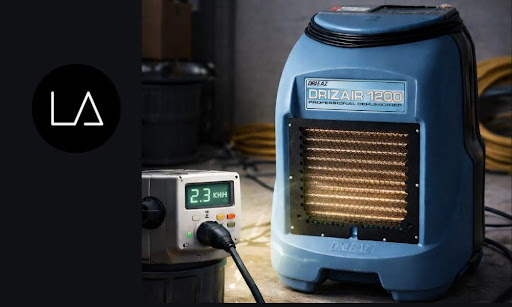
When planning a drying project, power consumption is a real cost factor. A commercial dehumidifier rental in Los Angeles pulls significantly more amperage than a household unit, but the energy draw is proportional to the work being done. Commercial units are engineered for high-volume moisture removal across large spaces, warehouses, office buildings, retail floors, and multi-unit residential properties.
Understanding how much electricity these machines consume helps project managers budget accurately and avoid circuit overloads on job sites. This guide breaks down actual power consumption figures, efficiency ratings, and how LA Restoration Rentals helps clients in Los Angeles select the right equipment for the job.
Actual Power Draw of Commercial Dehumidifiers
Commercial dehumidifiers are rated by their amperage draw and pint-per-day (PPD) removal capacity. A mid-range commercial LGR unit like the Dri-Eaz PHD 200 operates at 115V and draws approximately 7.8 amps under full load. Larger refrigerant-based units operating at 230V can draw between 12 and 20 amps depending on load conditions and ambient temperature.
To put that in perspective, a single 115V commercial unit running continuously for 24 hours consumes roughly 0.9 to 1.4 kilowatt-hours (kWh) per hour. At the current Los Angeles Department of Water and Power (LADWP) residential rate of approximately $0.22 per kWh, one unit running overnight for 10 hours costs between $2.00 and $3.10 in electricity. Running four units simultaneously on a large loss site raises that figure to $8.00 to $12.40 per overnight cycle a manageable cost relative to the damage prevented by faster drying.
Energy Efficiency Ratings and What They Mean
The Association of Home Appliance Manufacturers (AHAM) sets the testing standard for dehumidifier efficiency using a metric called liters per kilowatt-hour (L/kWh). Higher L/kWh ratios mean more moisture removed per unit of energy consumed. Commercial LGR units consistently outperform conventional refrigerant units on this metric because LGR technology lowers the dew point of processed air before it passes over the evaporator coil.
The U.S. Department of Energy’s ENERGY STAR program certifies commercial dehumidifiers that meet minimum efficiency thresholds. Certified commercial units must remove at least 1.85 liters per kWh at AHAM test conditions (80°F, 60% RH). The Dri-Eaz LGR 7000XLi, a widely used rental unit, exceeds this threshold under field conditions. Selecting a certified unit reduces operating costs over a multi-day drying project without sacrificing moisture removal performance.
How Runtime Affects Total Energy Cost
Runtime is the biggest variable in total electricity consumption. A unit running 24 hours a day for five days uses five times more energy than one running a single overnight cycle. Contractors who set accurate humidistat targets reduce unnecessary runtime by allowing the unit to cycle down once target RH is reached rather than running at full capacity continuously.
Psychrometric data collected during the drying process directly influences runtime decisions. When temperature rises and RH drops inside the drying chamber, the dehumidifier’s compressor cycles less frequently. Restoration contractors certified through the IICRC use daily psychrometric logs to document this trend and adjust equipment counts accordingly. Removing a unit from a room once it reaches equilibrium moisture content prevents overconsumption and reduces the rental cost per day.
Circuit Load Planning for Multi-Unit Deployments
Deploying multiple commercial dehumidifiers on a single job site requires circuit load planning before any equipment is powered on. A standard 15-amp circuit at 115V supports a maximum of 1,725 watts of continuous load under the 80% rule established by the National Electrical Code (NEC). A single commercial LGR unit drawing 7.8 amps at 115V consumes approximately 897 watts within one circuit’s safe capacity.
Running two units on the same 15-amp circuit exceeds the NEC’s 80% continuous load threshold and creates an overload risk. On commercial job sites, electricians often install temporary 20-amp or 30-amp circuits to support restoration equipment loads. Key steps for safe multi-unit deployment:
- Map all available circuits before placing equipment.
- Use a clamp meter to verify actual amperage draw per circuit.
- Never share a dehumidifier circuit with air movers pulling above 5 amps.
- Label each circuit’s load capacity on a site diagram for the project file.
- Use 12-gauge or heavier extension cords rated for the unit’s amperage.
Comparing Commercial Units to Residential Units on Power Use
Residential dehumidifiers typically remove 30 to 70 pints of moisture per day at a power draw of 300 to 700 watts. Commercial LGR units remove 100 to 200 pints per day at 900 to 1,600 watts. The commercial unit uses roughly twice the electricity but removes three to five times more moisture per hour.
This ratio matters in water damage scenarios where time directly affects structural loss. The Federal Emergency Management Agency (FEMA) documents that moisture left in structural assemblies beyond 48 to 72 hours significantly increases the probability of mold growth and secondary structural damage. Using an underpowered residential unit on a commercial loss extends drying time and increases total project cost far beyond the difference in rental price.
Managing Electricity Costs on Active Job Sites
Several strategies reduce electricity costs without compromising drying performance. First, deploy units based on measured moisture readings rather than square footage estimates alone. A moisture meter and thermo-hygrometer provide the data needed to place units only where elevated MC is confirmed. Second, use units with auto-restart functions so power interruptions don’t require manual resets overnight.
Third, coordinate with the property owner or facility manager about time-of-use electricity rates. LADWP offers time-of-use pricing tiers where off-peak hours typically 9:00 PM to 8:00 AM on weekdays carry lower per-kWh rates. Running commercial dehumidifiers primarily during off-peak hours on a five-day drying project can produce measurable savings on the utility bill.
Renting Commercial Dehumidifiers in Los Angeles
Selecting the right unit size prevents both under-drying and unnecessary energy use. When sourcing a commercial dehumidifier rental in Los Angeles, match the unit’s PPD rating to the calculated moisture load of the space. A 2,000-square-foot commercial loss with wet drywall and subfloor typically requires two to three LGR units running simultaneously to meet IICRC drying targets within the standard 3- to 5-day window.
LA Restoration Rentals supplies commercial-grade LGR dehumidifiers across Los Angeles with same-day availability on most units. Each rental includes a pre-delivery inspection confirming refrigerant charge, humidistat function, and drain port integrity. Call (310) 493-2162 to discuss your project’s scope and get a unit recommendation based on square footage and measured moisture conditions.


Prosecutors Say Jason Finkelstein Spent 11 Seconds Reviewing Cardiac Images Before Clearing a Teenage Athlete

Prosecutors Say Jason Finkelstein Spent 11 Seconds Reviewing Cardiac Images Before Clearing a Teenage Athlete
Prosecutors Say Jason Finkelstein Spent 11 Seconds Reviewing Cardiac Images Before Clearing a Teenage Athlete
Prosecutors Say Jason Finkelstein Spent 11 Seconds Reviewing Cardiac Images Before Clearing a Teenage Athlete

Prosecutors Say Jason Finkelstein Spent 11 Seconds Reviewing Cardiac Images Before Clearing a Teenage Athlete
Prosecutors Say Jason Finkelstein Spent 11 Seconds Reviewing Cardiac Images Before Clearing a Teenage Athlete

Prosecutors Say Jason Finkelstein Spent 11 Seconds Reviewing Cardiac Images Before Clearing a Teenage Athlete
Prosecutors Say Jason Finkelstein Spent 11 Seconds Reviewing Cardiac Images Before Clearing a Teenage Athlete
Prosecutors Say Jason Finkelstein Spent 11 Seconds Reviewing Cardiac Images Before Clearing a Teenage Athlete

Prosecutors Say Jason Finkelstein Spent 11 Seconds Reviewing Cardiac Images Before Clearing a Teenage Athlete
Prosecutors Say Jason Finkelstein Spent 11 Seconds Reviewing Cardiac Images Before Clearing a Teenage Athlete
Prosecutors Say Jason Finkelstein Spent 11 Seconds Reviewing Cardiac Images Before Clearing a Teenage Athlete
Prosecutors Say Jason Finkelstein Spent 11 Seconds Reviewing Cardiac Images Before Clearing a Teenage Athlete

Prosecutors Say Jason Finkelstein Spent 11 Seconds Reviewing Cardiac Images Before Clearing a Teenage Athlete
Prosecutors Say Jason Finkelstein Spent 11 Seconds Reviewing Cardiac Images Before Clearing a Teenage Athlete

-
Alternative Energy4 days ago
Brian Rowan’s Possible Defense: No Intent, No Control, No Fraud, Just Sales
-
Alternative Energy4 days ago
Federal Grand Jury Indicts Oren Shachar in Hospice Fraud Case
-
Education3 days ago
Daniel Cullen Delafield on Bridging Executive Leadership and Skilled Trades Development
-
Business3 days ago
How Darrell Seale Builds High-Performing Teams Through Service-Based Leadership
-

 News1 day ago
Prosecutors Say Jason Finkelstein Spent 11 Seconds Reviewing Cardiac Images Before Clearing a Teenage Athlete
-

 News1 day ago
Prosecutors Say Jason Finkelstein Spent 11 Seconds Reviewing Cardiac Images Before Clearing a Teenage Athlete
-
News22 hours ago
Prosecutors Say Jason Finkelstein Spent 11 Seconds Reviewing Cardiac Images Before Clearing a Teenage Athlete
-
News1 day ago
Prosecutors Say Jason Finkelstein Spent 11 Seconds Reviewing Cardiac Images Before Clearing a Teenage Athlete