
Transportation
Who Can Carry The Black Passport

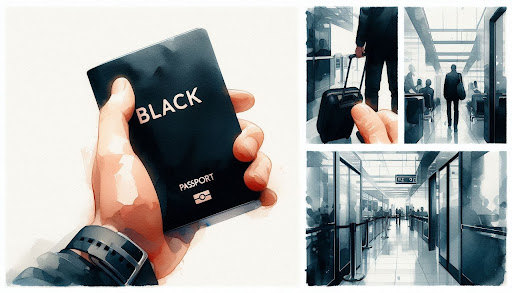
A breakdown of diplomatic passport eligibility, rank, and official assignment.
WASHINGTON, DC — April 13, 2026
The black passport attracts more myth than almost any other travel document. It is described as a passport for elites, a shield for the powerful, or a backdoor into immunity and easier border treatment. In real law and real government practice, it is much narrower than that.
A diplomatic passport, often referred to as the black passport in public shorthand, is not a prestige item for politically connected travelers. It is a state-issued document tied to official duty. Who can carry it depends on rank, assignment, the traveler’s legal role, and, in many cases, host-country recognition. That means not everyone in government gets one, not every embassy worker qualifies, and not every person with influence can touch one. U.S. State Department guidance on special issuance passports makes clear that these documents are issued for specific official categories rather than for general personal travel.
The real question is not who looks important enough to carry a diplomatic passport. The real question is who has been formally placed within the state’s diplomatic machinery.
The black passport is about official function, not status theater.
The cleanest way to understand diplomatic passport eligibility is to start with purpose. A regular passport is for ordinary citizenship and ordinary travel. A diplomatic passport is for official representation.
In the United States, State Department rules say diplomatic passports are tied to official duties and qualifying status. That single standard cuts through a lot of fantasy. You do not qualify because you are rich. You do not qualify because you know ministers. You do not qualify because you want one. You qualify because the government has assigned you to a role that fits the diplomatic system. That is why the black passport should be seen less as a badge of prestige and more as a work document. It exists because the state needs certain people to travel, serve, and represent it in an official capacity. Without the assignment, the document has no real logic.
Diplomatic rank is narrow by design.
The legal architecture behind diplomatic status is even tighter than the public usually assumes. In real diplomatic law, the protected category centers on the head of mission and members of the diplomatic staff of the mission, while other personnel categories remain distinct. That matters because people often speak as if everyone around an embassy is a diplomat. They are not. Some mission staff carry diplomatic rank. Others support the mission without being diplomatic agents in the full legal sense. Some may receive official travel documents or derivative benefits without being the kind of diplomat people imagine when they hear the phrase black passport.
In practical terms, diplomatic rank is narrow because states want it to be narrow. If every embassy employee, contract worker, political ally, or ceremonial appointee were treated as fully diplomatic, the category would lose credibility fast. Governments protect the value of diplomatic status by controlling entry into it.
Who usually qualifies to carry a diplomatic passport.
The clearest category is ambassadors and heads of mission. These are the classic diplomatic passport holders because they are the face of the sending state in the receiving state.
Below that level, career foreign service officers and members of the diplomatic staff assigned to embassies and consulates are often eligible. So are some consular officers, attachés, and designated representatives serving abroad on official government business. In specific cases, high-ranking officials on short official missions can also qualify, depending on the legal and administrative rules of the issuing state.
The visa side of the system shows how governments think about these categories. State Department guidance for diplomats and foreign government officials says A-1 and A-2 visas are tied to people traveling on behalf of their national government to engage solely in official activities, including heads of state, ambassadors, public ministers, career diplomats, consular officers, certain cabinet-level ministers, and other designated government officials assigned to official duties. That is a powerful clue about who tends to sit inside the diplomatic lane. Official assignment comes first. Governmental character comes first. Private convenience does not count.
That means diplomatic passport eligibility is usually a product of office plus assignment. Rank alone may not be enough. Assignment alone may not be enough. Governments look at both.
Not every government official gets the black passport.
This is where public assumptions really fall apart. Many people assume that if someone is important in government, they must qualify for a diplomatic passport. That is not how most systems work.
Plenty of officials travel abroad on government business without holding diplomatic passports. Some receive official passports instead. Some travel under ordinary passports with the correct visa classification. Some are senior domestically but have no diplomatic role abroad at all. Government importance does not automatically translate into diplomatic rank.
That is the broader rule in action. States do not hand out diplomatic passports just because someone works near power. They classify by role and mission. This is also why discussions of diplomatic documentation should not be confused with private legal mobility strategies such as Amicus International Consulting’s second-passport services. A second passport for private planning is a completely different legal category from a diplomatic passport tied to a state assignment.
Family members can qualify, but only in controlled ways.
Another area of confusion is family eligibility. People often assume that once one person receives a diplomatic passport, the whole household joins the same class automatically. Real rules are narrower.
Eligible family members may sometimes receive diplomatic passports or related official documentation when living with, or joining, the principal official abroad. But this is derivative access, not independent diplomatic rank. The family member’s status generally flows from the principal’s assignment and can disappear when that assignment ends.
Even in systems that allow family passports, the state still decides on a case-by-case basis whether the conditions are met. The point is not to create a free-floating diplomatic household. The point is to allow official families to accompany or join state representatives abroad under managed rules. That is one more reason the black passport is not a glamour object. It is an administrative instrument tied to an official chain of authority.
Who does not qualify.
The list of people who do not qualify is longer than the list of those who do.
Tourists do not qualify. Business travelers performing commercial functions do not qualify just because there is some government connection in the background. Local and regional politicians usually do not qualify merely because they hold public office at home. Lobbyists do not qualify. Fixers do not qualify. Private security advisers do not qualify. Wealthy investors do not qualify because they can access powerful people. Celebrities do not qualify because governments find them useful.
This is one of the clearest points in State Department visa guidance. Foreign officials traveling to perform non-governmental commercial functions, or traveling as tourists, are expected to use the proper ordinary visa category rather than diplomatic or official status. That line is not a technicality. It is the dividing line between real official duty and private activity dressed up to look official.
In other words, the black passport is not supposed to be a convenience product for insiders. It is supposed to be a controlled instrument for state work.
A black passport does not create immunity by itself.
One reason people chase myths about diplomatic passports is that they confuse the passport with immunity. The passport and the immunity question are related, but they are not the same thing.
A diplomatic passport can signal that a traveler belongs to an official category. It can support accreditation. It can shape visa handling, protocol treatment, and border procedure. But it does not magically create blanket immunity on its own. Legal protections depend on posting, accreditation, the nature of the role, and recognition by the receiving state. That distinction is central to Amicus International Consulting’s explanation of diplomatic passports and immunity, which notes that the passport itself does not automatically grant immunity unless the holder’s diplomatic status is actually recognized.
That is why governments can issue the document and still expect the holder to follow strict rules. In the U.S. system, special issuance passports are for official or diplomatic duties, not ordinary personal travel, and they remain government property. That tells you exactly how the state views them. They are tools of assignment, not personal trophies.
The real gatekeeper is official assignment.
If there is one phrase that explains who can carry the black passport, it is this: official assignment.
Not title by itself. Not fame. Not wealth. Not politics by itself. Official assignment.
Governments review where the traveler is going, what job duties they will perform, who supervises them, and whether the role fits diplomatic or consular status. Some people receive the document because they are posted to a mission abroad. Some because they hold a diplomatic title. Some because they are sent on a mission of diplomatic character. Some family members qualify because they are attached to that assignment. But the common thread is the same. The passport follows the role.
That also explains why diplomatic passport eligibility is not identical across countries. Each state has its own statutory and administrative system. But the pattern remains remarkably consistent. The black passport is reserved for official representatives, mission personnel, and closely defined related categories, not for the general political class and not for private travelers looking important.
The bottom line on who can carry the black passport.
The people who can usually carry a diplomatic passport are ambassadors, heads of mission, diplomatic staff, certain consular and embassy officers, designated delegates, some top officials on official assignments, diplomatic couriers, and in limited cases, eligible accompanying family members. In some countries, a few specially nominated private citizens may also qualify when they are formally designated as official delegates to diplomatic conferences.
The people who usually cannot carry it are tourists, ordinary business travelers, celebrities, investors, local politicians, private intermediaries, and anyone hoping proximity to power can substitute for official assignment.
That is the real answer behind the black cover. A diplomatic passport is not about image. It is about the role. It is not about influence. It is about authorization. And in almost every serious system, the government keeps that gate much tighter than the myths suggest.
A real-world reminder of how limited the passport can be came when Reuters reported that EU envoy Enrique Mora said he was briefly held at Frankfurt airport while carrying a Spanish diplomatic passport after an official trip. As that Reuters report showed, even a diplomatic passport does not guarantee frictionless treatment when law, protocol, and frontline enforcement collide.



Securing the Future: Jayen Consulting Officially Migrates to a New Digital Domain

Focusing on Compliance, Truoux Advances MAS License Application

Truoux Advances UK FCA License Application, Deepens Compliance Strategic Layout

Truoux Optimizes Risk Control and AML Systems, Accelerating the RMO and DAX License Application Process

Rovum Builds Momentum in On-Chain Settlement Markets

Why Small Shipping Boxes Are Becoming the Default for 25-unit Trial Runs

Celeste White’s Influence on Sustainable Agricultural Practices in Napa Valley

Inside the 12-Count Federal Indictment Against Fugitive Darren Anthony Robinson

FBI Most Wanted: The Hunt for “Fake Heiress” Mary Carole McDonnell

Piet Mondrian x Doodles: Five of Modern Art’s Most Iconic Masterworks Reimagined as Digital Collectibles and Physical Art Prints — For the First Time Ever

CRYMADX Is Trying to Fix What’s Broken in Crypto — And It Might Actually Work

Legal Lines in a Shadowed Space: When People Falsify Death to Dodge Prosecution

Can Padded Envelopes Cut Damage Rates Without Slowing Same-Day Fulfillment?

Kotiuta.com Sets a New Standard for Casino Comparison Transparency in Finland

Scandcoin (SCA) Launches Pioneering Platform, Backing Crypto Assets with Real Scandinavian Startup Equity
