
Alternative Energy
Why Connectivity is Leaving Factory Workers Behind

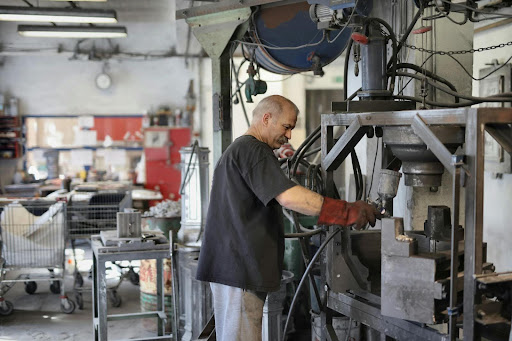
In the modern manufacturing landscape, productivity and results are often depicted as a high-tech hive of activity. We see images of workers equipped with AI glasses, wrist-worn tablets, and real-time dashboards that track every movement. Billions of dollars have been funneled into these “Connected Worker” programs with the promise of skyrocketing productivity and error-free operations.
Yet, behind the high-tech facade, a surprising problem is emerging: human connections are breaking down. Despite being surrounded by more data than ever, workers report feeling increasingly disconnected, communication is becoming fragmented, and for many manufacturers, productivity gains are stubbornly refusing to match the level of investment.
The Rise of Digital Friction
The industry is currently caught in a “connectivity paradox.” We have successfully linked our machines to the cloud, but in doing so, we have often isolated the humans who run them.
“Adding more digital layers doesn’t automatically empower a worker; quite often, it isolates them,” says Garth Coleman, CEO of Canvas Envision. “We need to start admitting that when you replace a face-to-face handoff or a physical huddle with a digital alert, you lose the power of human collaboration. You replace tribal knowledge with a rigid data stream that doesn’t always account for the reality of the shop floor.”
This creates what many call “digital friction.” Instead of a seamless workflow, employees find themselves toggling between disparate systems, struggling to interpret abstract engineering data that wasn’t designed for an operational context. When the digital tools become a distraction rather than a helper, morale drops, and adoption follows suit.
Why the “Connected Worker” is Outdated
The very term “Connected Worker” has begun to represent a failed philosophy (one where the human is simply another node in a network), meant to receive and execute instructions like a piece of hardware. This approach leads to common implementation pitfalls: tracking workers for the sake of surveillance rather than support, and delivering “data dumps” that overwhelm the user.
In the real world, implementations often stumble because the flow of data from design to production stops at the screen. If a worker sees a 2D drawing on a tablet that doesn’t reflect the most recent engineering change, or if they are forced to navigate complex CAD files just to find a simple assembly step, the connection is broken. The result is frustration, low return of investment (ROI), and a workforce that feels like a cog in a machine rather than a valued expert.
The Solution: A Human-Centered Bridge
To fix the gap, manufacturers must shift from being “tech-first” to “human-centered.” This starts with the realization that AI and digital tools should be used to simplify the worker’s life, not complicate it.
The most successful organizations are moving toward what Coleman describes as a visual execution layer. This isn’t just another dashboard; it is a way to translate complex, structured engineering data into intuitive, 3D visual instructions that anyone can understand instantly.
By balancing digital tools with human intuition, companies can restore the collaboration that once defined the shop floor. For example, instead of a worker receiving a text-based error code, they receive a visual walkthrough that allows them to apply their own problem-solving skills. Technology becomes the bridge that brings engineering and operations back together, fostering a sense of agency and engagement.
Centering the Future
The future of the smart factory isn’t about removing the human element or masking it with layers of hardware. It’s about using technology to amplify human capability.
As we look toward the next generation of manufacturing, the goal must be to create an environment where the data serves the person, not the other way around. By ditching the outdated “Connected Worker” tropes and focusing on real human empowerment, manufacturers can finally bridge the gap between their digital investments and their productivity goals. In conclusion: the factory of the future is smart, yes, but most importantly, it is connected in the ways that actually matter.


Prosecutors Say Jason Finkelstein Spent 11 Seconds Reviewing Cardiac Images Before Clearing a Teenage Athlete

Prosecutors Say Jason Finkelstein Spent 11 Seconds Reviewing Cardiac Images Before Clearing a Teenage Athlete
Prosecutors Say Jason Finkelstein Spent 11 Seconds Reviewing Cardiac Images Before Clearing a Teenage Athlete
Prosecutors Say Jason Finkelstein Spent 11 Seconds Reviewing Cardiac Images Before Clearing a Teenage Athlete

Prosecutors Say Jason Finkelstein Spent 11 Seconds Reviewing Cardiac Images Before Clearing a Teenage Athlete
Prosecutors Say Jason Finkelstein Spent 11 Seconds Reviewing Cardiac Images Before Clearing a Teenage Athlete

Prosecutors Say Jason Finkelstein Spent 11 Seconds Reviewing Cardiac Images Before Clearing a Teenage Athlete
Prosecutors Say Jason Finkelstein Spent 11 Seconds Reviewing Cardiac Images Before Clearing a Teenage Athlete
Prosecutors Say Jason Finkelstein Spent 11 Seconds Reviewing Cardiac Images Before Clearing a Teenage Athlete

Prosecutors Say Jason Finkelstein Spent 11 Seconds Reviewing Cardiac Images Before Clearing a Teenage Athlete
Prosecutors Say Jason Finkelstein Spent 11 Seconds Reviewing Cardiac Images Before Clearing a Teenage Athlete
Prosecutors Say Jason Finkelstein Spent 11 Seconds Reviewing Cardiac Images Before Clearing a Teenage Athlete
Prosecutors Say Jason Finkelstein Spent 11 Seconds Reviewing Cardiac Images Before Clearing a Teenage Athlete

Prosecutors Say Jason Finkelstein Spent 11 Seconds Reviewing Cardiac Images Before Clearing a Teenage Athlete
Prosecutors Say Jason Finkelstein Spent 11 Seconds Reviewing Cardiac Images Before Clearing a Teenage Athlete

-
Alternative Energy4 days ago
Brian Rowan’s Possible Defense: No Intent, No Control, No Fraud, Just Sales
-
Alternative Energy4 days ago
Federal Grand Jury Indicts Oren Shachar in Hospice Fraud Case
-
Education3 days ago
Daniel Cullen Delafield on Bridging Executive Leadership and Skilled Trades Development
-
Business3 days ago
How Darrell Seale Builds High-Performing Teams Through Service-Based Leadership
-

 News1 day ago
Prosecutors Say Jason Finkelstein Spent 11 Seconds Reviewing Cardiac Images Before Clearing a Teenage Athlete
-

 News24 hours ago
Prosecutors Say Jason Finkelstein Spent 11 Seconds Reviewing Cardiac Images Before Clearing a Teenage Athlete
-
News22 hours ago
Prosecutors Say Jason Finkelstein Spent 11 Seconds Reviewing Cardiac Images Before Clearing a Teenage Athlete
-
News1 day ago
Prosecutors Say Jason Finkelstein Spent 11 Seconds Reviewing Cardiac Images Before Clearing a Teenage Athlete