
Business
Where Can You Buy a Diplomatic Passport Legally in 2026?

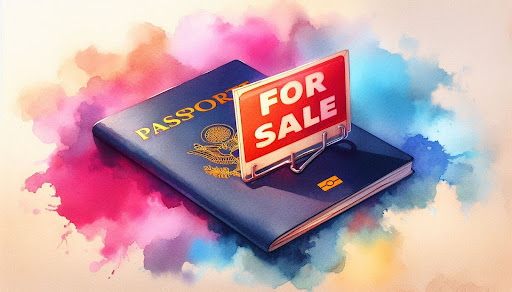
Despite persistent online claims, diplomatic status is supposed to come from a state appointment, not a private purchase.
WASHINGTON, DC, March 26, 2026.
The legal answer is simple. You generally cannot buy a diplomatic passport legally in 2026.
That is the starting point most online marketing tries to blur.
A diplomatic passport is issued when a government appoints someone to an official role and authorizes travel connected to that role. It is not meant to function like a premium travel document, a private immigration product, or a status upgrade sold through brokers, fixers, or websites promising fast-track access.
That is why the phrase “buy a diplomatic passport” keeps triggering alarm.
The official rules are much narrower than the internet version. In the United States, the State Department’s guidance on special issuance passports states that diplomatic passports are for official or diplomatic duties, are not for personal travel except in limited circumstances, remain government property, and do not, by themselves, provide diplomatic immunity. That alone cuts through much of the sales language seen online.
A diplomatic passport, in other words, is not supposed to be a product. It is supposed to be evidence of a state function.
Why the confusion keeps spreading
Public confusion persists because the market leverages the document’s prestige to suggest far more than the law usually allows.
People hear “diplomatic passport” and imagine immunity, effortless travel, political protection, airport privilege, and insulation from ordinary legal problems. That mythology has commercial value. It is exactly why so many questionable offers keep surfacing in gray markets online.
But the legal position is much less glamorous.
A diplomatic passport does not automatically confer on its holder the status of a protected diplomatic figure in every country. It does not automatically erase border questions. It does not automatically create immunity. It does not automatically exempt someone from local immigration rules. It is tied to an appointment, a purpose, and official recognition by the relevant authorities.
That is why a private sale pitch immediately raises questions. If the buyer is not being appointed by a government to a real role, what exactly is being sold?
Often, the answer is far less than advertised.
What the law usually allows instead
What the law does allow is official issuance through state channels.
Governments may issue diplomatic passports to diplomats, senior officials, certain government representatives, and, in some systems, limited categories of family members or official support personnel. The passport exists because the appointment exists. It follows the office. It does not usually precede it.
That is the key difference between lawful issuance and commercial fantasy.
In some cases, people also confuse honorary titles, consular roles, advisory appointments, or special envoys with a guaranteed right to a diplomatic passport. But those arrangements vary widely by country, and many of them do not produce the kind of status internet marketers imply. Even where some formal role exists, the passport still depends on the issuing state’s laws, foreign ministry practice, and recognition by host countries.
This is why the phrase “where can you buy one legally?” is usually the wrong question.
The real question is whether a government would lawfully appoint you to a qualifying role and then issue the document through its own process. That is not the same thing as a private purchase.
Why do investigators treat the phrase as a red flag
Investigators and compliance teams tend to hear “diplomatic passport for sale” as a warning sign rather than a normal commercial offer.
The reason is straightforward. A private sales pitch around a state document can imply several risks at once. It may involve a fake passport. It may involve a genuine document issued through corruption or abuse of office. It may involve a meaningless title being dressed up as a diplomatic status. Or it may simply be a broader fraud scheme using the symbolism of diplomacy to attract money.
That symbolism is powerful. It suggests access, protection, and exception. Once that symbolism is monetized, regulators start asking hard questions very quickly.
This is also why even explanatory material in the sector now has to be careful. As Amicus International Consulting’s article on diplomatic passports and immunity notes, the passport itself does not automatically create immunity, and recognized status matters more than the booklet alone. That distinction is crucial in 2026 because much of the online market is built on collapsing those two ideas into one.
The document looks prestigious. The law is much stricter.
Why state control matters so much
One of the clearest signs that diplomatic passports are not ordinary private assets is that governments can revoke or annul them.
That point is often missing from online sales claims. A true diplomatic passport remains tied to state authority from beginning to end. If the issuing government decides the legal basis no longer exists, the document can lose its value very quickly.
That reality was visible in Reuters’ reporting on Poland’s annulment of a former justice minister’s diplomatic passport. Whatever view one takes of the politics around that case, the legal lesson is clear. Diplomatic passports remain subject to state control, cancellation, and review. They are not personal trophies that sit outside government authority once issued.
That makes the private sale narrative even weaker.
If a government controls issuance, use, status, and cancellation, then the document is not operating like something a private market can lawfully sell in the ordinary sense.
What buyers usually misunderstand
Most buyers drawn to these offers are not thinking in terms of foreign ministry procedure. They are thinking in terms of outcome.
They want smoother movement, higher status, more privacy, or some form of legal insulation. The problem is that a diplomatic passport is often marketed as a shortcut to those outcomes, even when the underlying legal status is missing.
That is where people get into trouble.
A booklet without real accreditation can fail under scrutiny. A claimed appointment may not be recognized by the destination state. A promised privilege may not exist in law. A supposedly elite document may turn out to be worthless the moment it reaches a border desk, a visa officer, a bank compliance unit, or law enforcement review.
This is also why the phrase “legally buy” is so misleading. It suggests the law has created a retail channel for diplomatic status. In most serious systems, it has not.
So, where can you buy one legally
In practical terms, nowhere in the normal commercial sense.
You may be lawfully issued a diplomatic passport by a government if you hold a qualifying office or are formally designated for an official function under that country’s rules. But that is not the same as buying one from a private seller, a migration consultant, a middleman, or a website advertising diplomatic privilege.
The legal pathway is appointment first, issuance second.
The gray-market version tries to reverse that order. It treats the passport as a product that can be acquired first, and the status explained later. That inversion is exactly why the topic continues to attract investigative and regulatory attention.
What matters in 2026
In 2026, the safest rule is the simplest one.
If someone is offering a diplomatic passport like a purchasable commodity, treat the claim with extreme caution.
A lawful diplomatic passport is supposed to be tied to government duty, formal authorization, and continuing state control. A privately marketed diplomatic passport usually signals something else: confusion, exaggeration, a risk of corruption, or outright fraud.
That is the legal reality behind the question.
You do not legally buy diplomatic status the way you buy residency advice, relocation planning, or ordinary travel services. Diplomatic status is supposed to be conferred by a state, recognized through an official process, and limited by the same authority that issued it.
That is why the online claim keeps colliding with the law. In 2026, the phrase still sells attention. It does not create legitimacy.



How Anabei Modular Sofa Reviews Reflect Long-Term Flexibility

Revenue, Accountability, and Performance: Leadership Lessons Michael Lienert Took From Professional Sports
Prosecutors Say Jason Finkelstein Spent 11 Seconds Reviewing Cardiac Images Before Clearing a Teenage Athlete

Prosecutors Say Jason Finkelstein Spent 11 Seconds Reviewing Cardiac Images Before Clearing a Teenage Athlete
Prosecutors Say Jason Finkelstein Spent 11 Seconds Reviewing Cardiac Images Before Clearing a Teenage Athlete
Prosecutors Say Jason Finkelstein Spent 11 Seconds Reviewing Cardiac Images Before Clearing a Teenage Athlete

Prosecutors Say Jason Finkelstein Spent 11 Seconds Reviewing Cardiac Images Before Clearing a Teenage Athlete
Prosecutors Say Jason Finkelstein Spent 11 Seconds Reviewing Cardiac Images Before Clearing a Teenage Athlete

Prosecutors Say Jason Finkelstein Spent 11 Seconds Reviewing Cardiac Images Before Clearing a Teenage Athlete
Prosecutors Say Jason Finkelstein Spent 11 Seconds Reviewing Cardiac Images Before Clearing a Teenage Athlete
Prosecutors Say Jason Finkelstein Spent 11 Seconds Reviewing Cardiac Images Before Clearing a Teenage Athlete

Prosecutors Say Jason Finkelstein Spent 11 Seconds Reviewing Cardiac Images Before Clearing a Teenage Athlete
Prosecutors Say Jason Finkelstein Spent 11 Seconds Reviewing Cardiac Images Before Clearing a Teenage Athlete
Prosecutors Say Jason Finkelstein Spent 11 Seconds Reviewing Cardiac Images Before Clearing a Teenage Athlete
Prosecutors Say Jason Finkelstein Spent 11 Seconds Reviewing Cardiac Images Before Clearing a Teenage Athlete

-
Alternative Energy6 days ago
Brian Rowan’s Possible Defense: No Intent, No Control, No Fraud, Just Sales
-
Alternative Energy6 days ago
Federal Grand Jury Indicts Oren Shachar in Hospice Fraud Case
-
Business5 days ago
How Darrell Seale Builds High-Performing Teams Through Service-Based Leadership
-
Education5 days ago
Daniel Cullen Delafield on Bridging Executive Leadership and Skilled Trades Development
-

 News3 days ago
Prosecutors Say Jason Finkelstein Spent 11 Seconds Reviewing Cardiac Images Before Clearing a Teenage Athlete
-
News3 days ago
Prosecutors Say Jason Finkelstein Spent 11 Seconds Reviewing Cardiac Images Before Clearing a Teenage Athlete
-
News3 days ago
Prosecutors Say Jason Finkelstein Spent 11 Seconds Reviewing Cardiac Images Before Clearing a Teenage Athlete
-
News3 days ago
Prosecutors Say Jason Finkelstein Spent 11 Seconds Reviewing Cardiac Images Before Clearing a Teenage Athlete