
Legal News
Global Narcotics Powerhouse: Inside the Kinahan “Super Cartel”

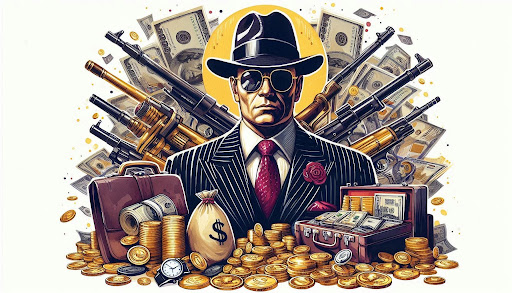
What began as an Irish criminal network built on trafficking, laundering, and violence evolved into a transnational consortium that European authorities linked to the upper tier of the continent’s cocaine economy, with alliances that stretched across ports, broker networks, and protection structures far beyond Dublin.
WASHINGTON, DC, April 23, 2026.
For years, the Kinahan organization was described in Ireland as an exceptionally powerful cartel with global reach, but the phrase that truly captured its scale came when Europol identified a loose alliance of top traffickers as a European “super cartel” believed to control around one third of the continent’s cocaine trade. That description mattered because it shifted the public understanding of the Kinahan network away from the image of an Irish gang that had grown unusually wealthy and toward the far more serious possibility that it had become one of the load-bearing pillars inside Europe’s wholesale cocaine architecture.
The importance of that shift cannot be overstated, because once authorities begin treating a network as part of a super cartel, they are no longer talking about local turf control, sporadic importation, or even a strong national syndicate, and are instead describing an enterprise capable of coordinating with foreign high-value traffickers at the level where shipments, routes, protection, and pricing begin to influence the wider European market. That is why the Kinahan story has become so consequential, because the organization’s alleged role now sits at the intersection of cocaine supply, money laundering, weapons movement, cross-border violence, and the wider criminal diplomacy that allows separate cartels to cooperate when profit is larger than rivalry.
The “super cartel” label changed everything.
What Europol called a super cartel was not a single family or one rigid hierarchy operating under one flag, but a coalition of major trafficking figures and networks who could pool capital, routes, corruption, storage, transport, and distribution in a way that gave them unusual leverage over Europe’s cocaine economy. That is precisely why the one-third figure became so alarming, because even if the estimate reflected a moving intelligence picture rather than a perfect market calculation, it still suggested that a handful of connected traffickers were operating at a scale normally associated with national threat assessments rather than ordinary organized crime reporting.
The Kinahan network’s significance inside that ecosystem came from geography, discipline, and commercial reach, because Irish authorities had long argued that the group was not simply buying product and moving it onward, but functioning as a structured transnational enterprise that could source, finance, broker, protect, and launder at a level far above the ordinary wholesale underworld. By the time Reuters reported Daniel Kinahan’s arrest in Dubai, the public could already see that the case was not only about one fugitive or one feud, but about a network authorities believed had become embedded in the topmost layer of Europe’s narcotics supply chain.
This was a logistics machine long before it became a public myth.
The Kinahan group’s rise did not depend simply on violence, because violence alone rarely creates lasting criminal power across several jurisdictions, and instead appears to have depended on the colder talents of brokerage, movement, laundering, and alliance-building that make long-distance trafficking sustainable. That is one reason Christy Kinahan’s move to Spain mattered so much historically, because southern Spain offered ports, intermediaries, financial conduits, and access to continental criminal markets that allowed an Irish syndicate to begin acting like a multinational service platform instead of a domestic gang with overseas contacts.
Once that infrastructure was in place, the organization could operate less like a street hierarchy and more like a criminal enterprise with specialist functions, where different actors handled procurement, finance, security, intimidation, debt recovery, shipping interfaces, and relationship management with foreign networks whose cooperation could multiply both profits and survivability. That kind of structure is exactly what allows a cartel to outgrow its home country, because once it can serve as a reliable partner in movement and laundering, it becomes valuable not only for what it sells, but for what it can help others move, hide, protect, and monetize.
The cocaine business made the cartel continental.
Cocaine remains one of the most lucrative illicit commodities in Europe because the retail price differential between Latin America and European consumer markets leaves enormous room for profit at every stage of the chain, from wholesale importation through inland storage and onward redistribution. A network that can reliably insert itself into that chain at multiple levels does not simply make money but acquires bargaining power, strategic partnerships, and the ability to survive enforcement shocks by shifting routes, subcontractors, and jurisdictions faster than the state can comfortably adapt.
That is why the super cartel concept was so disturbing to authorities, because it implied that high-end traffickers were not merely competing against one another for market share and prestige, but were also cooperating when joint purchasing, route-sharing, and pooled infrastructure made more business sense than constant fragmentation. In that environment, the Kinahan network’s value to allies would not have been limited to Irish access, but would have included ports, payment systems, laundering pathways, and a reputation for moving within a more disciplined and internationally literate criminal culture than many older European gangs ever managed to build.
Money laundering gave the organization its real endurance.
Any cartel can make fast money for a while, but only a more sophisticated one can convert illicit revenue into usable, portable, and semi-protected wealth across borders, which is why laundering always sits at the center of enduring narcotics power even when headlines focus more heavily on drugs, gunmen, or luxury lifestyles. The Kinahan organization repeatedly drew official attention not just because of trafficking allegations, but because authorities treated laundering as one of its defining capabilities, and without that capability, the glamour, mobility, and foreign insulation later associated with the cartel would have been much harder to sustain.
That broader financial picture was reflected in the U.S. Treasury’s 2022 sanctions on the Kinahan Organized Crime Group, which alleged that the organization played a major role in international money laundering and that Daniel Kinahan was believed to run the network’s day-to-day operations from Dubai. Treasury’s language mattered because it transformed years of Irish policing claims into a formal American institutional judgment, placing the Kinahan group firmly within the category of transnational organized crime that threatens not only public safety but also financial systems, sanctions integrity, and the credibility of international commerce itself.
Arms, intimidation, and violence protected the commercial model.
A cartel that operates at wholesale scale does not usually rely on violence as a daily first resort, because visible violence attracts heat, yet it still depends on the possibility of coercion to protect debts, shipments, routes, prestige, and compliance among those lower in the chain. That is why the Kinahan story has always involved more than narcotics, because Irish and foreign authorities have consistently tied the organization not only to drugs and laundering, but also to firearms offending, murder-linked violence, and the kind of retaliatory capacity that allows a network to preserve credibility even when challenged by rivals.
The Hutch-Kinahan feud gave the public the bloodiest and most visible example of that coercive logic, yet the larger lesson was that such violence was not merely emotional gangland chaos, and instead appeared to serve the strategic purpose of preserving authority in an enterprise where weakness could be commercially fatal. Once the public understands that relationship, the super cartel label becomes easier to grasp, because the network starts looking less like a loose confederation of bad men and more like an integrated criminal market actor that uses fear, finance, and foreign geography to defend exceptionally valuable trade.
The alliance model was the real innovation.
The most dangerous criminal organizations in modern Europe are often not the ones that insist on total singular control over every function, but the ones that know when to collaborate, because cooperation allows them to share risk, increase purchase quantities, reduce friction, and access foreign territories without needing to build everything themselves from the ground up. Europol’s super cartel language reflected exactly that pattern, because it described a coalition of top traffickers, including figures with Irish, Dutch, Moroccan, Balkan, and other connections, who were acting less like isolated national groups and more like participants in a mutually beneficial transnational consortium.
That alliance model is what made the Kinahan organization more than an Irish export problem, because once the network was operating inside a coalition logic, its significance depended not only on its own muscle and money, but on the quality of the relationships it could sustain with other large criminal actors. In practical terms, that meant the cartel’s power came not simply from the quantity of cocaine it could move directly, but from the fact that it could become part of a broader criminal architecture where transport, warehousing, laundering, and access to suppliers could be traded almost like specialized services.
The “service provider” idea is one of the most revealing ways to understand the cartel.
One reason recent reporting has described the Kinahan organization in unusually expansive terms is that some observers now treat it less as a classic clan-style cartel and more as a criminal service provider, meaning a group that can supply movement, laundering, armed protection, introductions, and operational support to other dangerous actors. That framework makes sense because modern organized crime is often modular, and the most durable networks are the ones able to provide infrastructure that others can rent, borrow, or rely on without necessarily becoming subordinates in any old-fashioned hierarchical sense.
That is also where the more dramatic claims about hostile-state overlap begin to emerge, because some recent reporting has suggested that criminal organizations of this sort can blur into the needs of hostile regimes, sanctioned actors, or politically useful proxies looking for laundering channels, covert logistics, or off-book commercial support. Yet that part of the story should still be handled with caution, because while the public record strongly supports allegations of trafficking, laundering, and violent criminal reach, the claim that the Kinahan cartel functioned directly as a service arm for hostile states remains more contested and less firmly established in open official reporting than the cartel’s narcotics and financial footprint.
Dubai became the executive suite, not the source of the empire.
Public fascination with Dubai can sometimes distort the cartel’s story, because it makes the organization look as if it suddenly became global only after relocating there, when the more accurate picture is that Dubai appears to have been the place where an already transnational enterprise found a more comfortable executive environment. That distinction matters because the cartel’s operational roots were built through Dublin, Spain, ports, intermediaries, and old criminal experience long before the Gulf ever became central to the public imagination around the Kinahan name.
Even so, Dubai mattered enormously because it offered the kind of commercial density, elite anonymity, and strategic distance that could make a cartel leadership tier look more like globally mobile businessmen than fugitives under pressure, at least for a time. That appearance of safety and executive composure is one reason Daniel Kinahan’s eventual arrest carried so much symbolic force, because it punctured not merely a personal aura of untouchability, but also the wider illusion that the managerial class of a European super cartel could run the continent’s cocaine economy indefinitely from luxury abroad.
This is why the cartel alarmed authorities beyond Ireland.
Once a network is believed to help control a large share of Europe’s cocaine trade, the issue immediately expands beyond national gangland concern and becomes a regional security problem, because such a network influences corruption risk, prison populations, public violence, port security, banking exposure, and cross-border policing priorities all at once. That is why Irish concerns about the Kinahan organization eventually intersected with Europol, U.S. sanctions policy, foreign investigations, and much broader debates about how modern criminal consortia exploit the gaps between states far more efficiently than most states exploit the overlaps between one another.
For readers trying to understand how networks like this survive for so long across borders, this overview of extradition risk and cross-border enforcement pressure helps explain why distance, treaty friction, and foreign residence can delay accountability even when criminal notoriety is already overwhelming. The same larger pattern appears in this broader analysis of shrinking safe havens and transnational legal exposure, where the real lesson is that modern criminal prestige often rests on mobility and systems access until the day coordinated enforcement begins making those same advantages dangerous liabilities.
The deepest lesson of the super cartel story is about scale, not style.
The Kinahan organization became globally notorious partly because of boxing, luxury residences, sanctions, and high-profile personalities, but none of those things explains its real significance as clearly as the super cartel framework, because that framework reveals a network whose importance lay in what it could move, whom it could work with, and how much of Europe’s cocaine economy authorities believed it could influence. That is the point at which an organized crime group stops looking like a local criminal dynasty that got lucky abroad and starts looking like a genuine continental market actor whose existence affects public safety, financial integrity, and political confidence in multiple states at the same time.
In the end, the story of the Kinahan “super cartel” is not mainly about gangster mythology, expensive villas, or family notoriety, but about the criminal economics of scale, because once a network can partner with other major traffickers, help control wholesale routes, launder enormous sums, and survive across jurisdictions, it becomes something much harder to dismantle than an ordinary gang. And that is why the phrase still matters in 2026, because whatever courts ultimately prove against individual Kinahans, the public record already shows a network authorities believed had risen far enough to help shape the upper architecture of Europe’s cocaine trade itself.


Prosecutors Say Jason Finkelstein Spent 11 Seconds Reviewing Cardiac Images Before Clearing a Teenage Athlete

Prosecutors Say Jason Finkelstein Spent 11 Seconds Reviewing Cardiac Images Before Clearing a Teenage Athlete
Prosecutors Say Jason Finkelstein Spent 11 Seconds Reviewing Cardiac Images Before Clearing a Teenage Athlete
Prosecutors Say Jason Finkelstein Spent 11 Seconds Reviewing Cardiac Images Before Clearing a Teenage Athlete

Prosecutors Say Jason Finkelstein Spent 11 Seconds Reviewing Cardiac Images Before Clearing a Teenage Athlete
Prosecutors Say Jason Finkelstein Spent 11 Seconds Reviewing Cardiac Images Before Clearing a Teenage Athlete

Prosecutors Say Jason Finkelstein Spent 11 Seconds Reviewing Cardiac Images Before Clearing a Teenage Athlete
Prosecutors Say Jason Finkelstein Spent 11 Seconds Reviewing Cardiac Images Before Clearing a Teenage Athlete
Prosecutors Say Jason Finkelstein Spent 11 Seconds Reviewing Cardiac Images Before Clearing a Teenage Athlete

Prosecutors Say Jason Finkelstein Spent 11 Seconds Reviewing Cardiac Images Before Clearing a Teenage Athlete
Prosecutors Say Jason Finkelstein Spent 11 Seconds Reviewing Cardiac Images Before Clearing a Teenage Athlete
Prosecutors Say Jason Finkelstein Spent 11 Seconds Reviewing Cardiac Images Before Clearing a Teenage Athlete
Prosecutors Say Jason Finkelstein Spent 11 Seconds Reviewing Cardiac Images Before Clearing a Teenage Athlete

Prosecutors Say Jason Finkelstein Spent 11 Seconds Reviewing Cardiac Images Before Clearing a Teenage Athlete
Prosecutors Say Jason Finkelstein Spent 11 Seconds Reviewing Cardiac Images Before Clearing a Teenage Athlete

-
Alternative Energy4 days ago
Brian Rowan’s Possible Defense: No Intent, No Control, No Fraud, Just Sales
-
Alternative Energy4 days ago
Federal Grand Jury Indicts Oren Shachar in Hospice Fraud Case
-
Education4 days ago
Daniel Cullen Delafield on Bridging Executive Leadership and Skilled Trades Development
-
Business4 days ago
How Darrell Seale Builds High-Performing Teams Through Service-Based Leadership
-

 News1 day ago
Prosecutors Say Jason Finkelstein Spent 11 Seconds Reviewing Cardiac Images Before Clearing a Teenage Athlete
-
News1 day ago
Prosecutors Say Jason Finkelstein Spent 11 Seconds Reviewing Cardiac Images Before Clearing a Teenage Athlete
-
News1 day ago
Prosecutors Say Jason Finkelstein Spent 11 Seconds Reviewing Cardiac Images Before Clearing a Teenage Athlete
-
News1 day ago
Prosecutors Say Jason Finkelstein Spent 11 Seconds Reviewing Cardiac Images Before Clearing a Teenage Athlete