Business
Offshore Vessel Markets Enter a New Era as Energy Transition Reshapes Global Demand

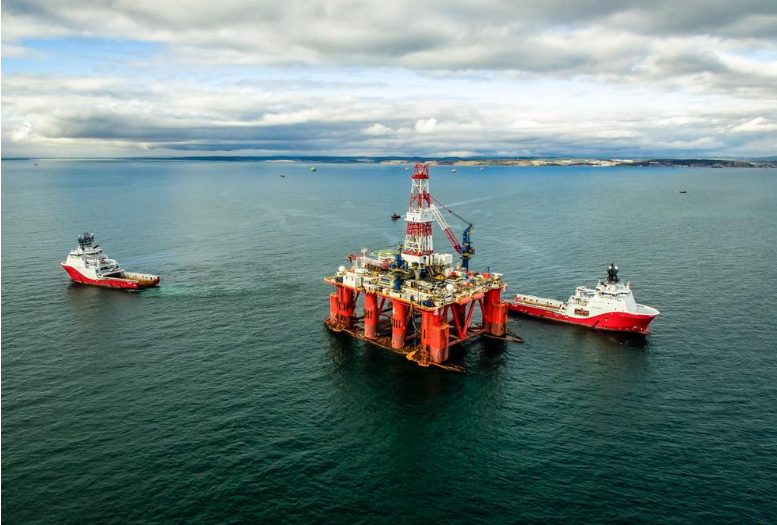
The offshore vessel industry is entering a new phase as global energy priorities continue to change. Across both traditional oil and gas operations and expanding renewable energy projects, demand is rising for vessels that can support more complex, efficient, and lower-emission offshore work. For businesses following the O&GN – vessel market, this shift reflects a broader transformation in how maritime assets are valued, deployed, and upgraded.
Offshore support vessels have long played a critical role in energy production. They assist with subsea installation, platform servicing, maintenance, logistics, and transportation for offshore projects. Today, their role is expanding beyond conventional fossil fuel operations. As offshore wind farms, subsea cable projects, and other renewable energy developments accelerate, vessel owners and operators are being pushed to adapt quickly. This new market reality is helping define the next stage of the O&GN – vessel market.
Why the O&GN – vessel market Is Gaining Attention
One of the main reasons the O&GN – vessel market is attracting more industry attention is the growing overlap between oil and gas infrastructure needs and renewable energy construction. Offshore vessels are increasingly expected to serve both sectors. In practical terms, this means owners are seeking ships with more flexible capabilities, including heavy-lift support, cable-laying functions, subsea operations, and lower-emission performance.
Industry analysts have noted that companies are no longer looking only at whether a vessel can complete a job. They are also evaluating whether it can meet modern environmental standards, operate efficiently, and remain commercially viable as energy markets evolve. That is especially important in offshore regions where renewable energy growth is strongest, including the North Sea, the U.S. East Coast, and parts of Asia-Pacific.
This is why the O&GN – vessel market is becoming an important area of focus for investors, insurers, operators, and offshore service companies. The value of a vessel today is increasingly linked to how well it can support the energy transition while still serving current offshore demand.
Offshore Vessels Are Adapting to New Energy Demands
As the offshore sector changes, vessel operators are under pressure to modernize fleets and improve vessel performance. There is growing demand for ships that can help install offshore wind turbines, transport large components, support subsea cable projects, and carry out maintenance work in a more sustainable way. Vessels with low-emissions technology and strong technical flexibility are becoming more attractive across the O&GN – vessel market.
Financing and insurance trends are also influencing the direction of the sector. Banks, insurers, and Protection and Indemnity clubs are showing stronger interest in vessels that meet updated expectations for safety, emissions, and operational efficiency. This means vessel upgrades and redeployments are not being shaped by technical capability alone. They are also being influenced by access to funding, insurance support, and compliance with changing regulations.
For offshore service companies, this creates both opportunity and pressure. Businesses that invest early in adaptable, future-ready vessels may be better positioned to win contracts across multiple energy segments. At the same time, those operating older or less efficient fleets may face growing challenges in a market that increasingly rewards flexibility and environmental performance.
A Defining Moment for the O&GN – vessel market
The offshore vessel sector now sits at the intersection of maritime logistics, infrastructure development, and global energy transformation. That makes the current period especially significant for the O&GN – vessel market. Vessel demand is no longer driven by a single energy source or project type. Instead, it is being shaped by a more diverse mix of offshore oil, gas, wind, and lower-carbon infrastructure activity.
As a result, offshore support vessels are expected to remain central to major energy projects for years to come. Their importance is not declining. It is expanding. For stakeholders tracking the O&GN – vessel market, the message is clear: vessel strategy now depends on balancing commercial opportunity with sustainability goals, regulatory expectations, and technological advancement.
In the years ahead, the companies that succeed in the O&GN – vessel market will likely be those that understand how quickly offshore energy needs are changing and are prepared to evolve with them.




















Piet Mondrian x Doodles: Five of Modern Art’s Most Iconic Masterworks Reimagined as Digital Collectibles and Physical Art Prints — For the First Time Ever

CRYMADX Is Trying to Fix What’s Broken in Crypto — And It Might Actually Work

Legal Lines in a Shadowed Space: When People Falsify Death to Dodge Prosecution

Can Padded Envelopes Cut Damage Rates Without Slowing Same-Day Fulfillment?

Kotiuta.com Sets a New Standard for Casino Comparison Transparency in Finland

Scandcoin (SCA) Launches Pioneering Platform, Backing Crypto Assets with Real Scandinavian Startup Equity

The Purr-fect Wave: How TabbyCatMeme ($TCAT) is Redefining the Meme Coin Game on Solana

Lithosphere Advances Agent-Centric Blockchain Infrastructure Through Expanding Web4 Ecosystem

Focusing On Localized Regulatory Adaptation, Truoux Embraces The MAS Regulatory Framework

The Resale Math Behind Choosing Herman Miller Furniture Over Fast Furniture

Arxia, The Next Major Layer 1, Records First Blockchain Transaction Over LoRa Radio Without Internet, Cellular, or Satellite

Employer is Targeted in €96,000 Death Benefit Scam

Extradition to Utah Ends Years of Identity Denials

The Final Flight: Witnessing the End of an Era for Orbán’s Billionaires

The Cook Islands and Beyond: Why Certain Jurisdictions Dominate the Global Trust Market