
News
Unveiling the Top 10 Scientific Discoveries of 2024


It’s been a big year for science! From breakthroughs in medicine to wild new discoveries about space, 2024 has really delivered some amazing stuff. We’ve seen things that could change how we treat diseases, learned more about our ancient past, and even found new worlds out there. Let’s take a look at the top 10 scientific discoveries of 2024 that really got people talking.
Key Takeaways
- New medical treatments, like the HIV drug Lenacapavir and an Alzheimer’s blood test, are changing healthcare.
- Mapping the fruit fly brain gives us clues about how our own brains work.
- Space exploration keeps finding cool things, like a new Super-Earth and more moons around Uranus and Neptune.
- Discoveries about Neanderthal ancestry and ancient cave systems help us understand Earth’s history.
- Technology like OpenCRISPR-1 and finding the smallest exoplanet show how far science has come.
1. Lenacapavir
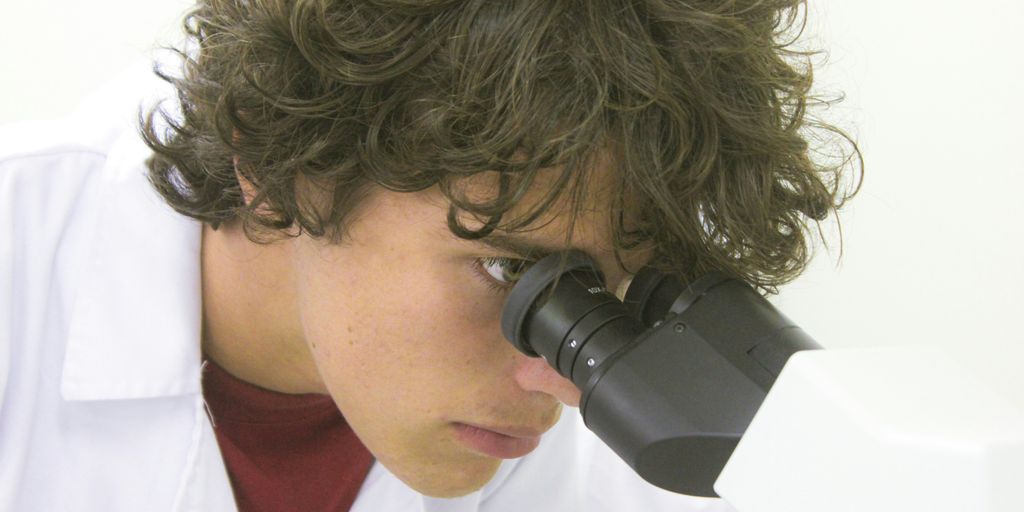
Okay, so 2024 saw some pretty cool stuff in science, but this one’s a game-changer. Lenacapavir. It’s not exactly a new drug, it got approved a couple of years ago, but the latest results are seriously impressive. We’re talking about HIV prevention here, and the numbers are kind of mind-blowing.
Basically, it’s a shot you get twice a year. Think about that – just two shots, and you’re protected. The trials showed something like a 96% to 100% success rate. That’s huge. It’s way better than having to remember to take a pill every single day. I know I’d forget, and I’m sure a lot of other people would too. This HIV prevention option is a big step forward.
It works by targeting the capsid protein, which is like the shell that protects the virus’s genetic material. And the cool thing is, because of how it works, it might open the door to new vaccines that target other viruses too. Science even called it the "breakthrough of the year".
Here’s a quick comparison to the daily pill, Truvada:
| Feature | Lenacapavir (Shot) | Truvada (Pill) |
|---|---|---|
| Administration | Twice a year | Daily |
| Adherence | Potentially better | Requires daily adherence |
| Success Rate | 96-100% | Varies with adherence |
It’s not just about convenience, though that’s a big part of it. It’s about effectiveness. If people don’t take their pills, it doesn’t matter how good the drug is. This shot takes that problem out of the equation. Plus, it could lead to even more breakthroughs down the road. Pretty neat, right?
2. Fruit Fly Brain
Okay, so, get this: scientists have mapped the entire brain of a fruit fly. I know, it sounds kinda weird, but it’s actually a huge deal. Like, think about it – a complete wiring diagram of a brain! It’s like having the ultimate instruction manual for how a brain works, even if it’s a tiny one. This could help us understand way more complex brains, like, you know, ours.
They basically took a fruit fly brain, which is about the size of a poppy seed, and sliced it super thin. Then, they took a million pictures with a really powerful microscope. After that, they used a computer to put all the pictures together and make a 3D model. It took them, like, ten years! That’s dedication.
One of the cool things they found is how fruit flies can quickly adapt their mating rituals. They can plug new sensory information, like different pheromones, into existing brain circuits. It’s like they’re using a neural mechanism that lets them rewire their brains really fast. This helps them evolve new behaviors without having to build everything from scratch. Pretty neat, huh?
3. Super-Earth
So, this year, scientists found another "super-Earth." What’s that mean? Basically, it’s a planet bigger than Earth but smaller than, say, Neptune. This one’s got scientists pretty excited because it might be habitable. I mean, might be. Let’s not pack our bags just yet.
This particular super-Earth, called TOI-715 b, is about one and a half times the size of Earth. It’s chilling out about 137 light-years away. What makes it interesting is that it’s in what they call the "conservative habitable zone" of its star. That’s the sweet spot where it’s not too hot and not too cold, so liquid water could exist on the surface. And, you know, liquid water is kind of important for life as we know it. The Transiting Exoplanet Survey Satellite (TESS) helped find it.
They also think there might be another, smaller planet in the same system, even closer to Earth’s size. If that’s confirmed, it would be the smallest exoplanet we’ve found in a habitable zone so far. Pretty cool, right?
Here’s a quick rundown:
- Planet: TOI-715 b
- Size: About 1.5x Earth’s width
- Distance: 137 light-years away
- Potential: Habitable zone
It’s all pretty mind-blowing when you think about it. There are so many planets out there, and we’re just starting to scratch the surface of finding them. Who knows what else we’ll discover?
4. Neanderthal Ancestry
It’s pretty well-known that humans and Neanderthals mixed it up at some point, right? I mean, we find Neanderthal DNA in people today. But figuring out when that happened on the Neanderthal timeline? That’s the tricky part. New research has pinpointed more precisely when humans and Neanderthals were getting together.
Researchers dug into the genomes of ancient humans from Eurasia (like, way back – between 2,000 and 45,000 years ago) and compared them to modern humans. They also looked at Neanderthal DNA. By comparing these segments, they figured out that humans and Neanderthals were hanging out in Eurasia for about 7,000 years! That’s a long time to be neighbors – or more than neighbors, if you catch my drift. The latest technology innovations are helping us understand our past.
They’re estimating this period lasted from about 50,500 years ago to 43,500 years ago, with a median date of around 47,000 years ago. So, next time someone brings up Neanderthals, you can tell them you know when the party was happening.
5. OpenCRISPR-1
Okay, so CRISPR is already pretty amazing, right? It’s like having molecular scissors that can edit DNA. Emmanuelle Charpentier and Jennifer Doudna even won the Nobel Prize in Chemistry for it back in 2020. But now, things are getting even wilder with AI.
Researchers are starting to use large language models (LLMs), similar to the AI that powers ChatGPT, to make CRISPR even better. The team at Profluent has created something called OpenCRISPR-1, and they’ve made it open-source so researchers everywhere can use it. The idea is that AI can help make gene editing more accurate and safer. This could seriously speed up the development of new treatments for genetic diseases.
Think about it: AI could analyze tons of genetic data to find the best places to make edits, predict the effects of those edits, and even design new CRISPR systems. It’s like giving CRISPR a super-smart brain. Of course, there are ethical concerns, which is why the Profluent team is emphasizing that OpenCRISPR-1 is for ethical use only. But the potential benefits are huge. Imagine a future where genetic diseases are easily corrected with the help of AI-powered CRISPR. That’s the dream, anyway.
6. Alzheimer’s Blood Test
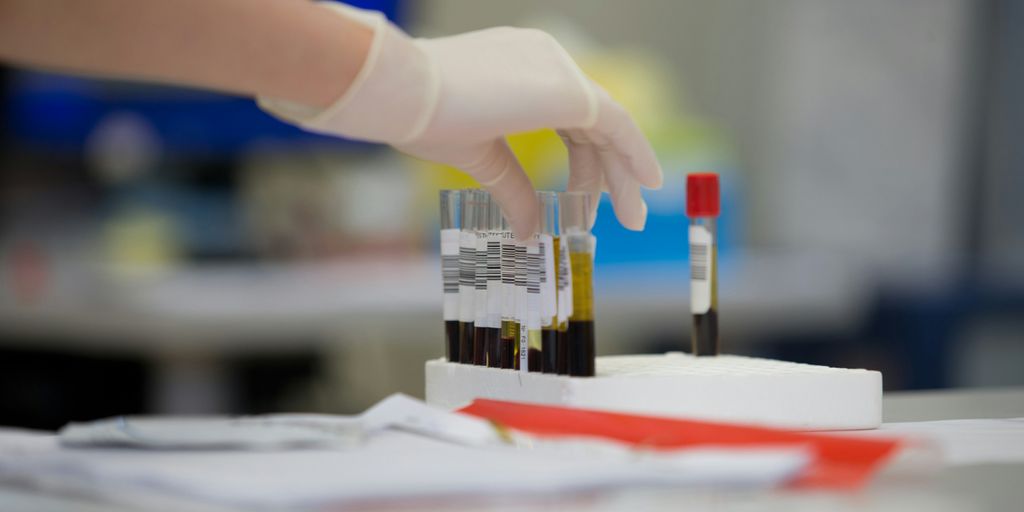
Okay, so Alzheimer’s is just awful. Watching someone you care about slowly lose their memories and who they are? It’s brutal. And the usual tests? Spinal taps or PET scans. Not exactly something you can just pop into your regular doctor for. This makes it hard to get a diagnosis and start treatment to slow things down.
But, get this: in 2024, some researchers, with help from the NIH, found that a simple blood test might be able to tell if someone has Alzheimer’s. They tested blood from over 1,200 older people, some in memory care and some just going to their regular doctor. They used a test called PrecivityAD2, which looks at amyloid beta and p-tau217 in the blood. Amyloid beta builds up in the brain because of Alzheimer’s.
They compared the blood test results to spinal fluid tests and PET scans. Turns out, the blood test was accurate about 88% to 92% of the time. They still need to tweak it a bit, but this could be a game-changer. Imagine how much easier it would be to get an early diagnosis! This could really change lives. Early detection is key, and this Alzheimer’s blood test could make a huge difference in the future of Prostate Specific Antigen (PSA) Testing Market.
7. Paleozoic Cave System
Okay, so this one’s pretty cool. Usually, when we find fossils, it’s bones, teeth, maybe some shells. Soft tissue? Forget about it. That stuff just doesn’t last millions of years. But in 2024, some researchers stumbled upon something really special: what they think is the oldest reptile skin ever found. I mean, how wild is that?
This skin dates back to the late Paleozoic Era, which is something like 20 million years ago. The scientists think the reptile might have been semi-aquatic, and get this – the scales haven’t changed much since then. It could have belonged to Captorhinus aguti, which was basically an iguana-sized reptile, but they aren’t totally sure. Still, finding fossilized reptile skin is a huge deal because it gives us a way better picture of what these ancient creatures actually looked like, not just their skeletons.
It’s like finding a missing piece of the puzzle. This discovery is helping us understand how these animals evolved and adapted over crazy long periods of time.
Here’s a quick rundown of why this find is so important:
- Rare Preservation: Soft tissue fossils are super rare.
- Evolutionary Insight: Shows how little reptile scales have changed.
- Ecosystem Understanding: Helps paint a clearer picture of the Paleozoic world.
8. Moons of Uranus and Neptune
Okay, so Uranus and Neptune already had a bunch of moons, right? Like, Uranus had 27 and Neptune had 14. But guess what? They got some new ones! Astronomers found three more moons in 2024, two orbiting Neptune and one around Uranus.
These moons are pretty faint, and they needed some serious telescopes to spot them. We’re talking about the Magellan in Chile and the Subaru in Hawaii. It’s pretty cool that they could even see them from Earth.
- The moon orbiting Uranus is tiny, only about 5 miles across. It takes 680 days to go around Uranus. That’s almost two years!
- One of Neptune’s new moons is about 14 miles across and takes 9 years to orbit. Can you imagine waiting nine years for one orbit?
- The other Neptune moon is about 8 miles across and takes a whopping 27 years to orbit. That’s longer than I’ve been alive!
These are the faintest moons ever seen with land telescopes. They had to use special image processing to even find them. It makes you wonder what else is out there that we can’t see yet. Maybe someday we’ll find even more moons! I wonder what true crime documentaries they have on those moons?
9. Vitamin A
Okay, so Vitamin A. We all know it’s good for you, right? Like, carrots and eyesight and all that jazz. But get this – turns out it’s doing way more than just helping you see in the dark. Scientists at Rockefeller University made a pretty cool discovery this year about how Vitamin A, specifically retinoic acid (that’s the active form), is involved in wound repair. Who knew?
Basically, hair follicle stem cells get all involved in healing, and Vitamin A is the mediator. It’s like it’s conducting the orchestra of skin regeneration. What’s even wilder is that these stem cells enter this temporary state of plasticity, where they act like multiple cell types at once. It’s like they’re shape-shifting to get the job done.
Now, here’s where it gets really interesting. This kind of unchecked plasticity is also seen in some cancer stem cells. So, the researchers are thinking that retinoids (Vitamin A derivatives) might actually play a role in suppressing cancer. It’s still early days, but the implications are huge. Imagine using something as simple as Vitamin A supplements to help fight cancer.
It’s one of those things that makes you go, "Huh, never would have guessed!" Vitamin A, the unsung hero of wound healing and maybe even cancer prevention. Science is weird, man.
10. Smallest Exoplanet
Okay, so space is HUGE, right? Like, mind-bogglingly big. And finding planets out there, especially small ones, is a serious challenge. But in 2024, astronomers might have just snagged a record. They spotted a potential exoplanet that could be the smallest one ever found chilling in a habitable zone. That’s the area around a star where liquid water could exist. Pretty cool, huh?
This possible planet, currently named TIC 271971130.02, is orbiting a star in the TOI-715 system. The main planet in that system, TOI-715 b, is a "super-Earth" – bigger than our planet but smaller than Neptune. It’s already confirmed and sitting pretty in the habitable zone. But this smaller, unconfirmed planet is the real star (pun intended!).
Think about it: a tiny world, potentially with water, orbiting another star light-years away. It really makes you wonder what’s out there. Discoveries like this are what keep scientists searching and pushing the boundaries of what we know about the universe. It’s like finding a needle in a cosmic haystack, but the needle might be a whole new world. The latest tech products are helping us find these planets.
Here’s a quick rundown:
- Potential Planet: TIC 271971130.02
- Location: TOI-715 system
- Significance: Could be the smallest exoplanet in a habitable zone
- Discovery Method: Transiting Exoplanet Survey Satellite (TESS)
It’s still early days, and more data is needed to confirm this planet’s existence and characteristics. But if it pans out, it’ll be a major win for exoplanet hunters and a fascinating glimpse into the diversity of planets out there. I’m excited to see what they find out next!
Wrapping Things Up
So, there you have it. 2024 was a pretty big year for science, right? We saw some truly amazing stuff happen, from new ways to fight sickness to figuring out more about space and even our own brains. It just goes to show that there’s always something new to learn, and people are always pushing the limits of what we know. It’s exciting to think about what next year might bring. Who knows what incredible things scientists will discover next? It’s a wild ride, and we’re all just here to see it unfold.




Prosecutors Say Jason Finkelstein Spent 11 Seconds Reviewing Cardiac Images Before Clearing a Teenage Athlete

Prosecutors Say Jason Finkelstein Spent 11 Seconds Reviewing Cardiac Images Before Clearing a Teenage Athlete
Prosecutors Say Jason Finkelstein Spent 11 Seconds Reviewing Cardiac Images Before Clearing a Teenage Athlete
Prosecutors Say Jason Finkelstein Spent 11 Seconds Reviewing Cardiac Images Before Clearing a Teenage Athlete

Prosecutors Say Jason Finkelstein Spent 11 Seconds Reviewing Cardiac Images Before Clearing a Teenage Athlete
Prosecutors Say Jason Finkelstein Spent 11 Seconds Reviewing Cardiac Images Before Clearing a Teenage Athlete

Prosecutors Say Jason Finkelstein Spent 11 Seconds Reviewing Cardiac Images Before Clearing a Teenage Athlete
Prosecutors Say Jason Finkelstein Spent 11 Seconds Reviewing Cardiac Images Before Clearing a Teenage Athlete
Prosecutors Say Jason Finkelstein Spent 11 Seconds Reviewing Cardiac Images Before Clearing a Teenage Athlete

Prosecutors Say Jason Finkelstein Spent 11 Seconds Reviewing Cardiac Images Before Clearing a Teenage Athlete
Prosecutors Say Jason Finkelstein Spent 11 Seconds Reviewing Cardiac Images Before Clearing a Teenage Athlete
Prosecutors Say Jason Finkelstein Spent 11 Seconds Reviewing Cardiac Images Before Clearing a Teenage Athlete
Prosecutors Say Jason Finkelstein Spent 11 Seconds Reviewing Cardiac Images Before Clearing a Teenage Athlete

Prosecutors Say Jason Finkelstein Spent 11 Seconds Reviewing Cardiac Images Before Clearing a Teenage Athlete
Prosecutors Say Jason Finkelstein Spent 11 Seconds Reviewing Cardiac Images Before Clearing a Teenage Athlete

-
Alternative Energy4 days ago
Brian Rowan’s Possible Defense: No Intent, No Control, No Fraud, Just Sales
-
Alternative Energy4 days ago
Federal Grand Jury Indicts Oren Shachar in Hospice Fraud Case
-
Education4 days ago
Daniel Cullen Delafield on Bridging Executive Leadership and Skilled Trades Development
-
Business4 days ago
How Darrell Seale Builds High-Performing Teams Through Service-Based Leadership
-

 News2 days ago
Prosecutors Say Jason Finkelstein Spent 11 Seconds Reviewing Cardiac Images Before Clearing a Teenage Athlete
-
News1 day ago
Prosecutors Say Jason Finkelstein Spent 11 Seconds Reviewing Cardiac Images Before Clearing a Teenage Athlete
-
News2 days ago
Prosecutors Say Jason Finkelstein Spent 11 Seconds Reviewing Cardiac Images Before Clearing a Teenage Athlete
-
News1 day ago
Prosecutors Say Jason Finkelstein Spent 11 Seconds Reviewing Cardiac Images Before Clearing a Teenage Athlete