
Markets
Understanding Stock Performance: A Deep Dive into 52 Weeks High and Low


Ever wonder how some folks seem to know when a stock is about to make a big move? Well, a lot of it comes down to understanding key numbers, and one of the most talked-about is the 52-week high and low. These aren’t just random figures; they tell a story about a stock’s journey over the past year. Knowing how to read them can really help you make better choices with your money. This article will break down what these numbers mean and how you can use them to your advantage.
Key Takeaways
- The 52-week high and low show a stock’s price range over a year, helping you see its past performance.
- These numbers can help you spot potential support and resistance levels, which are like price floors and ceilings.
- Looking at the 52-week high low can give you clues about how strong a stock’s trend is over time.
- While useful, these numbers don’t tell the whole story; it’s good to use them with other info.
- Buying stocks near their 52-week low can sometimes offer good opportunities, but it’s important to do your homework first.
Understanding the 52-Week Average in the Stock Market
The 52-week average is a pretty important number when you’re looking at stocks. It basically tells you how a stock has been doing over the past year. It’s not perfect, but it can give you a good idea of whether a stock is generally going up or down. It’s calculated by averaging the closing prices of a stock over the last 52 weeks.
Calculation Method
Okay, so how do you actually figure out the 52-week average? It’s not too hard. Here’s the breakdown:
- First, you need to get the closing price for each of the last 52 weeks.
- Then, add all those prices together.
- Finally, divide that total by 52.
That’s it! You’ve got your 52-week average. This gives you a smoothed-out view of the stock’s price over the year, which helps to cut out some of the short-term ups and downs. You can use reputable financial platforms to get the data.
Adjusted Prices for Accuracy
Now, here’s a thing to keep in mind: sometimes, you need to adjust the prices before you calculate the average. This is because things like stock splits or dividends can mess with the numbers. For example, if a company does a stock split, the price will suddenly drop, but that doesn’t mean the company is actually doing worse. So, you need to adjust the old prices to account for the split. Here are some things to consider:
- Adjusted prices: Make sure you’re using prices that have been adjusted for stock splits, dividends, and other corporate actions.
- Volume consideration: Looking at trading volume can give you more context. High volume might mean a price move is more significant.
- Outlier identification: Really big price swings can throw off the average, so keep an eye out for those.
Importance of Reliable Data Sources
If you’re going to use the 52-week average, you need to make sure you’re getting your data from a good source. You want a source that’s accurate and up-to-date. Using bad data can lead to bad decisions, and nobody wants that. I would suggest using reputable financial platforms or APIs to access high-quality, adjusted price data for calculations.
Significance of the 52-Week Average for Investors
The 52-week average is a really useful tool for investors. It gives you some good info about how a stock is doing and what’s happening in the market. It’s especially helpful for figuring out support and resistance levels and seeing long-term trends.
Identifying Support and Resistance Levels
The 52-week average can help you find key support and resistance levels for a stock. Support levels are like floors – they’re where a stock price is likely to stop falling. Resistance levels are like ceilings – they’re where a stock might have trouble going higher. I’ve noticed that if a stock’s price is dropping and gets close to its 52-week average, that average often acts like a support level. On the other hand, if the price is rising and hits the average from below, it can act like resistance. Knowing this can help you decide when to buy or sell, and where to set stop-loss orders to protect your money.
Gauging Long-Term Trends
The 52-week average is great for spotting long-term trends in stock prices. It smooths out all the little ups and downs, so you can see the bigger picture. If a stock price stays above its 52-week average for a while, that usually means it’s in an upward trend. If it stays below, it’s probably in a downward trend. I use this to make sure my investments are going with the flow of the market. It helps me decide when to buy, hold, or sell stocks.
Informing Investment Decisions
Ultimately, the 52-week average is there to help you make better investment decisions. By looking at where a stock is in relation to its average, you can get a sense of whether it’s overbought or oversold. You can also use it to confirm trends you see with other indicators. It’s not a crystal ball, but it can give you an edge when you’re trying to figure out what a stock might do next.
Comparing 52-Week Average to Other Technical Indicators
The 52-week average is useful, but it’s not the only tool out there. Let’s see how it stacks up against other common technical indicators.
Moving Averages
Moving averages are all about smoothing out price data to show the overall trend. The 52-week average is just one type, giving us a long-term view. Other popular ones include the 50-day and 200-day moving averages. The shorter the period, the more responsive it is to recent price changes. The 52-week average is less sensitive to short-term swings, making it better for spotting long-term trends.
Here’s a quick comparison:
| Moving Average | Time Frame | Key Characteristics |
|---|---|---|
| 52-week | 1 year | Long-term trend, less responsive to short-term changes |
| 200-day | ~9 months | Medium to long-term trend, slightly more responsive |
| 50-day | ~2 months | Short to medium-term trend, more responsive to recent price changes |
Using them together can give you a more complete picture. For example, if a stock is above its 52-week average but below its 50-day, it might be a sign of a short-term correction within a longer-term uptrend. You can check TechStocksRally for more information.
High-Low Index
The High-Low Index looks at the number of stocks hitting new 52-week highs versus those hitting new 52-week lows. It’s a breadth indicator, showing the overall participation in a market move. A rising High-Low Index suggests a healthy uptrend, while a falling one suggests weakness.
- The 52-week average focuses on an individual stock’s price relative to its past performance.
- The High-Low Index looks at the market as a whole.
- They can be used together to confirm trends. For example, a stock above its 52-week average in a market with a rising High-Low Index is a stronger signal than either alone.
Relative Strength Index
The Relative Strength Index (RSI) is a momentum indicator, measuring the speed and change of price movements. It oscillates between 0 and 100. Readings above 70 are often considered overbought, while readings below 30 are oversold.
- RSI helps identify potential reversals.
- The 52-week average helps identify the overall trend.
- If a stock is trading near its 52-week high but the RSI is showing overbought conditions, it might be a sign of a pullback. Conversely, a stock near its 52-week low with an oversold RSI could be a buying opportunity.
Limitations of the 52-Week Average
While the 52-week average can be a useful tool, it’s important to understand where it falls short. It’s not a magic bullet, and relying on it alone can lead to problems. Let’s look at some of the main limitations.
Lagging Indicator Challenges
The biggest issue with the 52-week average is that it’s a lagging indicator. This means it’s based on past data, not what’s happening right now or what will happen in the future. It reacts to price movements that have already occurred. So, by the time the 52-week average signals a trend change, the actual change might have already happened, and you could miss out on potential profits or even incur losses. It’s like driving while only looking in the rearview mirror – you’re seeing where you’ve been, not where you’re going. This can be a problem when trying to implement a momentum strategy.
Reduced Effectiveness in Volatile Markets
In calm markets, the 52-week average can be pretty reliable. But when things get volatile, it becomes less useful. During periods of high market swings, the 52-week average might not accurately reflect what’s really going on. The rapid price changes can cause the average to fluctuate wildly, leading to false signals. It struggles to keep up with the speed of the market, making it harder to make informed decisions. Think of it like trying to use a map in a hurricane – the map is still there, but it’s not going to help you much when everything is swirling around you.
Over-Reliance Risks
It’s tempting to rely heavily on the 52-week average because it seems simple and straightforward. However, putting too much faith in any single indicator is a bad idea. The 52-week average doesn’t tell the whole story. It doesn’t consider things like company news, economic factors, or overall market sentiment.
Here are some things the 52-week average doesn’t account for:
- Company earnings reports
- Changes in management
- New product launches
- Interest rate changes
- Geopolitical events
If you only look at the 52-week average, you might miss important information that could affect your investment decisions. It’s important to use it in combination with other tools and analysis techniques to get a more complete picture of a stock’s potential. You should also be using moving averages to get a better sense of the market.
Incorporating the 52-Week Average into Trading Strategies
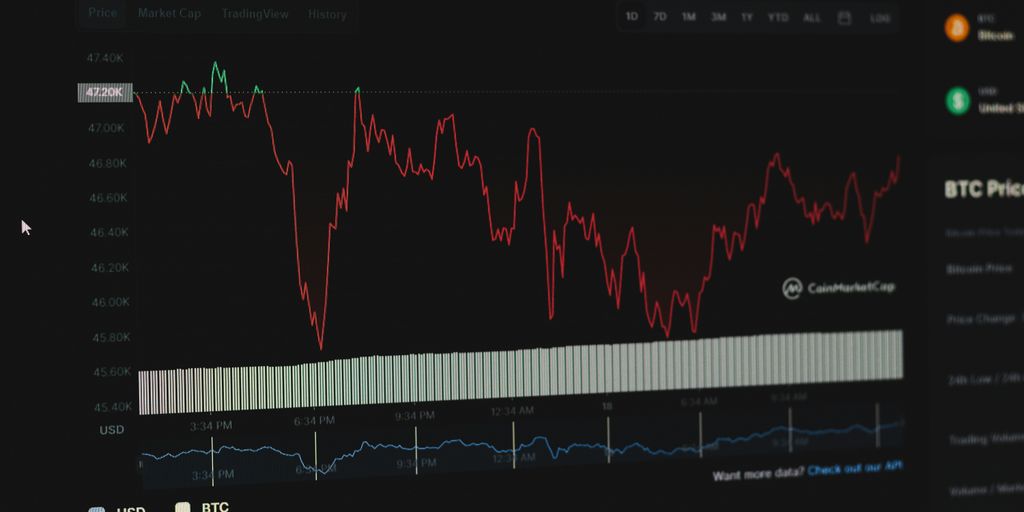
The 52-week average can really help with your trading, but it’s not a magic bullet. It’s more like another tool in your toolbox. Here’s how I use it to make better decisions and keep my risk in check.
Setting Entry and Exit Points
The 52-week average can be a good guide for figuring out when to jump into or out of a stock. Think of it this way: if a stock price is consistently above its 52-week average, that could signal a good time to buy, especially if it dips down close to the average. It might act as a support level. On the flip side, if the price is usually below the average, you might want to think about selling. It can act as resistance.
Managing Risk with Stop-Loss Orders
I always use stop-loss orders to protect myself, and the 52-week average can help me set them. If I’m buying a stock, I might place a stop-loss order just below the 52-week average. That way, if the price suddenly drops, I’m not stuck holding a loser for too long. It’s all about limiting the damage. This helps me sleep better at night, knowing I have a plan in place.
Combining with Fundamental Analysis
Don’t rely only on the 52-week average. It’s just one piece of the puzzle. I always combine it with fundamental analysis, which means looking at things like the company’s earnings, debt, and overall financial health. A stock might look good based on the 52-week average, but if the company is in trouble, it’s probably not a good investment.
Here’s what I look at:
- Earnings Reports: Are they growing or shrinking?
- Debt Levels: Is the company carrying too much debt?
- Industry Trends: Is the industry growing or declining?
By combining the 52-week average with fundamental analysis, I get a much clearer picture of whether a stock is worth buying. It takes more time, but it’s worth it in the long run.
Benefits of Investing in 52-Week Low Stocks
Potential for Excessive Returns
One of the most appealing aspects of investing in stocks hitting their 52-week lows is the potential for significant returns. If a company is fundamentally sound but temporarily facing headwinds, buying its stock at a low point could lead to substantial gains when it rebounds. It’s like catching a falling knife, but if you know what you’re doing, it can be very rewarding. Of course, there’s risk involved, but the potential upside is there. For example, if you had used sophisticated financial tools to identify a good company at its low, the returns could be great.
Lower Risk Compared to Highs
It might sound counterintuitive, but buying a stock at its 52-week low can actually be less risky than buying it at its high. Think about it: if a stock is already trading at a high, there’s less room for it to go up, and more room for it to fall. When you buy low, you’re potentially limiting your downside. Of course, this isn’t always the case – some stocks are low for a reason – but generally, the risk/reward ratio can be more favorable. Plus, you’re getting the stock at a discount. It’s like buying something on sale; you’re getting more for your money.
Portfolio Diversification Opportunities
Investing in 52-week low stocks can also be a great way to diversify your portfolio. By adding these stocks, you’re not only spreading your risk, but you’re also potentially increasing your chances of finding undervalued assets. It’s like casting a wider net; you’re more likely to catch something good. Just make sure you do your research and don’t put all your eggs in one basket. Diversification is key to long-term success in the stock market. Here are some diversification strategies:
- Invest in different sectors.
- Include both large-cap and small-cap stocks.
- Consider international stocks.
Navigating 52-Week Low Stocks
Definition of 52-Week Low Stocks
So, what exactly are 52-week low stocks? Simply put, these are stocks trading at their lowest price point over the past year (52 weeks). It’s a straightforward metric, but it can signal a variety of things. Hitting a 52-week low doesn’t automatically mean a stock is a bargain, but it definitely warrants a closer look. It’s like finding something on clearance – could be a steal, could be damaged goods. You need to investigate!
Reasons Stocks Reach Their 52-Week Low
There are tons of reasons why a stock might tumble to its 52-week low. It could be company-specific issues, like poor earnings reports, a scandal, or a failed product launch. Or, it could be broader market trends, such as an economic downturn, industry-wide challenges, or just plain old investor panic. Sometimes, a stock might reach its low because of a combination of factors. Here’s a quick rundown:
- Poor Financial Performance: Declining revenue, shrinking profits, or mounting debt can scare investors.
- Industry Downturn: If the entire sector is struggling, even well-managed companies can get dragged down.
- Negative News: Bad press, lawsuits, or regulatory issues can trigger a sell-off.
- Market Correction: A general market decline can impact even healthy stocks.
Common Misconceptions About Lows
One of the biggest mistakes investors make is assuming that a 52-week low automatically equals a buying opportunity. That’s just not true! A low price doesn’t always mean a stock is undervalued. Sometimes, it’s a sign of deeper problems. Another misconception is that a stock has to bounce back after hitting a low. It might, but it also might keep falling. It’s important to do your homework and avoid these common traps. Don’t just assume that low-priced shares are undervalued. Here are some common misconceptions:
- Low Price = Undervalued: A low price doesn’t guarantee a bargain; it could reflect real problems.
- Guaranteed Rebound: Stocks don’t always bounce back; further decline is possible.
- Ignoring Fundamentals: Focusing solely on the price without analyzing the company’s health is risky.
Wrapping Things Up
So, there you have it. Looking at a stock’s 52-week high and low can really give you a good idea of where it’s been and maybe where it’s headed. It’s not the only thing to check, of course. You still need to think about other stuff, like what the company actually does and what’s going on in the world. But using these numbers, along with other tools, can help you make smarter choices when you’re trying to figure out what to buy or sell. It’s all about getting a clearer picture, right?




Prosecutors Say Jason Finkelstein Spent 11 Seconds Reviewing Cardiac Images Before Clearing a Teenage Athlete

Prosecutors Say Jason Finkelstein Spent 11 Seconds Reviewing Cardiac Images Before Clearing a Teenage Athlete
Prosecutors Say Jason Finkelstein Spent 11 Seconds Reviewing Cardiac Images Before Clearing a Teenage Athlete
Prosecutors Say Jason Finkelstein Spent 11 Seconds Reviewing Cardiac Images Before Clearing a Teenage Athlete

Prosecutors Say Jason Finkelstein Spent 11 Seconds Reviewing Cardiac Images Before Clearing a Teenage Athlete
Prosecutors Say Jason Finkelstein Spent 11 Seconds Reviewing Cardiac Images Before Clearing a Teenage Athlete

Prosecutors Say Jason Finkelstein Spent 11 Seconds Reviewing Cardiac Images Before Clearing a Teenage Athlete
Prosecutors Say Jason Finkelstein Spent 11 Seconds Reviewing Cardiac Images Before Clearing a Teenage Athlete
Prosecutors Say Jason Finkelstein Spent 11 Seconds Reviewing Cardiac Images Before Clearing a Teenage Athlete

Prosecutors Say Jason Finkelstein Spent 11 Seconds Reviewing Cardiac Images Before Clearing a Teenage Athlete
Prosecutors Say Jason Finkelstein Spent 11 Seconds Reviewing Cardiac Images Before Clearing a Teenage Athlete
Prosecutors Say Jason Finkelstein Spent 11 Seconds Reviewing Cardiac Images Before Clearing a Teenage Athlete
Prosecutors Say Jason Finkelstein Spent 11 Seconds Reviewing Cardiac Images Before Clearing a Teenage Athlete

Prosecutors Say Jason Finkelstein Spent 11 Seconds Reviewing Cardiac Images Before Clearing a Teenage Athlete
Prosecutors Say Jason Finkelstein Spent 11 Seconds Reviewing Cardiac Images Before Clearing a Teenage Athlete

-
Alternative Energy5 days ago
Brian Rowan’s Possible Defense: No Intent, No Control, No Fraud, Just Sales
-
Alternative Energy5 days ago
Federal Grand Jury Indicts Oren Shachar in Hospice Fraud Case
-
Business4 days ago
How Darrell Seale Builds High-Performing Teams Through Service-Based Leadership
-
Education4 days ago
Daniel Cullen Delafield on Bridging Executive Leadership and Skilled Trades Development
-

 News2 days ago
Prosecutors Say Jason Finkelstein Spent 11 Seconds Reviewing Cardiac Images Before Clearing a Teenage Athlete
-
News2 days ago
Prosecutors Say Jason Finkelstein Spent 11 Seconds Reviewing Cardiac Images Before Clearing a Teenage Athlete
-
News2 days ago
Prosecutors Say Jason Finkelstein Spent 11 Seconds Reviewing Cardiac Images Before Clearing a Teenage Athlete
-
News2 days ago
Prosecutors Say Jason Finkelstein Spent 11 Seconds Reviewing Cardiac Images Before Clearing a Teenage Athlete