Artificial Intelligence
Pramod Kunju on the Ethical Implications of AI in Law Enforcement

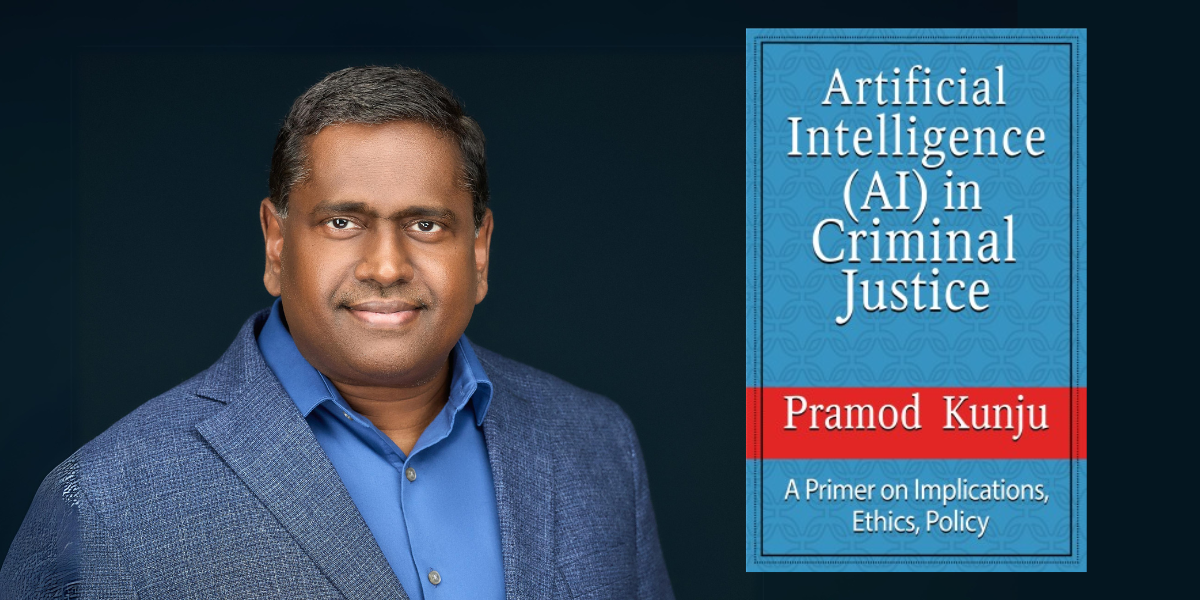
As artificial intelligence reshapes law enforcement practices worldwide, one crucial question emerges: How do we ensure these powerful tools serve justice rather than compromise it? For Pramod Kunju, author of “AI in Criminal Justice,” this ethical challenge lies at the heart of implementing artificial intelligence in law enforcement systems.
The ethical implications of AI in law enforcement aren’t merely theoretical concerns. Through his comprehensive research, Kunju examines how Machine Learning algorithms, while promising enhanced efficiency, raise fundamental questions about individual rights, fairness, and transparency in criminal justice processes.
Understanding these ethical challenges requires a unique blend of technical knowledge and criminal justice expertise. Kunju’s educational background reflects this dual requirement: a BTech in Electronics and Communication from IIT Madras and an MBA in Information Systems and Finance from IIM Ahmedabad provide deep technical understanding, while his Master’s in Criminal Justice from UC Irvine and MBA from Pepperdine University offer crucial insights into justice system implications.
“Everything indicates that this trend will continue to grow,” Kunju observes about AI’s expanding role in law enforcement. His book addresses the ethical complexities of implementing these technologies, particularly in sensitive areas like recidivism risk prediction and predictive policing, where algorithmic decisions can significantly impact individual lives.
Through detailed analysis, Kunju explores how Data Analytics and AI technologies transform law enforcement operations. His research examines crucial ethical considerations: How do we prevent algorithmic bias? What safeguards protect individual privacy? How can we ensure transparency in AI-driven decisions that affect fundamental rights?
The ethical framework Kunju develops goes beyond surface-level concerns. His work demonstrates how Machine Learning algorithms, similar to those used in private sector applications, must be carefully adapted for law enforcement use. This adaptation requires robust ethical guidelines to protect individual rights while advancing justice system capabilities.
His book delves deep into the moral implications of AI implementation. From examining potential biases in predictive algorithms to establishing frameworks for ethical deployment, Kunju’s research provides comprehensive guidance for maintaining ethical standards in technology-enhanced law enforcement.
The impact of AI on privacy rights receives particular attention in his work. Kunju’s research explores how law enforcement agencies can leverage advanced analytics while respecting individual privacy protections. This balance becomes increasingly crucial as predictive technologies grow more sophisticated.
Understanding the importance of ethical oversight, Kunju emphasizes the need for transparent AI systems in law enforcement. His work examines how agencies can implement these technologies while maintaining public trust through clear accountability measures and ethical guidelines.
The ethical implications extend to decision-making processes throughout the justice system. Kunju’s research demonstrates how AI tools can enhance rather than replace human judgment, ensuring that ethical considerations remain central to law enforcement operations.
Through his analysis, Kunju addresses fundamental questions about algorithmic fairness in law enforcement. His work provides frameworks for evaluating AI systems’ ethical impact, ensuring they serve justice equitably across all community segments.
The research examines practical applications of ethical AI in law enforcement settings. From initial contact through final disposition, Kunju’s work shows how agencies can maintain ethical standards while leveraging technological capabilities to enhance operations.
Recognizing the importance of accessible knowledge in ethical technology implementation, Kunju shares insights through multiple platforms. His expertise reaches diverse audiences through podcast appearances on Spotify (https://spoti.fi/3SI18tc), Apple (https://apple.co/3ysNJ1t), and SoundCloud (https://bit.ly/3Yz2CK3).
As law enforcement agencies worldwide consider AI implementation, Kunju’s ethical frameworks become increasingly valuable. His research provides crucial guidance for maintaining moral standards while advancing technological capabilities in justice systems.
The ethical implications of AI in law enforcement continue evolving, and Kunju’s work offers essential insights for navigating these challenges. His research demonstrates how technological advancement and ethical considerations can work together in creating more just and fair law enforcement systems.
For those seeking to understand the ethical dimensions of AI in law enforcement, Kunju’s expertise provides invaluable guidance. To explore his insights into ethical AI implementation, visit www.pramodkunju.com or access his book “AI in Criminal Justice” on Amazon.



SolForger Launches as a Non-Custodial Solana Developer Platform for Builders, Creators, and On-Chain Projects

Securing the Future: Jayen Consulting Officially Migrates to a New Digital Domain

Focusing on Compliance, Truoux Advances MAS License Application

Truoux Advances UK FCA License Application, Deepens Compliance Strategic Layout

Truoux Optimizes Risk Control and AML Systems, Accelerating the RMO and DAX License Application Process

Rovum Builds Momentum in On-Chain Settlement Markets

Why Small Shipping Boxes Are Becoming the Default for 25-unit Trial Runs

Radio Ads and Personal Spending: Where Prosecutors Allege the Dynamic Money Millions Went

The $34 Million Deception: Where the Guam Charity Bingo Money Really Went

Celeste White’s Influence on Sustainable Agricultural Practices in Napa Valley

Inside the 12-Count Federal Indictment Against Fugitive Darren Anthony Robinson

FBI Most Wanted: The Hunt for “Fake Heiress” Mary Carole McDonnell

Piet Mondrian x Doodles: Five of Modern Art’s Most Iconic Masterworks Reimagined as Digital Collectibles and Physical Art Prints — For the First Time Ever

CRYMADX Is Trying to Fix What’s Broken in Crypto — And It Might Actually Work

Legal Lines in a Shadowed Space: When People Falsify Death to Dodge Prosecution