
Green Technology
Can AI Replace Doctors? The Future of AI-Powered Healthcare

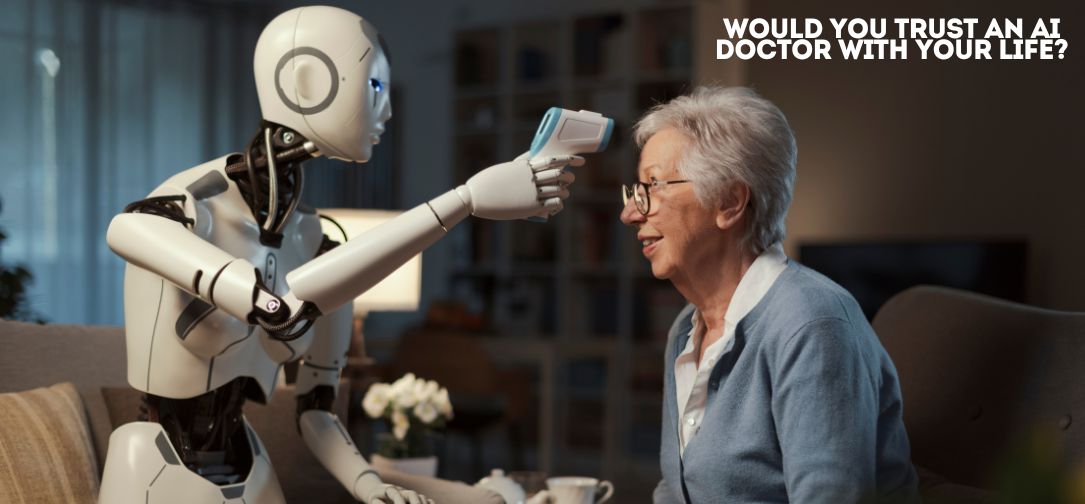
Imagine walking into a clinic, expecting to see a doctor, but instead, you’re greeted by an AI-powered robot. In seconds, it scans your symptoms, analyzes your medical history, and prescribes the best treatment plan. Would you trust it?
Artificial Intelligence (AI) is revolutionizing healthcare, from diagnosing diseases to assisting in surgeries. But as AI becomes more advanced, one big question remains: Can AI replace human doctors? Let’s explore the benefits, challenges, and ethical concerns surrounding AI in healthcare.
AI in Healthcare Today
AI is already transforming the medical field. From chatbots providing 24/7 health advice to machine learning algorithms diagnosing conditions with incredible accuracy, AI is proving to be a game-changer.
Breakthroughs in AI Healthcare:
- Medical Imaging & Diagnostics: AI can detect diseases like cancer, pneumonia, and diabetic retinopathy with over 95% accuracy in some cases. Machine learning models trained on thousands of X-rays, MRIs, and CT scans can identify abnormalities faster than radiologists.
- Predictive Analytics: AI can analyze patient data to predict disease outbreaks, track the progression of chronic conditions, and suggest preventive measures. This is particularly useful in managing conditions like diabetes and heart disease.
- Robotic Surgery: AI-assisted robots perform minimally invasive surgeries with high precision, reducing human error and leading to faster patient recovery times.
- Virtual Health Assistants: AI-powered chatbots and virtual assistants provide instant medical consultations, reducing the strain on healthcare professionals and improving patient access to medical advice.
With such advancements, AI is not just a futuristic concept, it’s already a critical part of modern medicine.
The Benefits of AI-Powered Healthcare
AI is revolutionizing patient care in several ways:
- Faster & More Accurate Diagnoses
AI can analyze thousands of medical records within seconds, helping doctors diagnose diseases earlier and more accurately than traditional methods. This can lead to early detection of conditions such as cancer, where timely intervention can save lives.
- Cost-Effective Healthcare
By automating routine administrative tasks, AI reduces operational costs in healthcare institutions. Telemedicine and AI-driven diagnostics can also reduce the need for in-person visits, making medical services more accessible and affordable.
- 24/7 Availability
Unlike human doctors, AI-powered healthcare tools can provide medical support at any time. This is particularly beneficial for remote areas with limited access to healthcare professionals.
- Reduced Human Error
Human doctors can make mistakes due to fatigue, stress, or oversight. AI, when properly trained, minimizes the risk of errors, ensuring that diagnoses and treatment plans are based on the most accurate data available.
- Personalized Treatment Plans
AI can analyze genetic information, lifestyle data, and medical history to create highly personalized treatment plans. This can lead to more effective treatments with fewer side effects.
The Risks & Ethical Concerns of AI in Medicine
While AI has many advantages, there are also serious challenges and risks to consider:
- Lack of Human Empathy
A major drawback of AI is its inability to understand human emotions. Compassion and empathy play a crucial role in patient care, particularly in fields like palliative care and mental health treatment. AI lacks the human touch that patients often need, which can be especially important when delivering difficult diagnoses or offering emotional support. While AI can simulate empathetic responses through programmed scripts and voice modulation, it does not truly comprehend emotions or form meaningful connections with patients. This limitation raises concerns about whether AI-driven healthcare can provide the same level of trust, reassurance, and personalized care that human doctors offer.
- Data Privacy & Security Issues
AI relies on massive amounts of patient data. But who owns this data? How secure is it? Healthcare data breaches could expose sensitive personal information, raising ethical concerns about patient confidentiality. Additionally, the misuse of patient data by third parties, such as insurance companies or pharmaceutical firms, poses serious ethical dilemmas. Strict regulations and encryption technologies are necessary to ensure data integrity and prevent unauthorized access. Without proper safeguards, AI-driven healthcare risks becoming a double-edged sword, enhancing medical treatment while simultaneously jeopardizing patient privacy.
- Risk of Misdiagnosis
AI is only as good as the data it’s trained on. If an AI model is not properly trained or if it lacks sufficient data on rare conditions, it can misdiagnose patients, leading to serious medical consequences. Additionally, biases in training data can result in disparities in diagnoses, potentially affecting underrepresented patient groups. This raises ethical concerns about whether AI can provide equitable healthcare across diverse populations. Furthermore, AI lacks the ability to consider complex contextual factors in a patient’s symptoms, which human doctors use to refine diagnoses.
- The Human vs. Machine Debate
If AI becomes too dominant, will human doctors become obsolete? The medical profession is built on years of training, experience, and intuition, qualities that AI cannot fully replicate. The idea of AI replacing human doctors raises concerns about job security and the dehumanization of healthcare.
- Legal & Ethical Responsibility
If an AI makes a wrong diagnosis or prescribes incorrect medication, who is responsible? Current laws are not fully equipped to handle such scenarios, creating legal gray areas that need to be addressed.
The Future: AI & Human Doctors Working Together
Rather than replacing doctors, AI is more likely to enhance healthcare delivery. The ideal future for healthcare involves AI working alongside human doctors to improve efficiency and patient outcomes.
Here’s how AI can assist doctors:
- Handling Routine Diagnoses and Administrative Tasks: AI can take care of routine check-ups, analyze medical records, and handle paperwork, allowing doctors to focus on more complex cases.
- Providing Data-Driven Insights: AI can help doctors make better treatment decisions by analyzing large datasets, identifying patterns, and recommending personalized treatments.
- Enhancing Surgical Precision: AI-assisted robotic systems can help surgeons perform complex procedures with greater accuracy and minimal invasiveness.
- Improving Medical Training: AI-powered simulations and virtual reality tools can provide medical students with hands-on training, improving their skills before working with real patients.
Conclusion: Would You Trust an AI Doctor?
AI in healthcare is no longer a distant dream, it’s happening now. But should we trust AI to make life-or-death medical decisions? While AI offers speed, accuracy, and efficiency, it lacks the human touch, empathy, and ethical judgment that human doctors provide.
Instead of replacing doctors, AI should be seen as a powerful tool that enhances their abilities. A balanced approach, where AI supports human doctors rather than replacing them, can lead to the best possible healthcare system.
What do you think? Would you trust an AI doctor with your life?.


















Prosecutors Say Jason Finkelstein Spent 11 Seconds Reviewing Cardiac Images Before Clearing a Teenage Athlete

Prosecutors Say Jason Finkelstein Spent 11 Seconds Reviewing Cardiac Images Before Clearing a Teenage Athlete
Prosecutors Say Jason Finkelstein Spent 11 Seconds Reviewing Cardiac Images Before Clearing a Teenage Athlete
Prosecutors Say Jason Finkelstein Spent 11 Seconds Reviewing Cardiac Images Before Clearing a Teenage Athlete

Prosecutors Say Jason Finkelstein Spent 11 Seconds Reviewing Cardiac Images Before Clearing a Teenage Athlete
Prosecutors Say Jason Finkelstein Spent 11 Seconds Reviewing Cardiac Images Before Clearing a Teenage Athlete

Prosecutors Say Jason Finkelstein Spent 11 Seconds Reviewing Cardiac Images Before Clearing a Teenage Athlete
Prosecutors Say Jason Finkelstein Spent 11 Seconds Reviewing Cardiac Images Before Clearing a Teenage Athlete
Prosecutors Say Jason Finkelstein Spent 11 Seconds Reviewing Cardiac Images Before Clearing a Teenage Athlete

Prosecutors Say Jason Finkelstein Spent 11 Seconds Reviewing Cardiac Images Before Clearing a Teenage Athlete
Prosecutors Say Jason Finkelstein Spent 11 Seconds Reviewing Cardiac Images Before Clearing a Teenage Athlete
Prosecutors Say Jason Finkelstein Spent 11 Seconds Reviewing Cardiac Images Before Clearing a Teenage Athlete
Prosecutors Say Jason Finkelstein Spent 11 Seconds Reviewing Cardiac Images Before Clearing a Teenage Athlete

Prosecutors Say Jason Finkelstein Spent 11 Seconds Reviewing Cardiac Images Before Clearing a Teenage Athlete
Prosecutors Say Jason Finkelstein Spent 11 Seconds Reviewing Cardiac Images Before Clearing a Teenage Athlete

-
Alternative Energy5 days ago
Brian Rowan’s Possible Defense: No Intent, No Control, No Fraud, Just Sales
-
Alternative Energy4 days ago
Federal Grand Jury Indicts Oren Shachar in Hospice Fraud Case
-
Business4 days ago
How Darrell Seale Builds High-Performing Teams Through Service-Based Leadership
-
Education4 days ago
Daniel Cullen Delafield on Bridging Executive Leadership and Skilled Trades Development
-

 News2 days ago
Prosecutors Say Jason Finkelstein Spent 11 Seconds Reviewing Cardiac Images Before Clearing a Teenage Athlete
-
News2 days ago
Prosecutors Say Jason Finkelstein Spent 11 Seconds Reviewing Cardiac Images Before Clearing a Teenage Athlete
-
News2 days ago
Prosecutors Say Jason Finkelstein Spent 11 Seconds Reviewing Cardiac Images Before Clearing a Teenage Athlete
-
News2 days ago
Prosecutors Say Jason Finkelstein Spent 11 Seconds Reviewing Cardiac Images Before Clearing a Teenage Athlete