
Technology
The Race to Mars: SpaceX, NASA, and the Future of Space Exploration

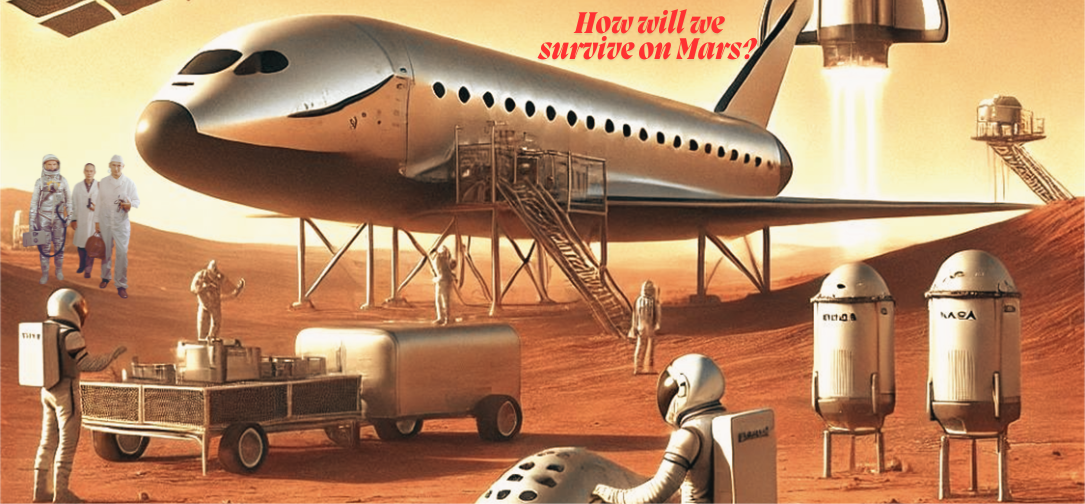
For centuries, Mars has captivated the human imagination. From ancient astronomers gazing at the red dot in the night sky to modern science fiction novels envisioning thriving Martian cities, our fascination with the Red Planet has never wavered. But now, in the 21st century, that dream is becoming a reality. The race to Mars is well underway, driven by private companies like SpaceX and governmental agencies like NASA, each with its own vision for humanity’s future beyond Earth.
This isn’t just a race to plant a flag; it’s a mission to establish a permanent human presence in another world. But who will get there first? How will we survive on Mars? And what does this mean for the future of space exploration?
Let’s dive into the technology, ambitions, and challenges shaping the most daring space race in human history.
The Players: SpaceX vs. NASA
SpaceX: The Private Space Pioneer
No discussion about Mars exploration is complete without mentioning SpaceX. Founded in 2002 by Elon Musk, the company’s ultimate goal is to make humanity a “multi-planetary species.” Musk envisions a self-sustaining colony on Mars, complete with thousands of settlers living and working on the planet.
Starship: The Rocket That Will Take Us to Mars
The key to SpaceX’s Martian ambitions is Starship, a fully reusable spacecraft designed for interplanetary travel. With the ability to carry 100+ passengers, Starship is unlike any rocket we’ve ever built. The rocket’s Super Heavy booster provides enough thrust to escape Earth’s gravity, and it’s in-orbit refueling system enables it to make the long journey to Mars.
Current Status (2025):
- SpaceX has conducted multiple successful test flights of Starship.
- Plans are in motion for an uncrewed cargo mission to Mars by 2026.
- Crewed missions could launch as early as 2029-2031.
Musk’s vision doesn’t stop at exploration. His plan is to send 1,000 Starships to Mars over the next few decades, creating a city of one million people by 2050.
But SpaceX isn’t alone in this race.
NASA: The Government Giant with a Proven Track Record
NASA has been studying Mars for decades. From the Curiosity and Perseverance rovers to the Ingenuity helicopter, the agency has been gathering vital information about the Martian environment. Unlike SpaceX’s rapid innovation approach, NASA is taking a methodical and research-driven path toward human exploration of Mars.
The Artemis Program: A Stepping Stone to Mars
NASA’s Artemis program aims to establish a sustainable human presence on the Moon before heading to Mars. Why? Because the Moon serves as a training ground—allowing astronauts to test life support systems, habitats, and deep-space travel technology in a lower-risk environment.
NASA’s Mars Plan (2030s):
- Continue robotic missions to gather critical data.
- Utilize the Moon as a launching base for deep-space travel.
- Send humans to Mars by the late 2030s for an initial exploratory mission.
While NASA’s timeline is longer than SpaceX’s, the agency’s careful approach ensures maximum safety for astronauts, something that will be crucial for long-duration space missions.
The Technology: How Do We Get There?
Getting to Mars is one of the greatest engineering challenges ever undertaken. Here are some of the cutting-edge technologies making the journey possible:
- Advanced Rocket Systems
- SpaceX’s Starship will be the most powerful rocket ever built, capable of carrying both cargo and crew.
- NASA is developing the Space Launch System (SLS), a heavy-lift rocket designed for deep-space travel.
- In-Orbit Refueling
- Since a single launch from Earth doesn’t carry enough fuel for the entire trip, SpaceX is pioneering in-orbit refueling, where Starships refuel in space before heading to Mars.
- Artificial Intelligence & Robotics
- Robots and AI-powered assistants will build infrastructure on Mars before humans arrive.
- SpaceX has suggested sending Tesla’s Optimus robot to Mars for basic construction tasks.
- 3D-Printed Habitats
- NASA is funding projects to create 3D-printed Mars habitats using local Martian soil.
- This would eliminate the need to transport massive amounts of building materials from Earth.
- Sustainable Life Support Systems
- Growing food on Mars will be essential. Scientists are testing ways to use Martian soil and hydroponic farming for long-term survival.
- SpaceX and NASA are developing oxygen generation systems, like MOXIE (Mars Oxygen In-Situ Resource Utilization Experiment), which extracts oxygen from Mars’ carbon dioxide-rich atmosphere.
The Challenges: Why Mars Is So Hard
Deadly Environment: Mars is freezing, with average temperatures of -81°F (-63°C).
Dust Storms: Massive storms can last for months, blocking sunlight and damaging equipment.
Radiation Exposure: Without Earth’s protective magnetic field, astronauts will face dangerous cosmic radiation.
The Long Journey: The trip to Mars takes 6-9 months one way, meaning astronauts will be isolated for years.
Survival: Unlike Earth, Mars has no breathable air, liquid water, or natural food sources; everything must be brought or produced on-site.
Despite these hurdles, the determination to reach Mars remains stronger than ever.
The Future: What Happens Next?
2025-2026: More Tests and Uncrewed Missions
- SpaceX will continue Starship test flights and may attempt an uncrewed Mars landing by 2026.
- NASA will continue robotic exploration and finalize Moon base plans.
2029-2031: First Crewed Missions to Mars
- SpaceX hopes to land the first humans on Mars by 2029 or early 2030s.
- NASA aims to send astronauts sometime in the late 2030s.
2040s-2050s: Building a Mars Colony
- SpaceX wants to establish a self-sustaining city on Mars, with one million residents by 2050.
- NASA envisions smaller scientific research stations before large-scale settlements.
If everything goes according to plan, the next generation of humans could be born on Mars—the first true interplanetary citizens.
Why This Matters: The Bigger Picture
The race to Mars isn’t just about exploration it’s about the future of humanity.
Planetary Backup: Mars offers a second home for humanity in case of disasters on Earth.
Technological Advancements: Innovations in space travel benefit industries on Earth, from AI to medicine.
Inspiring the Next Generation: The Mars race fuels curiosity, innovation, and scientific discovery.
Whether SpaceX, NASA, or another player reaches Mars first, one thing is certain: humanity’s next great adventure has begun.
So, are you ready for the Mars era?






















Prosecutors Say Jason Finkelstein Spent 11 Seconds Reviewing Cardiac Images Before Clearing a Teenage Athlete

Prosecutors Say Jason Finkelstein Spent 11 Seconds Reviewing Cardiac Images Before Clearing a Teenage Athlete
Prosecutors Say Jason Finkelstein Spent 11 Seconds Reviewing Cardiac Images Before Clearing a Teenage Athlete
Prosecutors Say Jason Finkelstein Spent 11 Seconds Reviewing Cardiac Images Before Clearing a Teenage Athlete

Prosecutors Say Jason Finkelstein Spent 11 Seconds Reviewing Cardiac Images Before Clearing a Teenage Athlete
Prosecutors Say Jason Finkelstein Spent 11 Seconds Reviewing Cardiac Images Before Clearing a Teenage Athlete

Prosecutors Say Jason Finkelstein Spent 11 Seconds Reviewing Cardiac Images Before Clearing a Teenage Athlete
Prosecutors Say Jason Finkelstein Spent 11 Seconds Reviewing Cardiac Images Before Clearing a Teenage Athlete
Prosecutors Say Jason Finkelstein Spent 11 Seconds Reviewing Cardiac Images Before Clearing a Teenage Athlete

Prosecutors Say Jason Finkelstein Spent 11 Seconds Reviewing Cardiac Images Before Clearing a Teenage Athlete
Prosecutors Say Jason Finkelstein Spent 11 Seconds Reviewing Cardiac Images Before Clearing a Teenage Athlete
Prosecutors Say Jason Finkelstein Spent 11 Seconds Reviewing Cardiac Images Before Clearing a Teenage Athlete
Prosecutors Say Jason Finkelstein Spent 11 Seconds Reviewing Cardiac Images Before Clearing a Teenage Athlete

Prosecutors Say Jason Finkelstein Spent 11 Seconds Reviewing Cardiac Images Before Clearing a Teenage Athlete
Prosecutors Say Jason Finkelstein Spent 11 Seconds Reviewing Cardiac Images Before Clearing a Teenage Athlete

-
Alternative Energy5 days ago
Brian Rowan’s Possible Defense: No Intent, No Control, No Fraud, Just Sales
-
Alternative Energy5 days ago
Federal Grand Jury Indicts Oren Shachar in Hospice Fraud Case
-
Business4 days ago
How Darrell Seale Builds High-Performing Teams Through Service-Based Leadership
-
Education4 days ago
Daniel Cullen Delafield on Bridging Executive Leadership and Skilled Trades Development
-

 News2 days ago
Prosecutors Say Jason Finkelstein Spent 11 Seconds Reviewing Cardiac Images Before Clearing a Teenage Athlete
-
News2 days ago
Prosecutors Say Jason Finkelstein Spent 11 Seconds Reviewing Cardiac Images Before Clearing a Teenage Athlete
-
News2 days ago
Prosecutors Say Jason Finkelstein Spent 11 Seconds Reviewing Cardiac Images Before Clearing a Teenage Athlete
-
News2 days ago
Prosecutors Say Jason Finkelstein Spent 11 Seconds Reviewing Cardiac Images Before Clearing a Teenage Athlete