
Government
U.S. Government Greenlights Controversial Deep Sea Mining Initiative

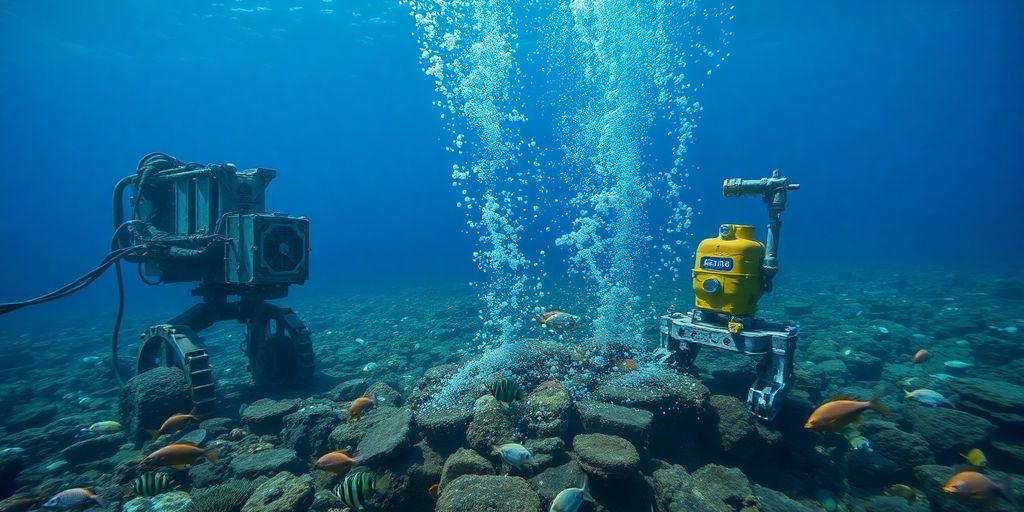
The U.S. government has officially confirmed its support for deep sea mining plans, following President Trump’s recent executive order. This move aims to enhance the country’s access to critical minerals while bypassing established international regulations, sparking significant backlash from environmental groups and other nations.
Key Takeaways
- President Trump signed an executive order to expedite deep sea mining in U.S. and international waters.
- The initiative aims to position the U.S. as a leader in seabed mineral exploration, potentially boosting the economy by $300 billion over the next decade.
- Environmentalists and international bodies criticize the move for undermining global cooperation and risking marine ecosystems.
Overview of the Executive Order
The executive order, signed by President Trump, seeks to accelerate the process of issuing exploration licenses and recovery permits for deep sea mining. This initiative is part of a broader strategy to secure access to valuable minerals such as cobalt and rare earth elements, which are essential for various industries, including technology and healthcare.
The order emphasizes the U.S. commitment to becoming a global leader in responsible seabed mineral exploration. However, it has raised concerns about its implications for international law and environmental protection.
International Backlash
The announcement has drawn sharp criticism from several quarters:
- China’s Response: The Chinese government condemned the U.S. action, stating it violates international law and undermines the interests of the global community. China, a dominant player in the rare earths market, views this move as a direct challenge to its position.
- Environmental Concerns: Organizations like Greenpeace have expressed outrage, arguing that the U.S. is bypassing the International Seabed Authority (ISA), which is responsible for regulating deep sea mining. They warn that this could lead to irreversible damage to marine ecosystems.
- Global Moratorium Calls: Over 30 countries have voiced support for a moratorium on deep sea mining until further scientific research can assess its environmental impacts.
Economic Implications
The U.S. administration estimates that deep sea mining could significantly boost the economy, projecting an increase of $300 billion in GDP and the creation of approximately 100,000 jobs over the next decade. This economic incentive is a driving force behind the push for expedited mining operations.
Environmental Risks
Critics highlight the potential environmental risks associated with deep sea mining:
- Ecosystem Disruption: Mining activities could disrupt delicate marine ecosystems, affecting species that inhabit the ocean floor and the water column above.
- Long-Term Damage: Studies indicate that while some sediment-dwelling creatures may recover from disturbances, larger marine animals may not return due to habitat loss.
- Irreplaceable Resources: The polymetallic nodules targeted for mining take millions of years to form, raising concerns about the sustainability of such practices.
Future of Deep Sea Mining
While the U.S. government is moving forward with its plans, the timeline for actual mining operations remains uncertain. The Metals Company, a key player in the industry, has expressed intentions to begin mining as early as 2027, pending the acquisition of necessary permits.
As the situation develops, the international community is closely monitoring the U.S. actions, with many advocating for a unified stance against unilateral mining initiatives that threaten global marine resources. The debate over deep sea mining continues to highlight the tension between economic interests and environmental stewardship, raising critical questions about the future of ocean governance.
Sources




Prosecutors Say Jason Finkelstein Spent 11 Seconds Reviewing Cardiac Images Before Clearing a Teenage Athlete

Prosecutors Say Jason Finkelstein Spent 11 Seconds Reviewing Cardiac Images Before Clearing a Teenage Athlete
Prosecutors Say Jason Finkelstein Spent 11 Seconds Reviewing Cardiac Images Before Clearing a Teenage Athlete
Prosecutors Say Jason Finkelstein Spent 11 Seconds Reviewing Cardiac Images Before Clearing a Teenage Athlete

Prosecutors Say Jason Finkelstein Spent 11 Seconds Reviewing Cardiac Images Before Clearing a Teenage Athlete
Prosecutors Say Jason Finkelstein Spent 11 Seconds Reviewing Cardiac Images Before Clearing a Teenage Athlete

Prosecutors Say Jason Finkelstein Spent 11 Seconds Reviewing Cardiac Images Before Clearing a Teenage Athlete
Prosecutors Say Jason Finkelstein Spent 11 Seconds Reviewing Cardiac Images Before Clearing a Teenage Athlete
Prosecutors Say Jason Finkelstein Spent 11 Seconds Reviewing Cardiac Images Before Clearing a Teenage Athlete

Prosecutors Say Jason Finkelstein Spent 11 Seconds Reviewing Cardiac Images Before Clearing a Teenage Athlete
Prosecutors Say Jason Finkelstein Spent 11 Seconds Reviewing Cardiac Images Before Clearing a Teenage Athlete
Prosecutors Say Jason Finkelstein Spent 11 Seconds Reviewing Cardiac Images Before Clearing a Teenage Athlete
Prosecutors Say Jason Finkelstein Spent 11 Seconds Reviewing Cardiac Images Before Clearing a Teenage Athlete

Prosecutors Say Jason Finkelstein Spent 11 Seconds Reviewing Cardiac Images Before Clearing a Teenage Athlete
Prosecutors Say Jason Finkelstein Spent 11 Seconds Reviewing Cardiac Images Before Clearing a Teenage Athlete

-
Alternative Energy5 days ago
Brian Rowan’s Possible Defense: No Intent, No Control, No Fraud, Just Sales
-
Alternative Energy5 days ago
Federal Grand Jury Indicts Oren Shachar in Hospice Fraud Case
-
Business4 days ago
How Darrell Seale Builds High-Performing Teams Through Service-Based Leadership
-
Education4 days ago
Daniel Cullen Delafield on Bridging Executive Leadership and Skilled Trades Development
-

 News2 days ago
Prosecutors Say Jason Finkelstein Spent 11 Seconds Reviewing Cardiac Images Before Clearing a Teenage Athlete
-
News2 days ago
Prosecutors Say Jason Finkelstein Spent 11 Seconds Reviewing Cardiac Images Before Clearing a Teenage Athlete
-
News2 days ago
Prosecutors Say Jason Finkelstein Spent 11 Seconds Reviewing Cardiac Images Before Clearing a Teenage Athlete
-
News2 days ago
Prosecutors Say Jason Finkelstein Spent 11 Seconds Reviewing Cardiac Images Before Clearing a Teenage Athlete