Business
Can Padded Envelopes Cut Damage Rates Without Slowing Same-Day Fulfillment?

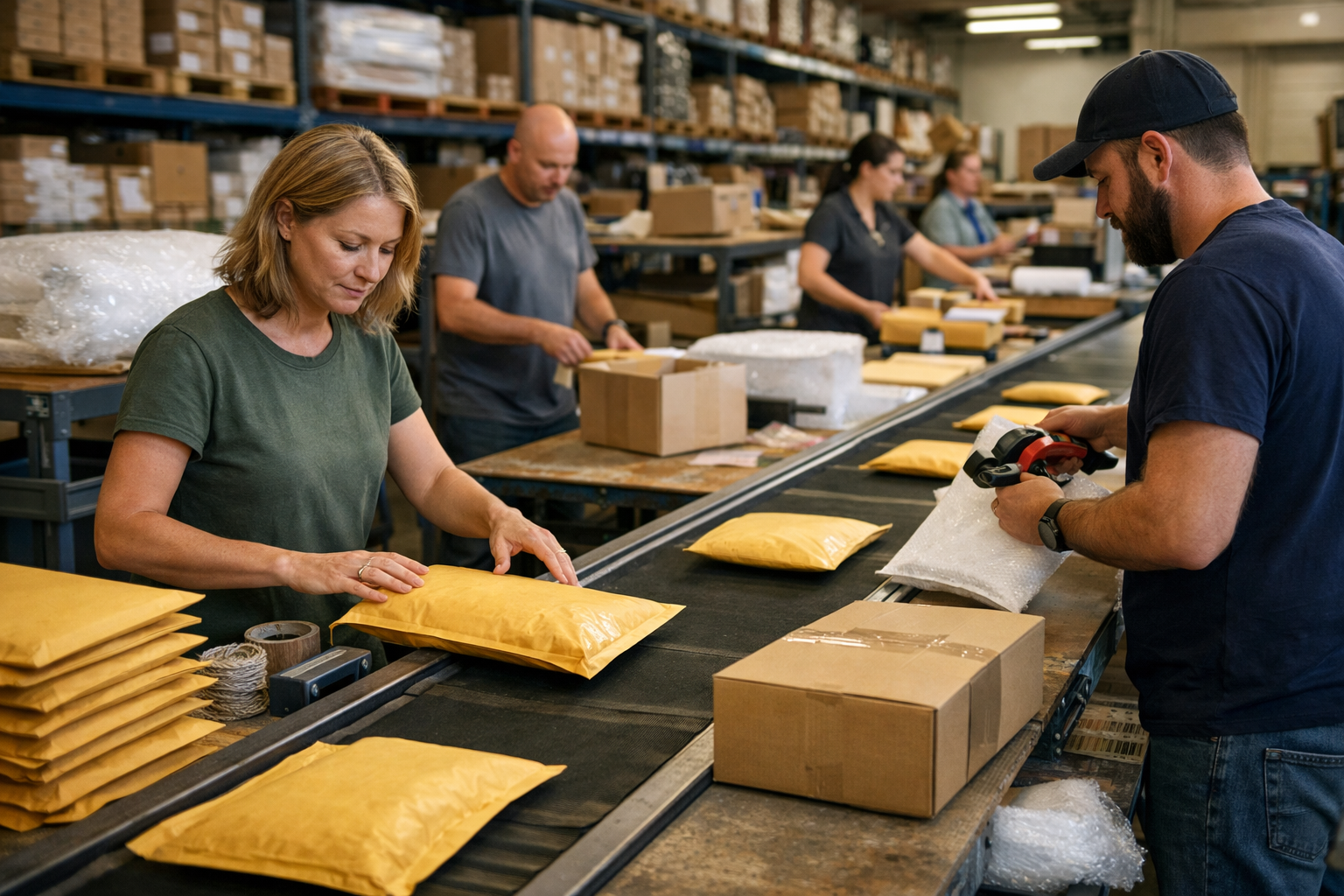
Key Takeaways
- Match padded envelopes to the right SKUs first: soft goods, flat kits, and low-crush items often ship with lower postage and fewer damage claims than oversized boxes.
- Test fit before rollout. Padded envelopes only protect well when the item-to-envelope size is tight enough to limit shifting, which is why 6×10, 9×12, and other common sizes need SKU-level rules.
- Check the small details that affect speed: a strong self-seal flap, durable liners, and clean label placement can keep same-day fulfillment moving instead of creating slowdowns at the pack bench.
- Compare padded envelopes against boxes and bubble mailers by total cost, not unit price alone—postage, storage density, pack time, and returns usually tell the real story.
- Watch for failure points in cheap padded envelopes. Split seams, weak liner adhesion, and poor puncture resistance tend to show up fast in higher return rates and more rework.
- Run a 30-day padded envelopes trial by SKU and track four numbers: pack time, postage, damage rate, and customer feedback. That gives shipping teams a clear go, no-go, or test-again decision.
Shipping costs are up, customer patience is down, and one weak pack decision can wipe out the margin on an order. That’s why padded envelopes are back on the table for DTC operations teams that used to default to boxes for almost everything. In practice, the question isn’t whether an envelope looks cheaper. It’s whether it protects well enough, moves fast enough, and trims enough postage to matter by the end of the month.
For operations managers and shipping coordinators, that math gets real fast. A box might add 20 to 60 seconds of labor once void fill, tape, and sizing errors enter the station flow—while a well-matched padded mailer can move through pick-pack lines with less handling and less shelf space (which matters more than most teams admit). But here’s the thing: poor fit kills the upside. If the item slides, bends, or stresses the flap, damage rates climb and same-day fulfillment starts to choke. The honest answer is that padded formats can cut both postage and claims, but only when the product profile, envelope size, and pack process actually work together.
Why padded envelopes are back in the shipping conversation for DTC operations
Packed right, padded envelopes cut postage and touch time at the same moment.
- Rate pressure changed the math. Carriers keep pushing teams to trim cube, not just weight, so soft goods, accessories, and flat kits are moving out of cartons and into Shipping envelopes. A 9×12 or 6×10 format often avoids wasted void space, and that matters every day.
- Damage now hits three lines on the P&L. A cracked item isn’t just a refund—it adds pick labor, replacement freight, and a higher chance the customer never buys again. For low-fragility SKUs, a bubble mailer or kraft bubble mailer can protect better than an oversized box with loose fill, especially for small parts, cards, beauty items, and paper goods.
- Speed matters on the pack line. In fast-pick operations, fewer motions win. Self-seal formats close faster than erecting, taping, and filling cartons, which is why teams are revisiting shipping envelope options that store flat and reduce replenishment walks. That time adds up—10 seconds saved across 800 orders is more than two labor hours.
Carrier rate pressure is forcing teams to rethink boxes vs padded envelopes
The shift is practical, not cosmetic. Right-sized padded envelopes reduce air, material spend, and pack-station clutter.
Damage claims are no longer a packaging issue alone — they hit margin, labor, and repeat purchase rates
Here’s what most teams miss: damage claims expose weak SKU matching, not just weak materials.
Where padded envelopes fit in a fast-pick, fast-pack workflow
Best use cases are apparel add-ons, refill packs, soft accessories, and flat paper mailers programs—items that need surface protection, not rigid walls.
No shortcuts here — this step actually counts.
Padded envelopes vs boxes vs bubble mailers: which format wins by product type?
About 7 out of 10 avoidable parcel damage claims in DTC ops come from poor format choice, not carrier handling—and that’s the part teams can fix fast. For padded envelopes, the real question isn’t whether they’re cheaper than cartons; it’s whether they protect the item without adding pick time, void fill, or wasted cubic inches.
Soft goods, accessories, and kits that ship well in padded envelopes
Soft apparel, flat accessories, note cards, and compact refill kits usually fit best in Shipping envelopes or padded envelopes with a self-seal flap. A bubble mailer works for small items that need light bubble protection but don’t need a box.
Fragile, rigid, and crush-sensitive items that still need corrugated protection
Rigid goods—glass, hardbound books, framed pieces, or plastic components with sharp edges—still belong in corrugated. If the item can crack, bend, or fail under top-load pressure, boxes beat padded envelopes every time. That’s the honest answer.
How kraft bubble mailers, poly bubble mailers, and paper padded envelopes differ in daily use
A kraft bubble mailer gives a paper exterior with bubble liners inside, which helps brands that want a cleaner paper look. Poly versions resist moisture better. Paper mailers sort well in packing stations where recycling rules matter (and presentation does too).
The size question: 6×10, 9×12, mini, square, and large envelope choices that avoid wasted space
Size discipline saves money. Common shipping envelope options like 6×10 for jewelry or cords and 9×12 for tees or document packs cut dead space, while mini, square, and large formats should match the product layout within half an inch. Too much air invites movement. Too little creates seam stress.
Simple idea. Harder to get right than it sounds.
- Use padded envelopes for compressible goods
- Use boxes for crush-sensitive SKUs
- Match sizes before buying in bulk
Can padded envelopes lower damage rates without adding pack time?
Like a smart conversation over coffee: yes, padded envelopes can cut damage without slowing same-day fulfillment, but only if the item-to-pack fit is tight enough to stop sliding. In practice, the biggest pack-time drag isn’t the mailer. It’s bad fit. A shirt in oversized Shipping envelopes shifts, bunches at the flap, and forces repacking.
What most warehouses miss: pack speed drops when the envelope and item fit poorly
Here’s what most teams miss—pack speed falls fast when the usable size is off by even 1 inch. A 6×10 format may work for cards, labels, or a small document set, while a 9×12 envelope fits flatter goods better. For soft goods, a bubble mailer works best when the product fills 70% to 90% of the cavity. Too loose, and damage risk rises. Too tight, and the sealer area wrinkles.
Self-seal flap, liners, and closure strength — small design details that change throughput
Small details matter. A clean self-seal flap saves 2 to 4 seconds per order, and that adds up over 500 picks. Strong liners and a firm closure reduce opener complaints, split seams, and edge catches on conveyors. For brands testing eco-lean shipping envelope options, a kraft bubble mailer can protect small goods while keeping the pack station simple. Some SKUs also fit well in paper mailers.
A simple dock test for compression, edge impact, and puncture risk before a full rollout
Realistically, one dock test beats a week of debate:
The data backs this up, again and again.
- Pack 20 live orders in padded envelopes
- Run a 3-foot edge drop and corner drop
- Stack 25 pounds on top for 30 minutes
- Check puncture marks, flap lift, and item movement
If damage stays under 1% and average pack time holds, the switch is probably worth it.
How shipping teams should evaluate padded envelopes for postage, storage, and labor
Speed breaks when packaging choice is wrong.
That mistake usually shows up in two places at once: postage spend climbs, and the packing line starts losing seconds on every order. The better answer is to test padded envelopes by carton replacement rate, damage pattern, and station time—not by unit price alone.
Weight and parcel profile: where padded envelopes save money over cartons
For soft goods, accessories, — flat kits, padded envelopes often beat cartons on parcel profile. A 9×12 shipping envelope options review should compare:
- ounce savings versus a box plus void fill
- lower cube on parcels under 1 inch thick
- damage fit for items that don’t need rigid walls
A bubble mailer usually works for small items that need light cushion but not full corrugated protection. A kraft bubble mailer can make sense for brands that want a paper look while still keeping a bubble liner inside.
Worth pausing on that for a second.
Storage density matters — envelopes take less floor and shelf space than case-packed boxes
Flat stock wins. Padded envelopes and other Shipping envelopes can store hundreds in the footprint needed for a few box bundles, which matters fast in growing pick-pack rooms (especially near the bench).
Packing station flow: opener, labels, document inserts, and sealer choices that keep lines moving
At the station, labor is the real cost. In practice, one client-side packaging adviser at The Boxery sees the best gains when SKUs are sorted into three packaging lanes. Not five. Three.
Buying padded envelopes for commercial use: what operations managers should compare first
A fast-growing apparel brand cut pack time by 11 seconds per order after dropping one oversized mailer size and adding two better-fit padded envelopes. Damage claims also fell the same month. That’s the buying lesson: the right spec saves labor and protects margin at the same time.
Material choices: kraft, paper, plastic, Tyvek-style, and colored options
Start with the item, not the catalog. A kraft bubble mailer works for books, cosmetics, and boxed accessories; a poly-style bubble mailer fits moisture-sensitive goods; Tyvek-style liners help with tear resistance; and colored options can support brand presentation without changing the pack station flow.
For softer goods and lower break risk, teams often compare paper mailers against plastic formats to trim postage and reduce excess fill.
Bulk ordering, custom printing, and right-size assortment planning for growing brands
Bluntly, too many SKUs create picking drag. Most DTC teams do better with:
- 3 to 5 core shipping envelope options
- Two high-run sizes like 6×10 and 9×12
- One large format for seasonal spikes
Custom printing looks good, — the bigger win is assortment logic—matching order data to actual envelope sizes, flap clearance, liner thickness, and sealer strength. In practice, Shipping envelopes should be bought by order mix, not guesswork.
Red flags in cheap padded envelopes that show up as returns, split seams, or weak liner adhesion
The honest answer is simple. Cheap padded envelopes usually fail at the seams, at the flap, or at the bubble liner bond (that’s where return costs start). Watch for thin paper faces, weak side seals, poor labels adhesion, and burst-prone corners—small flaws that turn into damaged units fast.
This is the part people underestimate.
A practical decision framework for choosing padded envelopes in same-day fulfillment
Could padded envelopes lower damage without creating a packing bottleneck? Usually, yes—if the operation sets rules before the shift starts instead of leaving packers to guess at the bench.
The three-bucket test: ship now in padded envelopes, test next, keep in boxes
Start with three buckets:
- Ship now: soft goods, flat accessories, refill packs, and items under 1 inch thick that fit standard Shipping envelopes or a bubble mailer.
- Test next: light cosmetics, boxed supplements, and sturdy small electronics that may work in a kraft bubble mailer.
- Keep in boxes: fragile goods, premium presentation SKUs, and products with crush risk at corners.
How to set packaging rules by SKU dimensions, break risk, and presentation needs
If a SKU is under 9×12, weighs less than 1 pound, and passes a squeeze test with no sharp edges, it moves into padded envelopes. If it needs rigid walls, printed inserts, or a gift-grade unboxing moment, boxes stay in play. Teams comparing shipping envelope options should also separate poly from paper mailers for branding and recycling goals.
What a good trial looks like over 30 days — pack time, postage, damage rate, and customer response
A useful 30-day trial tracks four numbers:
- Pack time per order
- Postage by package type
- Damage or return rate
- Customer notes about package condition
In practice, a brand should test 200 to 500 orders—enough volume to spot a real pattern, not a fluke. If pack time drops by even 6 seconds per order and damage stays flat or falls, padded envelopes earn a bigger share of the mix.
Frequently Asked Questions
Does the USPS have free padded envelopes?
Yes, but only for specific Priority Mail and Priority Mail Express services. Those padded envelopes aren’t free for any shipment type; the packaging is included only if the sender uses the matching service and pays that postage rate.
What are padded envelopes called?
Padded envelopes are often called bubble mailers, padded mailers, or cushioned mailers. The term usually points to an envelope with a paper or plastic outer layer and interior liners that protect small items during transit.
What is a USPS padded envelope?
A USPS padded envelope usually means a Priority Mail Flat Rate Padded Envelope, which has built-in cushioning and ships at a flat rate within that service class. It’s useful for soft goods, small boxed items, and products that need more protection than a standard paper envelope can give.
How much do USPS padded envelopes cost?
The envelope itself may be supplied at no charge for eligible mail classes, — the postage isn’t free. Rates change, so operations teams should check current postal pricing before building packout rules around padded envelopes or flat rate options.
Are padded envelopes cheaper than boxes?
Often, yes. For light, low-profile products, padded envelopes can cut postage and material cost at the same time—especially when a box would add dead space and push the shipment into a higher billed weight or size tier.
Real results depend on getting this right.
When should a brand use padded envelopes instead of bubble mailers or boxes?
Here’s the honest answer: a lot of people use the terms interchangeably, but the real choice is about risk. Use padded envelopes for items that need light cushioning, use a sturdier bubble mailer for small fragile goods with low crush risk, — move to boxes when the product can crack, bend, or dent under stack pressure.
What sizes of padded envelopes are most useful for DTC shipping?
Three sizes cover a surprising share of daily orders: 4×8 for jewelry and mini accessories, 6×10 for cosmetics and small parts, and 9×12 for apparel, books, and flat kits. Brands with wider assortments should map product dimensions to usable interior space, not the listed outside sizes on the envelope.
Are kraft padded envelopes or poly padded envelopes better?
Neither is always better. Kraft padded envelopes look more natural and pair well with paper-heavy packaging programs, while poly padded envelopes resist moisture better and hold up well in rough parcel networks (that matters more than people think).
Can padded envelopes be custom printed?
Yes, and custom printing can work well for brands that care about presentation without moving every SKU into a box. But print shouldn’t drive the choice—protection, sealer strength, flap design, and the right sizes matter more than colored graphics if damage rates are creeping up.
Are padded envelopes good for documents, cards, and photos?
Sometimes. Padded envelopes add cushioning for documents, note cards, and photos, but they don’t stop bends on their own. If the contents must stay flat, add a stiff liner or chipboard insert inside the envelope.
The smart move isn’t swapping every carton for a softer format and hoping the numbers work. It’s putting each SKU where it belongs. For light apparel, flat accessories, and compact kits, padded envelopes can trim parcel weight, free up shelf space, and keep pack stations moving. But poor fit still creates trouble fast — bent corners, split seams, wasted motions at the bench, and damage that shows up later as replacements, labor, and margin loss.
That’s why the best teams treat packaging as an operating rule, not a purchasing choice. They sort items into clear groups, match mailer size to the product’s real profile, and test closure strength, puncture risk, and compression before changing a full line. A 30-day trial is usually enough to spot the truth (good or bad) if the team tracks pack time, postage per shipment, damage claims, and customer comments by SKU.
The next step is simple: pull the top 25 same-day SKUs by volume this week, place each into ship now, test next, or box only, and run a measured padded envelopes trial before the next replenishment cycle.
For more great reading, visit our site and explore related topics.



SolForger Launches as a Non-Custodial Solana Developer Platform for Builders, Creators, and On-Chain Projects

Securing the Future: Jayen Consulting Officially Migrates to a New Digital Domain

Focusing on Compliance, Truoux Advances MAS License Application

Truoux Advances UK FCA License Application, Deepens Compliance Strategic Layout

Truoux Optimizes Risk Control and AML Systems, Accelerating the RMO and DAX License Application Process

Rovum Builds Momentum in On-Chain Settlement Markets

Why Small Shipping Boxes Are Becoming the Default for 25-unit Trial Runs

Radio Ads and Personal Spending: Where Prosecutors Allege the Dynamic Money Millions Went

The $34 Million Deception: Where the Guam Charity Bingo Money Really Went

Celeste White’s Influence on Sustainable Agricultural Practices in Napa Valley

Inside the 12-Count Federal Indictment Against Fugitive Darren Anthony Robinson

FBI Most Wanted: The Hunt for “Fake Heiress” Mary Carole McDonnell

Piet Mondrian x Doodles: Five of Modern Art’s Most Iconic Masterworks Reimagined as Digital Collectibles and Physical Art Prints — For the First Time Ever

CRYMADX Is Trying to Fix What’s Broken in Crypto — And It Might Actually Work

Legal Lines in a Shadowed Space: When People Falsify Death to Dodge Prosecution