
Immigration
Trump’s Immigration Crackdown: Legal Battles and Policy Shifts

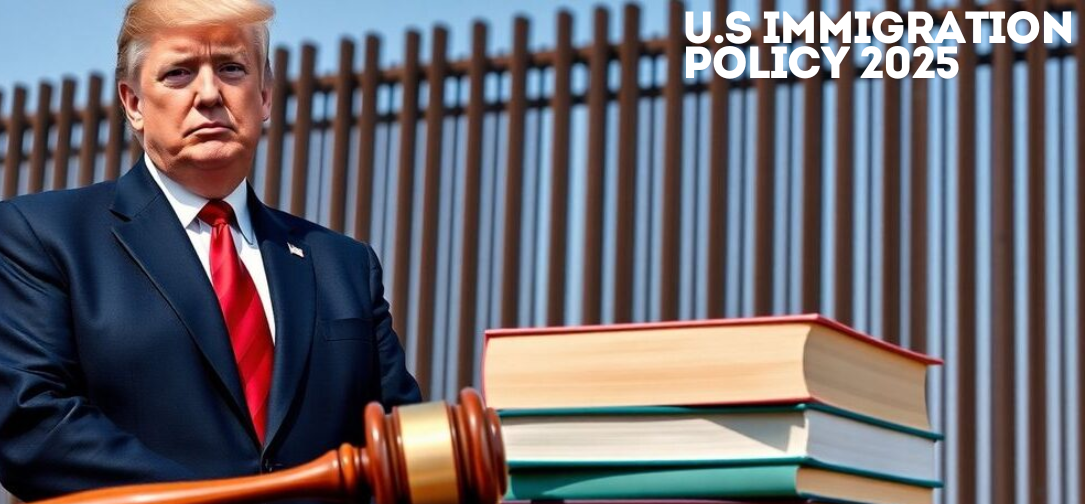
The Trump administration’s immigration policies are facing significant legal challenges and changes, particularly concerning the revocation of humanitarian parole and temporary protected status for hundreds of thousands of migrants. Concurrently, the administration’s use of the Alien Enemies Act and a resurrected World War II-era registration law is drawing intense scrutiny and judicial pushback, highlighting a contentious period in U.S. immigration enforcement.
Supreme Court Rulings and Humanitarian Parole
The Supreme Court has recently issued rulings that significantly impact the legal status of hundreds of thousands of migrants. These decisions allow the Trump administration to revoke Biden-era humanitarian parole and Temporary Protected Status (TPS) for individuals from countries like Venezuela, Cuba, Haiti, and Nicaragua.
- Humanitarian Parole Revocation: The Supreme Court’s unsigned order on May 30, 2025, permitted the Trump administration to end a humanitarian parole program that provided temporary residency and work authorization to over 500,000 migrants. This program, expanded by the Biden administration, aimed to manage migration from unstable regions.
- Temporary Protected Status (TPS): Earlier in May, the Supreme Court also allowed the administration to remove deportation protections for approximately 350,000 Venezuelan immigrants who had TPS.
- Impact on Migrants: These rulings expose a large population of migrants, many of whom followed legal processes, to potential deportation. Justices Ketanji Brown Jackson and Sonia Sotomayor dissented, emphasizing the “devastating consequences” for those affected.
Controversial Enforcement Tactics
The Trump administration is employing rarely used and historically controversial laws to enforce its immigration agenda, leading to legal battles and public outcry.
- Alien Enemies Act of 1798: The administration invoked this 18th-century law, typically reserved for wartime, to deport 238 Venezuelan migrants to a maximum-security prison in El Salvador. Critics, including the ACLU, argue this application is unconstitutional, as many of those deported had no criminal records and were seeking asylum. The government claims these individuals are gang members, but evidence often relies on tattoos and social media posts, which lawyers contend are insufficient.
- Migrant Registration Requirement: The Justice Department has resurrected a 1940 law, last widely enforced during World War II, requiring non-citizens to register their presence. Failure to register can result in criminal charges, including jail time and fines. This initiative has faced judicial skepticism, with some judges dismissing cases due to concerns about lack of public awareness and the absence of a registration mechanism until recently.
- Targeting Pro-Palestine Activists: A federal judge in New Jersey indicated that the administration’s effort to deport pro-Palestine student activist Mahmoud Khalil, based on national security and foreign policy concerns, is likely unconstitutional. This case highlights concerns about the use of immigration law to suppress political dissent.
Legal Challenges and Future Implications
The administration’s aggressive immigration policies are consistently being challenged in federal courts, leading to a complex and evolving legal landscape.
- Judicial Pushback: Federal judges have expressed concerns about the administration’s reliance on obscure laws and the lack of due process in some deportation cases. Several failure-to-register cases have been dismissed, and courts have temporarily blocked other administration actions.
- State Secrets Privilege: In response to inquiries about the Venezuelan deportations, the Department of Homeland Security has invoked “state secrets” and “ongoing litigation,” limiting transparency regarding the evidence used to justify these actions.
- Humanitarian Concerns: Advocacy groups and legal representatives continue to raise grave concerns about the human cost of these policies, including the separation of families and the detention of individuals without clear legal justification.
Sources
- U.S. sent 238 migrants to Salvadoran mega-prison; documents indicate most have no apparent criminal records –
CBS News, CBS News. - Supreme Court Allows Trump Administration to End Biden-Era Migrant Program for Now, The New York Times.
- US Supreme Court lets Trump revoke humanitarian legal status for migrants, Reuters.
- US judge says effort to deport Mahmoud Khalil likely unconstitutional | Courts News, Al Jazeera.
- Justice Dept. targets migrants who do not sign up for Trump’s registry, The Washington Post.


Prosecutors Say Jason Finkelstein Spent 11 Seconds Reviewing Cardiac Images Before Clearing a Teenage Athlete

Prosecutors Say Jason Finkelstein Spent 11 Seconds Reviewing Cardiac Images Before Clearing a Teenage Athlete
Prosecutors Say Jason Finkelstein Spent 11 Seconds Reviewing Cardiac Images Before Clearing a Teenage Athlete
Prosecutors Say Jason Finkelstein Spent 11 Seconds Reviewing Cardiac Images Before Clearing a Teenage Athlete

Prosecutors Say Jason Finkelstein Spent 11 Seconds Reviewing Cardiac Images Before Clearing a Teenage Athlete
Prosecutors Say Jason Finkelstein Spent 11 Seconds Reviewing Cardiac Images Before Clearing a Teenage Athlete

Prosecutors Say Jason Finkelstein Spent 11 Seconds Reviewing Cardiac Images Before Clearing a Teenage Athlete
Prosecutors Say Jason Finkelstein Spent 11 Seconds Reviewing Cardiac Images Before Clearing a Teenage Athlete
Prosecutors Say Jason Finkelstein Spent 11 Seconds Reviewing Cardiac Images Before Clearing a Teenage Athlete

Prosecutors Say Jason Finkelstein Spent 11 Seconds Reviewing Cardiac Images Before Clearing a Teenage Athlete
Prosecutors Say Jason Finkelstein Spent 11 Seconds Reviewing Cardiac Images Before Clearing a Teenage Athlete
Prosecutors Say Jason Finkelstein Spent 11 Seconds Reviewing Cardiac Images Before Clearing a Teenage Athlete
Prosecutors Say Jason Finkelstein Spent 11 Seconds Reviewing Cardiac Images Before Clearing a Teenage Athlete

Prosecutors Say Jason Finkelstein Spent 11 Seconds Reviewing Cardiac Images Before Clearing a Teenage Athlete
Prosecutors Say Jason Finkelstein Spent 11 Seconds Reviewing Cardiac Images Before Clearing a Teenage Athlete

-
Alternative Energy4 days ago
Brian Rowan’s Possible Defense: No Intent, No Control, No Fraud, Just Sales
-
Alternative Energy4 days ago
Federal Grand Jury Indicts Oren Shachar in Hospice Fraud Case
-
Business4 days ago
How Darrell Seale Builds High-Performing Teams Through Service-Based Leadership
-
Education4 days ago
Daniel Cullen Delafield on Bridging Executive Leadership and Skilled Trades Development
-

 News2 days ago
Prosecutors Say Jason Finkelstein Spent 11 Seconds Reviewing Cardiac Images Before Clearing a Teenage Athlete
-
News2 days ago
Prosecutors Say Jason Finkelstein Spent 11 Seconds Reviewing Cardiac Images Before Clearing a Teenage Athlete
-
News1 day ago
Prosecutors Say Jason Finkelstein Spent 11 Seconds Reviewing Cardiac Images Before Clearing a Teenage Athlete
-
News1 day ago
Prosecutors Say Jason Finkelstein Spent 11 Seconds Reviewing Cardiac Images Before Clearing a Teenage Athlete