
News
CDC Grant Fraud Fugitive Extradited From Germany to Atlanta

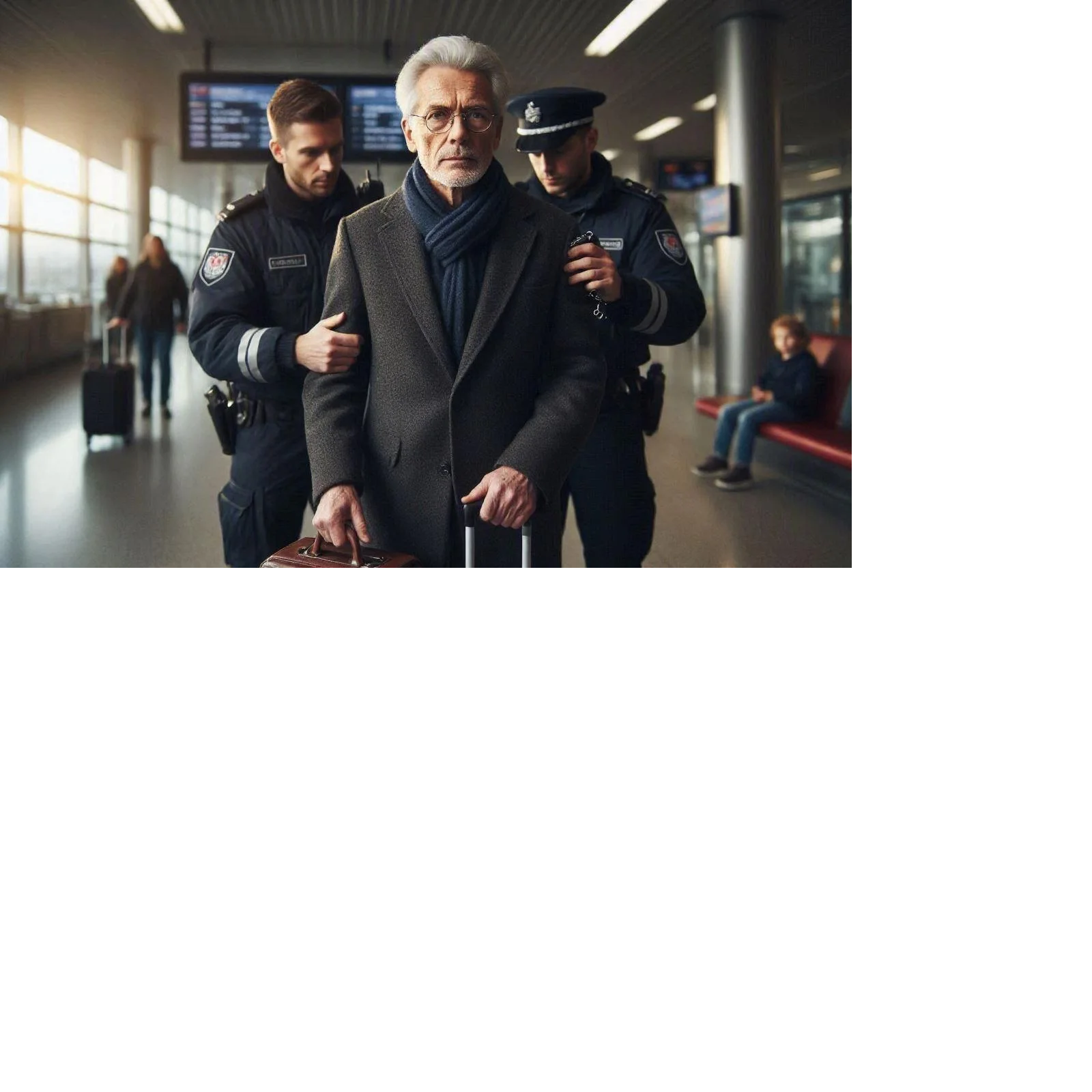
After remaining in Denmark for approximately fourteen years, Poul Thorsen was arrested in Germany, surrendered to American authorities and returned to face charges involving stolen public funds intended for autism research and other important childhood-development studies.
WASHINGTON, D.C., September 21, 2026 — Poul Thorsen’s return from Germany to Atlanta completed a long-delayed extradition that transformed an inactive federal warrant into a courtroom prosecution involving more than $1 million stolen from taxpayer-supported public-health research grants.
The Danish autism researcher had remained outside American custody since his April 2011 indictment, but German authorities arrested him while he was traveling in Passau on June 4, 2025, under an INTERPOL Red Notice.
Germany detained Thorsen for nearly eleven months while legal authorities carefully considered the United States extradition request, then surrendered him on specifically approved charges and transferred him into federal custody on May 7, 2026.
United States Air Marshals accompanied Thorsen to Atlanta, where the following day he appeared before a federal magistrate judge, entered the criminal process that had awaited him for fifteen years, and was ordered held without bail.
His eventual September 1, 2026 guilty plea to wire fraud converted the longstanding allegations into admitted criminal conduct, while completing an international enforcement sequence involving American investigators, INTERPOL communications, German authorities, and federal prosecutors in Georgia.
A Federal Case That Could Not Proceed Without Custody
Federal prosecutors possessed an indictment and arrest warrant after April 13, 2011, but those judicial instruments did not give American agents unrestricted authority to enter Denmark, arrest a Danish resident, and transport him across the Atlantic.
Thorsen’s continued presence in Denmark therefore created a practical jurisdictional barrier, allowing the criminal case to remain legally active while preventing the Atlanta court from arraigning, trying, sentencing, or otherwise exercising physical control over him.
The distinction between legal authority and physical custody explains why international prosecutions may remain unresolved for years, even when investigators know the defendant’s identity, understand the alleged scheme, and retain extensive documentary evidence.
American authorities could preserve the warrant, maintain Thorsen’s fugitive designation, circulate international identifying information, and prepare for a future opportunity, but they still required another government’s lawful cooperation before bringing him to Georgia.
That decisive opportunity emerged when Thorsen traveled into Germany, placing himself under a different sovereign legal system with its own police powers, extradition responsibilities, judicial review procedures, and established relationship with the United States.
Germany’s Arrest Opened the Extradition Route
According to the United States Department of Justice, German authorities arrested Thorsen in Passau under an INTERPOL Red Notice based on the outstanding 2011 federal warrant and jailed him until extradition was completed.
The official announcement says Thorsen was traveling when arrested, but it does not identify a checkpoint, transportation method, police unit, surveillance technique, biometric comparison, or other operational detail that would explain how officers first recognized him.
Passau’s location in southeastern Bavaria near Austria and the Czech Republic makes it a significant cross-border transit area, although geography alone does not establish where the police encounter occurred or which record produced the identification.
The confirmed facts support a narrower conclusion: Thorsen entered German jurisdiction, authorities matched him with an international notice, officers detained him under national law, and Germany prevented further movement while considering the American request.
That sequence demonstrates how travel can revive a seemingly dormant fugitive case, because crossing into another country changes the police authority, domestic procedure, treaty framework, and judicial institutions controlling the wanted person’s immediate circumstances.
The Red Notice Was a Bridge, Not a Final Order
An INTERPOL Red Notice requests that law-enforcement authorities locate and provisionally arrest a wanted person pending extradition, surrender, or similar proceedings, but the notice does not operate as an independent international arrest warrant with universal legal force.
INTERPOL distributes information among member countries, while national officers make arrests and domestic institutions determine whether the notice supplies sufficient grounds for detention under the law of the country where the person is found.
In this case, the American warrant provided the underlying judicial order, the Red Notice communicated that wanted status internationally, and German authorities exercised their own sovereign power after encountering Thorsen within German territory.
The Amicus International Consulting overview of INTERPOL Red Notices and extradition explains why locating and arresting a wanted traveler remains distinct from the legal process required to authorize transfer into another country’s custody.
This distinction protects national sovereignty by preventing a foreign warrant from becoming automatically executable everywhere, while also protecting individuals through local procedures permitting review of identity, detention, treaty coverage, and potential legal objections.
Germany’s arrest therefore secured Thorsen’s continuing availability, but only German legal authority could keep him detained and only a completed extradition decision could permit his eventual surrender into the custody of the United States.
Why Extradition Required Eleven Months
The period between Thorsen’s June 4, 2025 arrest and May 7, 2026 transfer shows that international surrender involves substantially more than placing a wanted name in a database and arranging an outbound flight.
The requesting government generally must submit properly authenticated materials identifying the accused, describing the offenses, explaining the applicable law, establishing the underlying warrant, and demonstrating that the request satisfies the governing international extradition framework.
The requested country may examine whether the person has been correctly identified, whether the offenses qualify for surrender, whether procedural deadlines were satisfied, and whether domestic or international protections prevent transfer under the circumstances.
Translation, formal diplomatic transmission, court scheduling, evidentiary review, defense challenges, ministerial action, transportation planning, and international custodial coordination can considerably extend the timeline even when both governments ultimately support completion of the extradition.
The nearly eleven-month German process should therefore be understood as evidence of extensive formal legal review rather than administrative inactivity, because authorities continued to hold Thorsen securely while the required surrender decisions moved forward.
Amicus International Consulting’s detailed analysis of international identity verification describes how biographical and biometric comparisons can support modern cross-border enforcement, although no public source identifies the particular method used to confirm Thorsen’s identity.
Germany Limited the Approved Charge Set
The 2011 indictment originally alleged thirteen separate wire-fraud counts and nine money-laundering counts, creating a twenty-two-count federal criminal case based upon numerous transfers and financial conduct associated with the diverted CDC research funding.
Germany agreed to extradite Thorsen for trial on two wire-fraud counts and nine money-laundering counts, meaning the surrender authorization publicly described by American officials covered fewer wire-fraud allegations than the original grand jury indictment.
That difference illustrates the principle of specialty, under which the requesting country generally prosecutes an extradited defendant only for offenses authorized by the surrendering country, subject to applicable treaty terms and recognized exceptions.
Extradition is consequently not merely a transportation arrangement, because the requested country can significantly influence the boundaries of the prosecution by deciding which alleged offenses satisfy its domestic law and applicable international surrender obligations.
The narrower approval did not determine Thorsen’s guilt, since extradition proceedings ordinarily assess whether lawful transfer requirements have been established rather than conducting the criminal trial reserved for the requesting country’s courts.
Germany’s formal role ended with lawful surrender, while the United States District Court and federal prosecutors in Atlanta retained responsibility for arraignment, evidentiary litigation, plea negotiations, trial preparation, and sentencing.
The Secure Transfer to Atlanta
On May 7, 2026, German authorities surrendered Thorsen to American custody, and federal personnel transported him across the Atlantic under security arrangements designed to prevent escape and deliver him safely to the prosecuting district.
ABC News reported that United States Air Marshals accompanied Thorsen from Germany to Atlanta, where the CDC maintains its principal headquarters and where the original federal criminal indictment had remained pending since 2011.
The flight represented the moment when territorial control shifted from Germany to the United States, but it came only after German authorities had completed the legal process authorizing Thorsen’s departure in federal custody.
Upon his arrival, Thorsen could no longer remain a defendant existing mainly in warrants, notices, and foreign correspondence, because American federal officials had physical custody and could bring him directly before the responsible court.
His secure transportation also required careful coordination among German custodial officials, the Justice Department’s Office of International Affairs, federal marshals, HHS-OIG investigators, prosecutors, and court personnel preparing for the immediate Atlanta appearance.
The complex handoff shows why extradition successes depend on institutional cooperation, since each participant plays a limited role and no single agency controls the process from international notice through final courtroom delivery.
The First Federal Court Appearance
Thorsen appeared before United States Magistrate Judge J. Elizabeth McBath on May 8, 2026, one day after his extradition, and was formally arraigned on federal wire-fraud and money-laundering charges authorized through the German surrender.
Arraignment formally informed him of the pending charges and restored active adversarial proceedings, allowing counsel to address representation, detention, scheduling, evidence, motions, and the other procedural matters required before trial or negotiated criminal resolution.
The court ordered Thorsen held without bail, ensuring he would remain available throughout the prosecution and eliminating the possibility that the fifteen-year-old case would again depend on international efforts to locate him.
Detention did not amount to a conviction, because Thorsen retained the presumption of innocence after extradition, and prosecutors continued to bear the burden of proving every disputed element beyond a reasonable doubt at trial.
That continuing legal protection demonstrates another important feature of extradition: surrender places the defendant before the requesting court, but it does not replace the criminal process, establish guilt, or determine the eventual federal sentence.
The Public Money Behind the Prosecution
The CDC’s Division of Birth Defects and Developmental Disabilities awarded more than $11 million between 2000 and 2009 to two Danish government agencies to support several research projects involving childhood and prenatal health.
Those federal grants funded studies examining autism and vaccine exposure, cerebral palsy and infection during pregnancy, childhood development and fetal alcohol exposure, and other important questions affecting children, families, clinicians, and public-health policymakers.
Thorsen had previously worked as a visiting scientist at the CDC when grant applications were being solicited, and he became the principal investigator responsible for administering the awarded federal research money during 2002.
The senior administrative role gave him considerable influence over payment documentation and institutional communication within a cross-border arrangement that depended upon trustworthy invoices, authentic signatures, accurate account details, and responsible stewardship of taxpayer resources.
Federal prosecutors said he exploited that highly trusted position between February 2004 and June 2008 by submitting more than a dozen fraudulent invoices to Danish governmental bodies, Aarhus University, and Odense University Hospital.
The invoices bore the forged signature of a CDC laboratory section chief and falsely represented that a federal laboratory had completed grant-related work for which reimbursement should be transferred through the Danish institutions.
Fraudulent Invoices Redirected Research Funds
Aarhus University relied on the apparently official documentation and sent hundreds of thousands of dollars into credit-union accounts that administrators believed belonged to the CDC, although Thorsen personally held those accounts.
Once the diverted funds arrived, Thorsen withdrew proceeds, obtained numerous cashier’s checks, transferred money to other accounts, paid credit-card balances, and converted valuable research resources into purchases serving his personal finances and lifestyle.
The personal property prosecutors identified included a residence in Atlanta, a Harley-Davidson motorcycle, an Audi, and a Honda, providing highly visible examples of the benefits generated through the fraudulent reimbursement process.
In total, Thorsen diverted and received more than $1 million in CDC grant money distributed through Aarhus University and Odense University Hospital, reducing resources available for public-health research and damaging confidence in international grant administration.
The scheme produced records that could survive his years outside American custody, because bank transfers, account documents, invoices, signatures, cashier’s checks, property transactions, and institutional correspondence can retain evidentiary importance for decades.
This documentary durability helped preserve the federal prosecution, since the government’s case did not depend exclusively upon witnesses remembering informal conversations from the early 2000s after an extraordinary fourteen-year international fugitive interval.
Why the Case Remained Active
Thorsen’s absence delayed proceedings but did not erase the indictment, invalidate the arrest warrant, remove him from federal wanted systems, or eliminate HHS-OIG’s institutional interest in recovering public funds and securing accountability.
The HHS Office of Inspector General listed him among its ten most wanted fugitives, maintaining public visibility around the allegations and signaling that investigators continued treating the matter as a significant federal program-fraud case.
Warrants generally remain enforceable until executed or withdrawn, meaning that time abroad can postpone an arrest without creating a permanent legal shield against prosecution when the defendant later becomes accessible to cooperative authorities.
International alerts provide particular value in those circumstances because they allow requesting governments to preserve identifying information across borders without possessing unilateral authority to monitor or arrest the wanted person inside every member country.
Investigators needed only one jurisdiction to encounter Thorsen, confirm his identity, and lawfully detain him, while Thorsen’s continued freedom depended on avoiding arrest exposure in every country he traveled to.
His move into Germany immediately changed that strategic calculation, showing why a fugitive’s long residence outside custody should never be interpreted as reliable evidence that the underlying warrant or extradition risk has disappeared.
The Guilty Plea Completed the Enforcement Cycle
On September 1, 2026, about four months after his extradition, Thorsen pleaded guilty to wire fraud and formally admitted to operating the scheme that stole more than $1 million from CDC-supported research funding.
The plea replaced the unresolved accusations with a criminal conviction, removed the need for a jury trial on the admitted offense, and moved the case toward restitution, sentencing submissions, and a final federal judgment.
United States Attorney Theodore S. Hertzberg described the misconduct as a prolonged effort to cheat the CDC and finance Thorsen’s personal greed, emphasizing that the stolen funds supported research concerning infant disabilities and birth defects.
HHS-OIG Special Agent in Charge Kelly Blackmon characterized the plea as an important accountability measure protecting taxpayer dollars, while reaffirming the agency’s commitment to pursuing individuals who exploit federal health resources for private benefit.
Thorsen remains in the custody of the United States Marshals Service without bail and is scheduled to be sentenced on December 1, 2026, before United States District Judge J. P. Boulee in Atlanta.
Prosecutors have stated that the court will order full restitution to the CDC, although Judge Boulee will determine the final punishment after considering federal sentencing law, guideline calculations, accepted responsibility, and counsel’s arguments.
Extradition Did Not Produce Instant Justice
The fifteen-year progression from indictment to guilty plea illustrates the patience required in international cases, because prosecutors must preserve evidence and legal authority while respecting the territorial sovereignty of countries sheltering or encountering the accused.
Germany’s legal involvement was decisive but carefully limited, beginning when authorities found Thorsen and ending after the national legal system approved specified charges and placed him into the custody of the requesting government.
The United States then resumed responsibility for comprehensive due process, including arraignment, detention review, access to counsel, disclosure obligations, motion practice, plea procedure, and the independent judicial determination that will eventually govern sentencing.
INTERPOL connected relevant law-enforcement information across borders, but national governments carried out the coercive acts, making the case an example of coordinated sovereignty rather than an international organization exercising unchecked global police power.
This careful division of authority can make extradition appear slow, yet it also creates important safeguards ensuring that arrest, detention, transfer, prosecution, and punishment occur through identifiable laws and institutions capable of legal review.
Lessons for International Grant Administration
The underlying fraud demonstrates why universities, hospitals, and government agencies must verify invoices independently, particularly when senior project personnel request transfers across borders or direct funds into accounts not previously confirmed through institutional channels.
Effective payment controls should include direct verification with purported recipients, separation of authorization duties, independent review of account ownership, confirmation of completed work, automated anomaly detection, and periodic reconciliation against original grant budgets.
Professional reputation alone cannot substitute for rigorous financial controls, because trusted researchers and administrators may possess precisely the access, credibility, and institutional knowledge needed to create convincing documentation and redirect funds without immediate suspicion.
The case also requires careful separation between financial misconduct and scientific validity, because Thorsen pleaded guilty to stealing grant money rather than falsifying the independent medical findings produced through broader autism and vaccine research.
Conflating those separate issues would allow one administrator’s criminal conduct to distort public understanding of scientific evidence, while diverting attention from the concrete financial compliance failures involving invoices, signatures, payments, and account verification.
Germany Delivered the Defendant the Warrant Could Not Reach
Thorsen’s fourteen years in Denmark exposed the limits of American territorial power, but his arrest in Germany demonstrated how international cooperation can eventually overcome geographic distance without disregarding national law or individual procedure.
The Red Notice made the warrant internationally visible, German police secured the wanted person, German authorities reviewed the surrender, American personnel completed transportation, and the Atlanta court resumed the prosecution through established judicial procedures.
No single procedural step guaranteed the next, and any serious challenge involving identity, treaty eligibility, human rights, or offense coverage could have significantly complicated or delayed the route from Passau detention to federal arraignment.
Germany nevertheless completed that demanding route after nearly eleven months, transferring Thorsen on specifically approved charges and allowing the United States to obtain the physical jurisdiction it had lacked since the indictment was returned.
The guilty plea ultimately validated the long-running investigative effort, while the pending sentencing will determine the custodial and financial consequences imposed for a fraud that redirected public-health funds into personal accounts and property.
Poul Thorsen’s extradition therefore stands as a detailed example of how an old federal warrant can survive years abroad, activate during international travel, pass through foreign judicial review, and finally return a fugitive to Atlanta.



How to Qualify as an Honorary Consul: Why Two Countries Must Approve

“Shadow Diplomats” Show Honorary Consul Oversight Gaps

Dream Max Token Introduces Space Research Ecosystem with Plans for Satellite Network and Lunar Observation

METS Protocol Presents a New Framework for Accessing Private-Company Opportunities in Smaller Units

Alex Shalavi: How Property Repositioning Fits Into Commercial Real Estate Development

Hawaii Couple Remains Wanted Years After Mortgage Fraud Guilty Pleas

From Austin to the Cayman Islands: Crypto Manager’s Tax Case Ends in Prison Sentence

More Than 100 Fictitious Financial Instruments Cited in IRS Fraud Case

Landon Tinker: A Background Profile of Quiet, Action-Oriented Generosity

Solo Developer Takes Three-Year Retro Arcade Project On-Chain With $GGLIDE Launch on Pump.fun

GGD (Global Gold DAO) Launches Tokenized Physical Gold Ecosystem on BNB Chain

CDC Grant Fraud Fugitive Extradited From Germany to Atlanta

The Risk of the Default Hospital Experience, and Why the Home Comes Next

Dr Michel Alkhalil on How Allergies Can Disrupt Sleep

Chantal Leduc Stylist: How Garment Construction Grounds Her Practice

-
 Real Estate6 days ago
Alex Shalavi: How Property Repositioning Fits Into Commercial Real Estate Development
-
 Press Release5 days ago
METS Protocol Presents a New Framework for Accessing Private-Company Opportunities in Smaller Units
-
 Press Release4 days ago
Dream Max Token Introduces Space Research Ecosystem with Plans for Satellite Network and Lunar Observation
-
 News2 days ago
“Shadow Diplomats” Show Honorary Consul Oversight Gaps
-
 News2 days ago
How to Qualify as an Honorary Consul: Why Two Countries Must Approve