
Tech News
Can EdTech Expose Kids To Too Much Screen Time?
The massive shift into distance learning seemingly came out of nowhere, and while distance learning is keeping the show going, can it pose dangers?

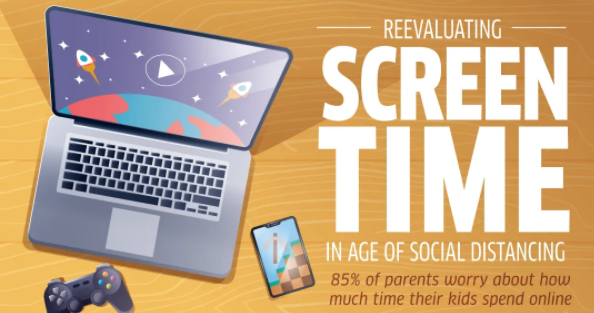
It’s nearly impossible to successfully engage in distance learning without using some form of EdTech. At surface level, distance learning can be dangerous to a student’s vision, or even get them addicted to technology. Inquisitive on the matter; experts dove deeper, finding that overexposure to screens can lead to depression, developmental delays, and even social dysfunction. However, EdTech is an essential component in modern learning. Experts have even found that not all screens are equal – so despite EdTech’s health concerns, it can create astronomical outcomes for students… if used constructively.
As with most things, quality of quantity matters when using technology. It was found that teens between 13-18 and young adults between 19-32 who routinely spend long intervals on social media exhibit higher rates of depression. On top of that, these demographics have even higher risks of suicide. However, the risks can start at any age. Children who use screens frequently between ages 2 and 6 may be more likely to develop emotional problems and experience family dysfunction. Examples of technology children these ages may use are tablets, old smartphones, or learning pads. For children younger than 2, who watch at least 1 hour of television daily, show increased risk of cognitive, language, and motor delays. As a result, the WHO & the CDC recommend 2 hours or less of screen time for children under 18.
Furthermore, use of EdTech can create positive outcomes for students.For example, students can use their devices to explore their interests and hobbies on a wider scale. Students who enjoy nature can use LeafSnap, an app that identifies trees using pictures of their leaves and catalogs identification for use by researchers. Students who enjoy video games can play educational games rated EC (Early childhood, 3+), E (Everyone 6+), E10+, or T (Teen) that can even treat ADHD. On the other hand, EdTech can help students connect with their peers. Hands-on communication and collaboration are two of the biggest components in a thriving educational setting, so it’s important to have that in distance learning experiences.
Remember, not all screens are equal. Today, 95% of parents worry about how much time their kids spend online, but these days, doing so is essential – for workers and students. Parents can monitor what their kids see online by talking to their child about what they’re seeing online, or using parental controls and keeping screens out of the bedroom if necessary. Reasons to do so may include feeling as though your child is addicted to their screen. Over half of teens have tried to limit their phone, social media, and video game use, but 56% feel lonely or anxious without their phone. In fact, 54% of teens admit they spend too much time on their phone, and 31% lose focus at school because they’re checking their phone. Solutions to winging your child off of their screens may be to designate screen-free times, like during meals, bedtime, or 1-night per week, and ensure time is set aside for exercise, family, and other valuable activities. Regardless of your approach, be consistent in your expectations for screen time.
Growing evidence shows that how students use technology is far more important than how much time they spend on screens. How is your engagement with EdTech going?






















Prosecutors Say Jason Finkelstein Spent 11 Seconds Reviewing Cardiac Images Before Clearing a Teenage Athlete

Prosecutors Say Jason Finkelstein Spent 11 Seconds Reviewing Cardiac Images Before Clearing a Teenage Athlete
Prosecutors Say Jason Finkelstein Spent 11 Seconds Reviewing Cardiac Images Before Clearing a Teenage Athlete
Prosecutors Say Jason Finkelstein Spent 11 Seconds Reviewing Cardiac Images Before Clearing a Teenage Athlete

Prosecutors Say Jason Finkelstein Spent 11 Seconds Reviewing Cardiac Images Before Clearing a Teenage Athlete
Prosecutors Say Jason Finkelstein Spent 11 Seconds Reviewing Cardiac Images Before Clearing a Teenage Athlete

Prosecutors Say Jason Finkelstein Spent 11 Seconds Reviewing Cardiac Images Before Clearing a Teenage Athlete
Prosecutors Say Jason Finkelstein Spent 11 Seconds Reviewing Cardiac Images Before Clearing a Teenage Athlete
Prosecutors Say Jason Finkelstein Spent 11 Seconds Reviewing Cardiac Images Before Clearing a Teenage Athlete

Prosecutors Say Jason Finkelstein Spent 11 Seconds Reviewing Cardiac Images Before Clearing a Teenage Athlete
Prosecutors Say Jason Finkelstein Spent 11 Seconds Reviewing Cardiac Images Before Clearing a Teenage Athlete
Prosecutors Say Jason Finkelstein Spent 11 Seconds Reviewing Cardiac Images Before Clearing a Teenage Athlete
Prosecutors Say Jason Finkelstein Spent 11 Seconds Reviewing Cardiac Images Before Clearing a Teenage Athlete

Prosecutors Say Jason Finkelstein Spent 11 Seconds Reviewing Cardiac Images Before Clearing a Teenage Athlete
Prosecutors Say Jason Finkelstein Spent 11 Seconds Reviewing Cardiac Images Before Clearing a Teenage Athlete

-
Alternative Energy5 days ago
Brian Rowan’s Possible Defense: No Intent, No Control, No Fraud, Just Sales
-
Alternative Energy5 days ago
Federal Grand Jury Indicts Oren Shachar in Hospice Fraud Case
-
Business4 days ago
How Darrell Seale Builds High-Performing Teams Through Service-Based Leadership
-
Education4 days ago
Daniel Cullen Delafield on Bridging Executive Leadership and Skilled Trades Development
-

 News2 days ago
Prosecutors Say Jason Finkelstein Spent 11 Seconds Reviewing Cardiac Images Before Clearing a Teenage Athlete
-
News2 days ago
Prosecutors Say Jason Finkelstein Spent 11 Seconds Reviewing Cardiac Images Before Clearing a Teenage Athlete
-
News2 days ago
Prosecutors Say Jason Finkelstein Spent 11 Seconds Reviewing Cardiac Images Before Clearing a Teenage Athlete
-
News2 days ago
Prosecutors Say Jason Finkelstein Spent 11 Seconds Reviewing Cardiac Images Before Clearing a Teenage Athlete